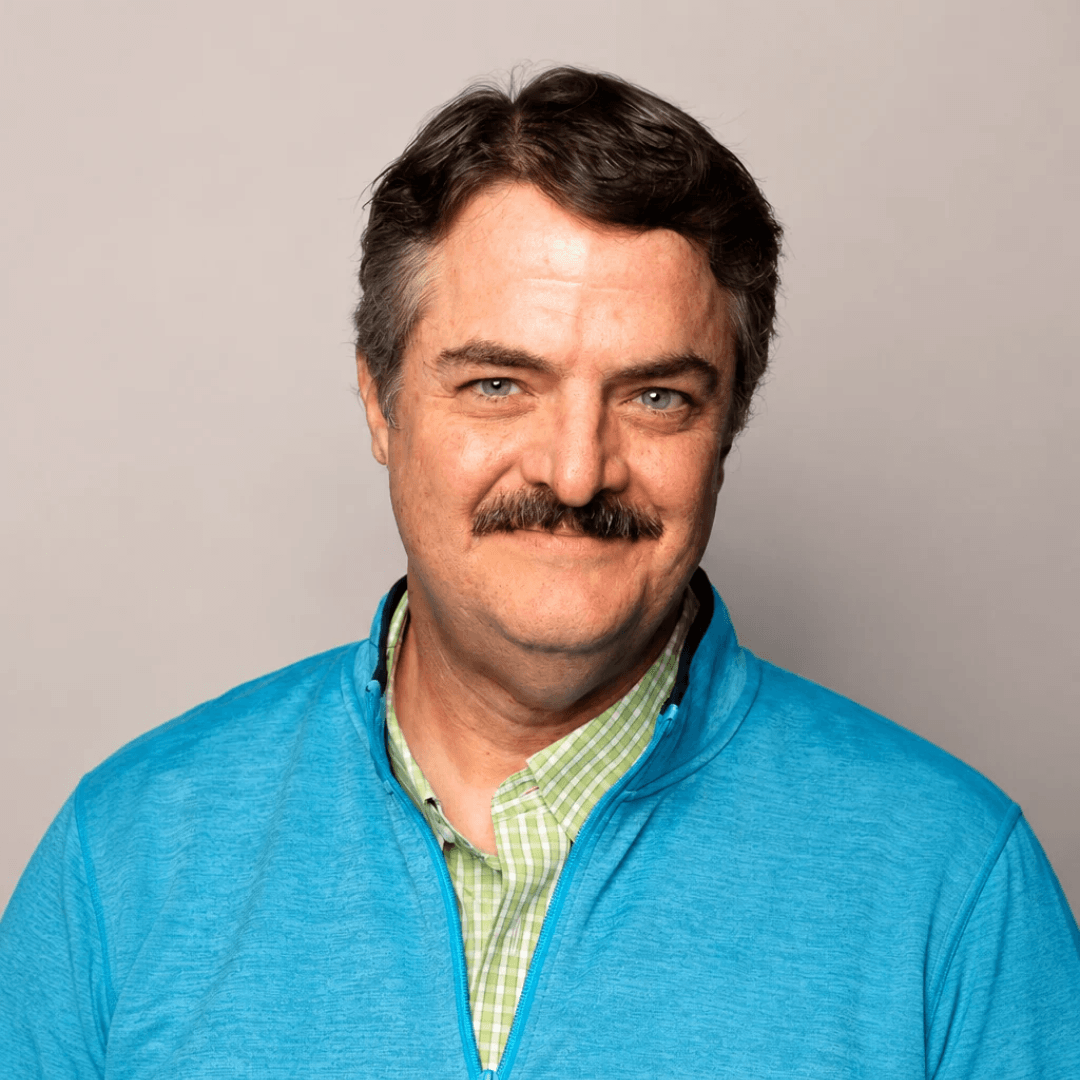
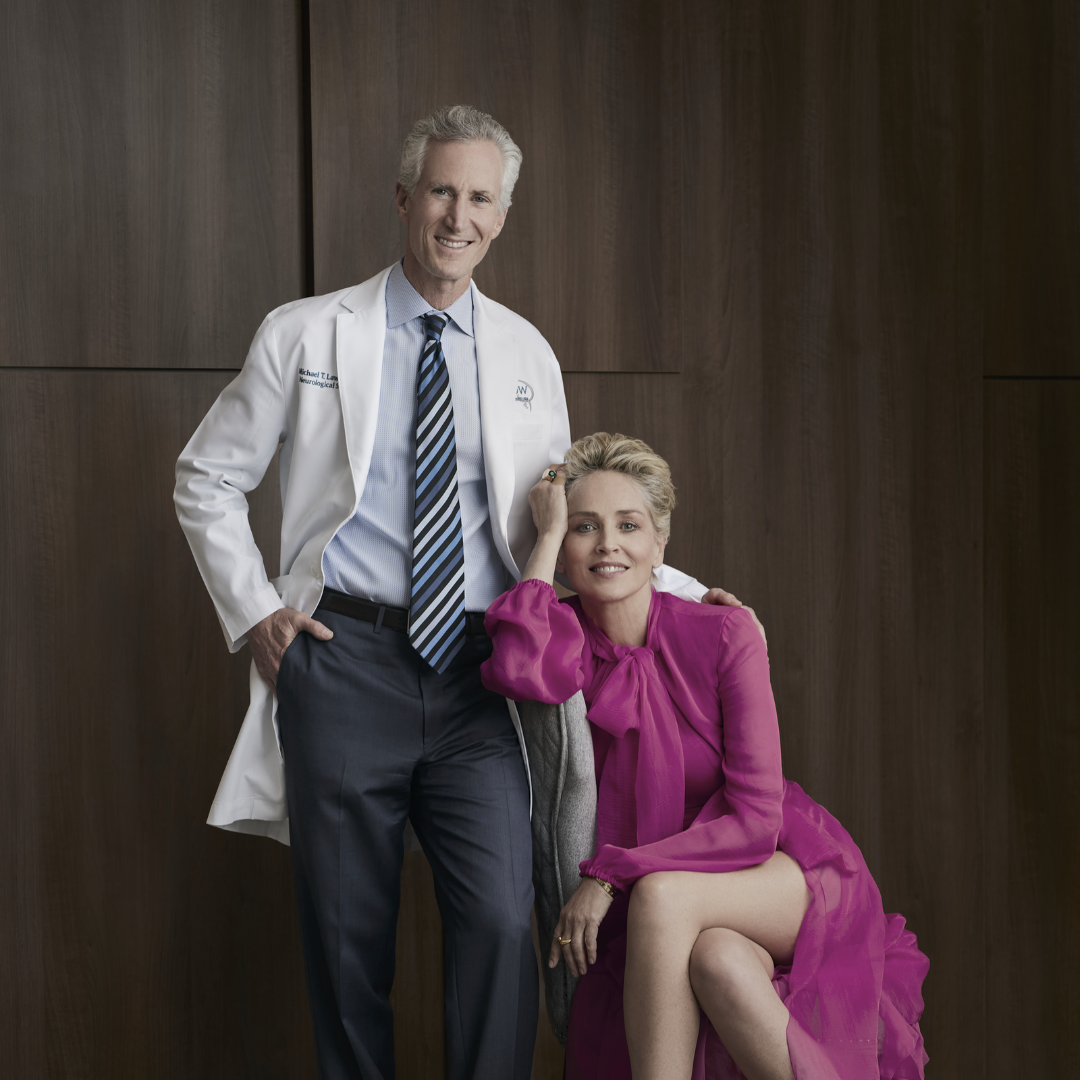
Dr. Correa:
From the American Academy of Neurology, I'm Dr. Daniel Correa.
Dr. Peters:
And I am Dr. Katy Peters, and this is the Brain Health Podcast.
Is laughter the best medicine? Hey, Brain Health Podcast audience, we're really excited to be here, and I hope that you get to have a little laughter in your day, maybe after listening to this podcast, because we have the comedian, Tina Friml. She's a standup comedian, speaker, writer, and she's appeared on The Tonight Show, Comedy Central, and many other programs. And she also has cerebral palsy. She uses her role as a comedian to advocate for others.
And I feel that laughter can be a powerful form of medicine, finding yourself [inaudible 00:01:01] moments of joy, connection, relief during challenging times. And a good laugh can just lift our spirits and bring people together. We need comedians. We need entertainers like Tina. And I think when they can share their personal experience, that really takes a lot of courage, especially when it's shared with honesty and with humor. It helps us not feel alone. It reminds people that they're more than just a diagnosis or a health challenge or a neurologic challenge. And bringing humor to a difficult experience also allows us to have more open conversations. So Tina, as a comedian, has really been able to do this and bring awareness to cerebral palsy.
And then, we're going to get into the details, the medical details of cerebral palsy with our expert, Dr. Jason Carmel, who's a pediatric neurologist, and sort of discuss what happens with that transition from pediatric to adulthood, and what are some new exciting areas of research? So check out this podcast.
Hello, everyone. Hello, BrainHealth.com audience. Today we are going to laugh. We're going to laugh a lot because we have an awesome guest, Tina Friml. She is a standup comedian, speaker, writer. She's appeared on the Tonight Show starring Jimmy Fallon, Comedy Central and the Drew Barrymore Show. Her live performances span from major comedy festivals to international stages. And she was recently on Netflix's Joke Festival and Rogue Island Comedy Festival and clubs all across the United States and internationally. And another role that she has is that she's an advocate for authentic disability representation in mainstream media and accessibility in the arts. So Tina, welcome to our podcast.
Tina Friml:
My pleasure to be here talking to you. I never get to talk to doctors. I only get to talk to other clowns.
Dr. Peters:
Well, hey, the doctor's in the house now, so we get to have a talk. You should be going to see your doctor. No, I'm just joking. So I love talking to comedians. It's a lot of fun. So where are you joining us from today?
Tina Friml:
I'm coming in from Cambridge, Massachusetts, where I have an apartment in this incredible area. And I'm on tour so much, and I'm kind of a rolling stone. And I'm from New England, I'm from Vermont. So I moved here from Brooklyn about a year ago. I just needed somewhere, a crash pad that felt just a little bit less like I was being swarmed by culture all the time. I mean, in a weird way, what I do is so exciting that I just needed something that felt like one notch down from that.
Dr. Peters:
I love that Cambridge area. I just got back from Boston. I was there and I got to go to Willie's Pizza, or sort of. It was really good.
Tina Friml:
Oh, my gosh. Yes. Boston is a weird... I mean, it gets people riled up when I say this, but Boston's a perfect city. It really is. It has everything.
Dr. Peters:
Okay.
Tina Friml:
It has the culture. It's gorgeous. It does get cold, but whatever. At least it doesn't get super hot. I so wish that I could Frankenstein a few different cities together into one actual Boston that also has the entertainment industry in it. Oh, well.
Dr. Peters:
I like that. I like that to make the perfect city for yourself. So you are a comedian, so tell us what is so great about comedy and laughter. What's so great about it?
Tina Friml:
Comedy, it really is the perfect way to be able to talk about things that are otherwise incredibly difficult and scary to talk about. It for me is a way to get people to listen to something that might otherwise be a little bit intimidating or... Okay, there's a way better way to put this, but it kind of massages out the empathy and makes something that would otherwise I think be really hard to wrap your head around or hard to relate to.
It can be the tie that makes people understand what it would be like to be in that person's shoes. I mean, the great one thing that we all have in common is that there is a sense of irony to life no matter what your situation. I think that I found out pretty early on that if I just point to the irony going on in my life and be like, "What is that about?" it tapped into a thing that everyone can relate to in their own way.
Dr. Peters:
I agree. I just saw you on Trevor Noah, and I think it was on his podcast. And one of the things he talked about, you talked to him and mentioned one of the things your brother asked your parents. I thought that was sort of a funny clip.
Tina Friml:
Yeah. Well, I'll tell the story again that the way that I found out when I was a really, really small kid that I was different was driving in a car with my mom and dad and brother who's only two years older than me. So he was also a young kid. And out of nowhere he just was like, "Hey mom and dad, why does Tina talk weird?"
And it was just news to me. I wasn't even talking after that. It just came out of nowhere, and it caught everyone off guard. So my mom and dad just said, "Hey, we're not going to get into that right now."
In hindsight, obviously, I was the same thing. And my mom and dad, they never dwelled on my cerebral palsy. They let me be a normal kid and let me tell them when I started to hit some boundaries. So that was their reaction saying, "Oh, we're not going to get into that right now."
Dr. Peters:
I like that.
Tina Friml:
That was a reflection of that. But I think what unfortunately happened at the time was I misinterpreted that as, "Oh, we don't talk about that."
Almost like Encanto, "We don't talk about Bruno."
"We don't talk about Tina and what's wrong with her."
It was the beginning of things that happened in my young life that were grappling with all that was happening with my brain and how to strengthen my brain and handle cerebral palsy, all the while, this identity crisis and this philosophical thing of what does that say about me as a person and how I relate to the world?
Dr. Peters:
And really starting with those relations with family, too, how do you relate to others? That's a really key part. Now, back to your comedy, what are your favorite parts of being a standup comedian and when did you start becoming a standup comedian?
Tina Friml:
I've been funny my whole life, and it is just a natural humor to me. But also, I learned pretty early on that I could use humor as a way to sort of subconscious, not subconscious, sort of say without saying that, "Hey, you can talk to me. I'm a person in here. There's a person inside here."
I would often get, when I was younger, often get misunderstood for having cognitive disabilities because of how I talked. And it was a way to catch people up to speed of like, "Oh, that's not what's happening right now."
But I didn't really at all get into comedy until I became an adult. I began to find comedy just as a fan for a while, about early 20s. Definitely, my favorite part of comedy, there's nothing like being up there and the timing of a joke when... In a weird way, the way that I talk because I talk slow, it really helps out with joke timing. It can really pack a punch when I know I have this big punchline or a big misdirection coming up.
And for me, that's my favorite part of standup is I'm getting a reaction I'm getting. I kind of have them in the palm of my hand and yet I know what's coming and they don't and I can just time it exactly right.
Dr. Peters:
Boom.
Tina Friml:
Boom. And that timing is cool, because it's something that it has nothing to do with how I enunciate words. It has nothing to do with how quick or clear my movements are. It really just is something I can nail unhindered.
Dr. Peters:
Great. And who are some of your, I guess, comedians you look up to as mentors?
Tina Friml:
Oh, man. So I always point to two comedians that really help shape my comedy, and that's Maria Bamford. If you're not aware of her, please do yourself a favor and get educated. So yeah, she's incredible. And she does comedy a lot about her mental health, but really paints a very visual, very funny and fantastical and ridiculous picture of what it's like to be in her head and be operating on the outside world as well.
And then the other is Anthony Jeselnik. He's the master of misdirection. And I love comics that are edgy or dark humor without using the obvious things, without using vulgarity or crazy visceral sexual stuff. I mean, there's a place for that, and that can be very funny, but there's something that Anthony does that just he loves to trail you on. And the very last sentence of a story, completely plot twists the entire thing. For me, that was an unbelievable skill that I just constantly try and begin to master.
Dr. Peters:
I think that's really good. Because it seems to me that with comedy, because you have to go to clubs, you really get to know your audience and your fans. What have you learned engaging with your audience and fans about your own comedy?
Tina Friml:
It's really amazing. My favorite part by far about touring has been just seeing the kind of eclectic audience that grow. Because when I began to do comedy, a lot of comedy about being disabled, I think the people in my life predicted and expected that I would have a large disabled crowd, and I do. But the thing that I think I didn't expect was this crossover. I have people with disabilities, I have people working in the medical field, I have nerds, I have kink involved people. I have all these because I also have lots of alternative comedy.
And so, I came this and I found out maybe this open secret that a lot of these groups are really intertwined. There's a lot of disabled people in the kink community. There's a lot of nerds who are also working in hospitals and know all about cerebral palsy. This really, really wonderful rainbow that I began to paint for myself just simply by being who I was and doing the kind of comedy that I do. That's by far been the most surprising and the most awesome thing about performing.
Dr. Peters:
What's sort of next on your docket? You're touring right now?
Tina Friml:
Yeah, so I'm doing a little bit more touring, but I'm actually filming my very first comedy hour, my special in October.
Dr. Peters:
Oh.
Tina Friml:
Yes, yes. It's with this awesome company.
Dr. Peters:
That's exciting.
Tina Friml:
Thank you. Yeah, it's with an awesome company called 800 Pound Gorilla, which they're originally from Nashville, but they grew into a national company. So I now get to drag them to my hometown in Vermont because I'll be doing this.
Dr. Peters:
Great.
Tina Friml:
Yeah. I'm doing this in the theater that I literally grew up in in Middlebury, Vermont.
Dr. Peters:
Congratulations.
Tina Friml:
Thank you. Yeah, that's the next thing on the horizon.
Dr. Peters:
That's a huge deal. And so, we're all about understanding more about neurologic differences and challenges and also about brain health. Can you tell us more about your cerebral palsy diagnosis?
Tina Friml:
Yeah, totally. So I have what's considered a very mild case of cerebral palsy. And although people that don't know what CP is, they're like, "Really?" They're very surprised.
But my case is considered mild because I'm affected in how I speak and I'm affected in my fine motor skills, particularly on my right hand, and a little bit with balance as well, ever so slightly. But that's about it. I don't use any mobility aids. Fortunate to not need any kind of accommodations or handicap accessible rooms.
And so, I always talk about how cerebral palsy affects people a bit like a calico cat. It can really just show up in the most random ways. And the range of certain people are affected on their entire bodies and don't gain the ability to speak or be able to do basic things like eating. And then, I'll meet people at my shows that say, "Hey, yeah, I have cerebral palsy in my hand." And you wouldn't even notice until they mention it.
I think that's another passionate reason why I love to create awareness about CP in general. I think it's one of those neurological disorders that does show up so differently in so many people that it can trip up people that don't have it, are not familiar with it. It's unpredictable.
Dr. Peters:
Yeah. It can have a lot of variations and a lot of degrees. We've interviewed some other great guests that have had cerebral palsy in very different presentations. And I think you're totally correct, it's all about awareness, right? And we're all about helping people become aware about brain health. With your cerebral palsy, what do you do to now protect or promote your own brain health day-to-day since you're touring and you're out there doing things? What do you do for your brain health?
Tina Friml:
Yeah. For me, it's really interesting, the journey that I'm on now that I'm in my 30s. And I've gone through the whole philosophical teenage angst of like, "But what does this say about me, and will I be able to do this and this?"
And now it's become very much more nuanced. And I do need to put much more effort into even while avoiding burnout. And for me, I was just talking to another person about this, but realizing in the adult world, in the industry more and more, particularly with the internet, things are happening so fast. There's this weird pressure to keep up with it, to keep up with these crazy, quick deadlines. If someone texts you and emails you, you got to get back to them.
And having cerebral palsy, it makes it harder. I can't bang out a text in 15 seconds. I can't write an email in two minutes. And there's a certain kind of self-advocacy now that I kind of have a successful career. I'm really having to step up and advocate for myself in front of other people and in front of myself and say, "Hey, I can't do this. Maybe if I was able-bodied, maybe if I didn't have cerebral palsy, I would be able to do this that quickly. But let's be honest, if I were able-bodied, I wouldn't be in this career right now."
So it's really giving myself the resources, eating well, making sure I sleep well, and like I say, avoiding burnout to just give me the grace and the space to... The only way you can thrive is in giving yourself that. You can't pressure yourself or... How do I want to put this? You can't pressure yourself into thriving.
Dr. Peters:
I agree.
Tina Friml:
You need to give yourself the room to grow in your own way.
Dr. Peters:
I'm just thinking my phone is constantly ringing and have to get back to it. Sometimes you just need to slow down, so I think it's okay. I think it's a good lesson for everybody.
Tina Friml:
Yeah, I think so. Every now and then, I'll talk about how... I think one thing that for my whole life will probably be a constant is that I get self-conscious about how slowly I speak. I've had people let me know that in a way it reminds them to slow down philosophically, which at first I didn't know how to take that. But I think there's value in that, even if I can't help it, being the one thing in the world that I'm going to take my time no matter how quick the rest of the world goes. This is going to happen when it happens.
Dr. Peters:
It's sort of symbolic of the punchline, right? You've got to wait for it. You can't get the punchline until you get the joke, right? You have to get the joke first.
Tina Friml:
Exactly.
Dr. Peters:
You'll wait for that punchline.
Tina Friml:
It's timing. It's like it'll be worth the wait.
Dr. Peters:
Exactly. Absolutely. Well, Tina, thank you so much for talking with us. I'd say that you are worth the wait, and I'm so excited about your taped show. That's your one-hour show. I think that's going to be awesome.
Tina Friml:
Yes.
Dr. Peters:
And thank you for advocating for others with disabilities and with cerebral palsy and for being out there. And you know what? You're worth waiting for.
Tina Friml:
Thank you so much, Katy. That's the best thing I could possibly be doing for myself. I'm having so much fun.
Dr. Correa:
If you've been a listener for long enough, you already know that one in two in the US alone is affected by neurologic disease or disorders. That's 180 million people, and there's no time to waste in finding better treatments and cures.
Dr. Peters:
Our podcast is powered by the American Academy of Neurology, a global community of neurologists and neuroscience professionals. They've funded cutting edge research for decades, but they can't do it alone.
Dr. Correa:
You can personally support this work through the AEN Research Program where 100% of your donation goes directly to researchers. You can help drive breakthroughs that bring hope to patients and families. Learn more at BrainHealth.com/donate.
Dr. Peters:
So here we are. We're really excited today to have a wonderful expert to discuss cerebral palsy. It's Dr. Jason Carmel. He is a child neurologist and motor systems neuroscientist who serves as the Chief of the Division of Child Neurology and Executive Director of the Weinberg Family Cerebral Palsy Center at Columbia Medical Center in New York. He's also the Director of the Movement Recovery Laboratory, which uses activity-based therapies, including brain stimulation and intensive behavioral training to promote recovery of function. This is so important for so many patients, and I can't wait to talk to him. And he cares not only for kids with cerebral palsy, but also for adults. So Dr. Carmel, welcome to our Brain Health Podcast.
Dr. Carmel:
Delighted to be here. Thank you for having me.
Dr. Peters:
And so before we get into all the information and the 411, can you tell us a little bit more about yourself and where you're joining us from today?
Dr. Carmel:
Sure. I'm a native New Yorker. I grew up in Manhattan, and I did some schooling in California and then back here in New York. I've spent a lot of my professional life at Columbia, and I'm joining you today from my office here at the Medical Center.
Dr. Peters:
So again, thank you for talking with us today and being our expert. Cerebral palsy is the most common childhood motor disability. Can you just give us more information about cerebral palsy and what it is? It seems that there's so many different, I guess, faces of cerebral palsy. We'd love to learn more.
Dr. Carmel:
Sure. Cerebral palsy is an injury to the developing nervous system that impairs movement. And you're exactly right that it's a wide spectrum. You may see somebody walking down the street with a slight limp. They have cerebral palsy, because they had an injury to their brain either in utero or shortly after birth that impairs their movement. You can also have folks on the more severe end of the spectrum who may use a wheelchair for mobility and be dependent on others for dressing, feeding, and other daily activities.
Dr. Peters:
And what are some of the risk factors for cerebral palsy for a child to develop this?
Dr. Carmel:
The number one risk factor is being born premature. So the more premature somebody is, the higher their risk to have cerebral palsy. There are other risk factors for brain injuries during development, including infection or bleeds during pregnancy.
Dr. Peters:
Is it something that you can detect in utero or is it something that needs to be detected after a baby is born?
Dr. Carmel:
It's detected clinically after somebody's born. Occasionally, we'll have signs of brain injury from scans, either ultrasounds or other scans that we do of the baby's brain while they're still in utero. And so we can know that they have the risk of developing cerebral palsy, but it's the examination of the child afterwards together with evidence for brain injury that allows us to make the diagnosis.
Dr. Peters:
And what would be some of the first signs and symptoms of those childhood patients? I mean, I know it has to vary, but what are generally the more common ones that are seen and what should parents be on the lookout for?
Dr. Carmel:
So it's missing the motor milestones. So the inability to roll, to sit, to maintain head and neck control. Those would be the earliest signs of injury to the developing brain or impaired movement, and then we investigate for signs of injury to the developing brain. Another early sign is kids really shouldn't have a preferred hand before the age of about 12 months. So kids who present with an early hand preference would be another sign to ask your pediatrician.
Dr. Peters:
That's really interesting. I didn't know that about a hand preference. I started out as a left-hander. I turned into a right-hander. I now have a very strong preference, but I think that's very interesting, very interesting. Now, as I remember when I rotated in child neurology and I treat adult patients, one of the things is that a lot of different neurologic disorders can cause those not meeting motor milestones. Is there sort of a workup that is done for these patients? Is there imaging?
Dr. Carmel:
Yes. So typically, if the delays are long enough and profound enough, then the providers will typically take images of the brain. Early in the neonatal period, we can look at the brain with ultrasound, because there's that soft spot, the fontanelle at the top of the head that allows the ultrasound probe to look at the brain. After the first couple of months, then we typically do imaging with MRI as the preferred modality.
Dr. Peters:
And what are the challenges with MRIing a child? I know that my patients alone, as adults, they get anxious. Sometimes we have to give them sedation. I'm sure to let our audience know, there must be some challenging times MRIing a kid.
Dr. Carmel:
So when babies are very young, either if they're born premature or even at term, we can do what we call a feed and wrap, have them eat, breastfeeding or a bottle, and then wrap them as you would a neonate, and they can sometimes sleep through the scan.
Dr. Peters:
Oh, wow.
Dr. Carmel:
As they get older, then they're going to need sedation in order to stay still. And so, sedation is a very safe procedure, but it's not a zero risk procedure. And so, we would really need to know that the information that we would get from an MRI is worth having a child and a family go through that.
Dr. Peters:
Yeah. It sounds like even there's so many different shades of cerebral palsy, but also just all the different ways that you have to do to get people tested and to get those MRIs. So when somebody is initially diagnosed, what are the, I guess, the first lines of therapy and treatment for these patients?
Dr. Carmel:
Yeah, I'll just say one more thing about diagnosis of cerebral palsy. So I think that most parents are familiar with the doctor testing reflexes and looking at movements, but there are a set of standardized tests of baby movements. Some are observed, some are provoked, meaning moving the baby into various positions to see their reaction. And those standardized tests enable us to look at baby's movements compared to the normative population.
And so by doing those tests, we can increase the sensitivity and specificity, how easy it is to pick up the diagnosis of cerebral palsy and to know that it's cerebral palsy and not a different disorder. Once cerebral palsy is diagnosed, then the typical treatments are therapies. They can be physical therapy, occupational, feeding therapy initially. As the child gets older, they may be involved in speech and communication therapies.
Dr. Peters:
I had the opportunity to meet Shay Hammond. I don't know if you know Shay, but he's a soccer player, but also has CP. And he started CP soccer. And he detailed his childhood experience of going to rehab with all the adults and he would participate in physical therapy. So he really told people to do that.
Dr. Carmel:
We think that providing therapy early in life is very helpful, although the data about that are a little bit mixed. We want children to have the physical therapy experiences, but we also want them to do what all babies need to do, which is to attach to their parents, to laugh, to play, and have those experiences as well. So a challenge for young families with an affected child is to know where therapy stops and where parenting begins and to balance those two.
Dr. Peters:
That is so, so important and I appreciate you sharing that with us. The person that we also interviewed today was Tina Friml. She's a comedian and is super funny and really talks a lot about her experiences with CP. But she really transitioned from care as a child to an adult. Can you talk about those important transitions and how is it different taking care of a child versus an adult person with cerebral palsy?
Dr. Carmel:
Yeah, first of all, I want to say to Tina and the other comedians with cerebral palsy, thank you for putting yourself out in the open.
Dr. Peters:
Absolutely.
Dr. Carmel:
I think that I've seen from adjacent neurological fields, whether it's Chris Reeve in spinal cord injury or Michael J. Fox and Parkinson's, that having a public face of a disease is really important to letting people understand that disease. And not only is Tina an incredibly funny person, but she's really putting herself and her disorder out in front of the public, which really lets people in so that they understand, at least in this one instance, what cerebral palsy looks like. So I'm a big fan.
The transition of care is complex, and we typically here at Columbia, we actually started as a cerebral palsy with the mission of helping to transition people from pediatric to adult care. So our logo is a bridge and our tagline is, Bridging care for a lifetime. And so, it was really meeting that challenge head on. About 60% of people living with cerebral palsy are adults, and so what is often considered a pediatric disorder actually has more adults with it.
We start early on, usually by 12 or 13, we're talking to our patients about transition of care. Of course, that depends on their cognitive abilities. People like Tina and most people with cerebral palsy, 70% or so have no major cognitive limitations, and so can get involved as the drivers of their own care very early on. So we solicit their input as to how they want to be cared for. We give teenagers the opportunity to speak with their family as well as without their family and to introduce as needed the adult providers that they can turn to.
Many of the providers here at Columbia are comfortable treating both kids and adults. And so the transition is not often in terms of the doctors, but in terms of the agency of the care, who's in charge. And we want to start to involve teenagers in their care early on so that when they turn 18 and have the decision making power, assuming they have the capacity, that they've practiced this, they've been full participants in their care so that we make that transition as easy as possible.
What's critical for families is that they're often making a transition in terms of their social services and their educational environments at the same time. And while we have really great supports in school, outside school, youth, disability, sports programs and other things, the programming for adults with CP is few and far between. And so, it can often be a challenge for people as they hit 18 or 21, depending on the system, to find others who they can connect with, continue their therapy services, and feel like they're part of a community. So that's one of the things that our center and other centers are really trying to provide to our patients.
Dr. Peters:
That's great. I remember inheriting the pediatric patients from Kennedy Krieger when I was at Johns Hopkins, when they were adults, and they just didn't have the same services. So I agree with you that that needs to be highlighted. And Kennedy Krieger is a great institute that I got to at least spend a little time at.
Dr. Carmel:
It's an amazing institution. And all of us are trying to meet that challenge, because medical specialties are set up by age, the social services are set up by age, and so creating a smooth transition and making sure that there are maturity appropriate options for our adults with CP has been something that our field is increasingly trying to address.
Dr. Peters:
I agree.
Dr. Carmel:
In terms of research, I'll highlight just a couple of the many exciting things. First of all, I think that when one looks at what works in cerebral palsy care, a lot of the therapies that come to the top are the physical and occupational therapies, things like power training, constrained therapy for somebody who has weakness on one side of the body, the less affected arm is constrained and forced use of the more affected arm. These therapies have a high dose of practice that's challenging and really engages people in the tasks that are meaningful for their day-to-day lives. So those are the sorts of therapies.
And we've come to understand some of the crucial ingredients in terms of the intensity, the challenge, the setting of where the therapies are performed that make them more or less effective. So getting some of the specificity of things that many of us may have done and heard of, like physical and occupational therapy, but doing them in the ways that evidence has pointed out really works is one major area of advancement.
Another major area of advancement is in the etiology of cerebral palsy, why somebody has it. And increasingly, when I went through training, you and I might be similar in terms of our ages, but when I was going through child neurology training, I was taught that it was an acquired disorder. It was something that happened in utero, maybe around the time of birth when the child's very young. Now we understand that genetics plays an important role. Depending on the paper you read, it can be between 10 and 25% of people with cerebral palsy has a gene that is affecting their development. That can be a gene that is the single cause of their cerebral palsy, or it can be a gene that interacts with the environment.
Let's say a child has prematurity, one child who's born quite premature develops cerebral palsy, one who's born very premature does not. And so there's a gene environment interaction there that causes the CP, and we're trying to better understand that. And as an international group, we've been able to create a long list of genes that may be implicated in cerebral palsy.
One thing that's very exciting about the genetic basis of cerebral palsy is that many of those gene variants are actionable, meaning if you have that genetic variant, there may be a treatment that is specific to that variant. And so that's one of the reasons that it's very important to have genetic testing, even if you have another cause for your CP, even if you or your child was born premature, for instance, there's still a significant risk that there's a gene variant that made you have CP versus somebody else.
Dr. Peters:
And that's very exciting, because there's been so much done with gene therapy with some other pediatric neurologic disorders. I mean, if there's an opportunity here for something that is truly very common, that would be groundbreaking.
Dr. Carmel:
It's extremely exciting. So there's those gene therapies that you were talking about, they may be supplying the gene that's missing or they may be tamping down disordered genes that make flawed proteins. Those are treatments that one can personalize to the individual. And so even if you have a genetic variant that's unlike other people, there are now personalized medicines for these types of disorders.
Dr. Peters:
That is truly amazing.
Dr. Carmel:
My laboratory uses electrical stimulation of the brain, spinal cord, and peripheral nerves to use the language of the nervous system, which is electrical activity, to try to heal it. And so we've been working with patients with a variety of disorders, most recently with CP, to try to strengthen the nervous system. So people with CP have impaired movement, but they often have quite a lot of movement that we can use to improve their lives. And so by strengthening the existing connections between brain and spinal cord, for instance, we may be able to improve arm and hand function, walking or other movements that are really important for people in their daily lives.
So that kind of treatment is called neuromodulation, focal application of electrical or magnetic stimulation of the nervous system. And I think that's an area that's really poised along with others like Parkinson's disease and deep brain stimulation, which your listeners may have heard of, that may help improve people's lives in the future.
Dr. Peters:
That is amazing. And that has the trickle-down effect to so many other patients too with motor dysfunction. Again, thank you so much. We look forward to having you back again if we can, when we have more questions about cerebral palsy.
Dr. Carmel:
Thank you so much for the opportunity.
Dr. Peters:
Thank you for joining us today on the Brain Health Podcast. Follow and subscribe so you don't miss our weekly episodes.
Dr. Correa:
Also, for each episode, you can find out how to connect with our team and our guests along with great resources in our show notes. We love it when we hear your ideas or questions, and you can send these in by email to Podcast@BrainHealth.com or leave us a message at 612-928-6206. I'm Dr. Daniel Correa connecting with you from New York City, and you can find me on social media @NeuroDrCorrea.
Dr. Peters:
And I am Dr. Katy Peters, joining you from Durham, North Carolina and online @KatyPetersMDPhD.
Dr. Correa:
But most importantly, thank you and all of our community members for letting us be part of your brain health journey. You make this podcast what it is, and by listening each week, you're helping us promote brain health for all.
Dr. Peters:
Before you start the next episode, we would appreciate it if you would rate us five stars and leave a review. That helps more people find us. And don't forget our website, BrainHealth.com. Subscribe to receive our newsletters and be a bigger part of our growing community. See you next week.