Dr. Correa:
From the American Academy of Neurology, I'm Dr. Daniel Correa.
Dr. Peters:
And I am Dr. Katy Peters, and this is the Brain Health Podcast.
Dr. Correa:
Welcome back to the Brain Health Podcast. And Katy, this is where we really get into those really important questions. And so today I want to know, were you a Grey's Anatomy, an ER, a House fan? Tell me about your interest in the medical arts on TV.
Dr. Peters:
Oh my gosh. So can I say Scrubs? Because I actually do think it's-
Dr. Correa:
Absolutely.
Dr. Peters:
I do think it's the most realistic, especially the first season. When you're an intern and a resident and when they're hiding in the closet, that's just like when the pager goes off. I think that rang true just to the start of your medical career. It seemed to be the most real in my mind maybe at that time, but really my jam is Chicago Med. My husband and I actually call it grand rounds. We watch it on Wednesdays. We're huge fans. We know all about the cast. We've been watching it for years.
I do have several friends that though are huge... I feel like there are camps, you're sort of a ER fan, a Grey's Anatomy fan, a House fan. And I have a lot of friends that are Grey's Anatomy fans and they love all the drama, McSteamy and McDreamy. And some of my neurosurgical colleagues are medical writers for some of the programs, including Chicago Med.
Dr. Correa:
Oh, wow.
Dr. Peters:
And he's been in some of the episodes, so I try to spot him if he's there. So how about you?
Dr. Correa:
Yeah, I mean, I liked the shows with a puzzle that they're always figuring out. I'm a neurologist, that's often the thing. So there was aspects about House that I liked. I enjoyed ER, but I think I got less into the drama shows later. I did love Scrubs. My wife and I enjoyed and watched that and excited that it's coming back, although I don't know if it'll be exactly the same thing or we're later in our career, so it may not land exactly the same way. Or they might be actually directly making fun of us as the aging attendings. Who knows? I could see them doing that.
And I enjoy both in those puzzle ones and a new show out that's now Doc. I think they're interesting to see how they approach. Since I'm interested in public health awareness and health literacy, always just interested to see how they're kind of condensing it into the story for TV and often also cringe a bit at what is shown about the environment in the hospital, sometimes on the dramatic side or the way they're kind of cutting corners, which sometimes makes me worry about how people understand what we do in the hospital or all the different roles.
I think of this recent Doc show. As many times as they have these possible neurologic questions or things that are going on in this supposedly premier academic medical center, everything is somehow only run by general surgeons and internal medicine doctors. There seems like the very few actual specialists that aren't really highlighted. And there's one person who's kind of the neuro everything. They show her doing things that are both neuropsychologists, neuropsychiatrists and neurologists all in the same setting.
Sometimes on the House show, you have the same character doing neurosurgical procedures and doing a neurologic evaluation and doing interventional stuff. We have so many more specialists and specialties in medicine that sometimes the nuances and the depth of what we do gets a little overly edited down for these TV shows, but they're still fun to watch.
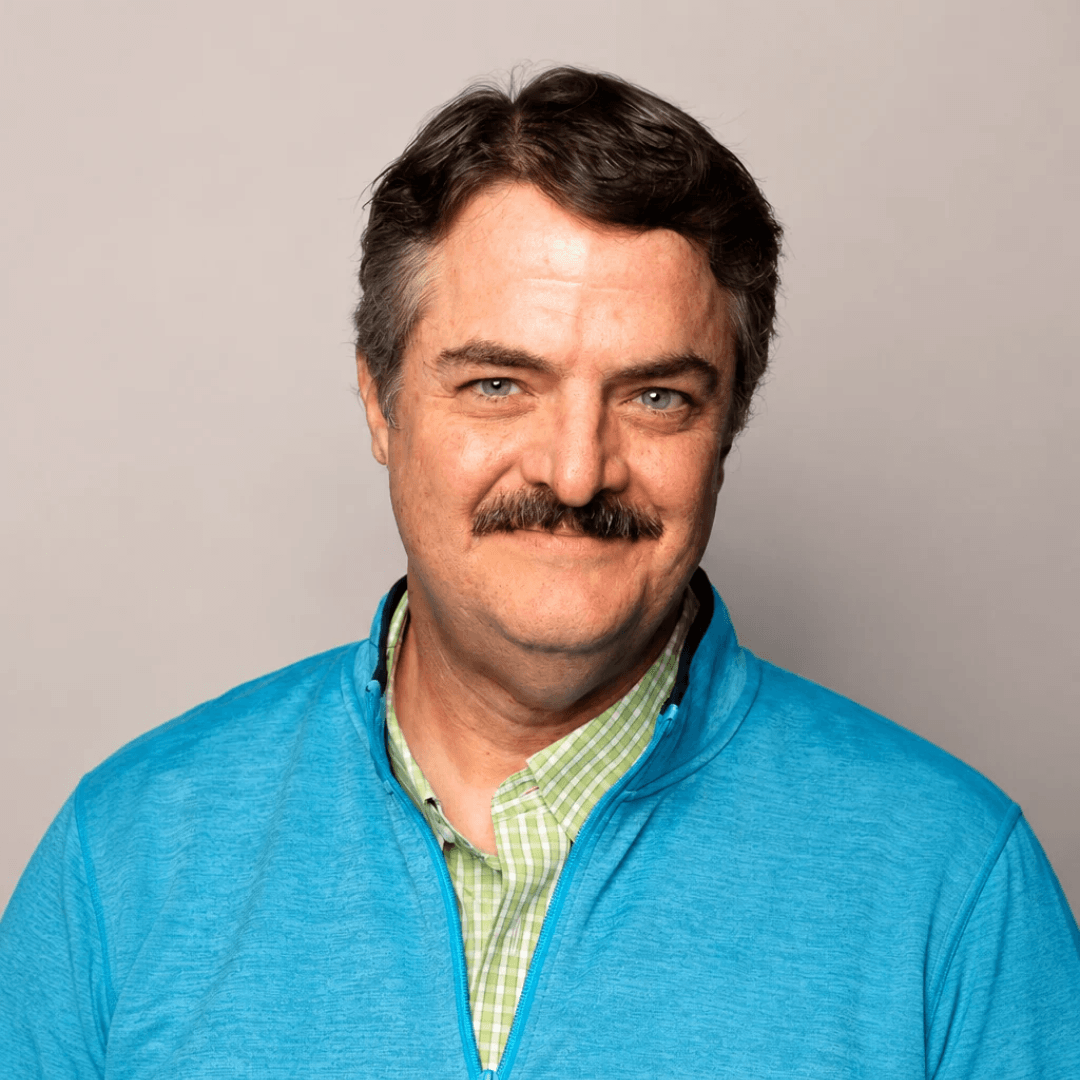
So our guest today is probably one you'll recognize as the much loved bartender from early in Grey's Anatomy where they'd all go to and just come together as a community and relate to him. So Steven Bailey is an actor and writer, and it has turned out for him that he's now experienced his own medical odyssey journey and puzzle with a nerve and muscle disorder called congenital myasthenia. So check out this episode. We get into discussion of his initial symptoms, his course of getting the information and diagnosis, how he's adapted initially with his time and working in Hollywood. And then we'll follow that up with an expert discussion on how myasthenia as a congenital syndrome or a genetic syndrome is different from some of a topic that we've talked on in a previous episode on myasthenia gravis. These are conditions that affect the communication between muscles and nerves, but there are really truly very different syndromes. So we'll hear from Teerin Liewluck from the Mayo Clinic later in the episode from more of a medical expert discussion and perspective of helping support individuals on this journey and with this diagnosis.
Saludos and welcome back to the Brain & Life Podcast. Today we're joined by Steven W. Bailey, an actor, writer that audiences know best as Joe the beloved bartender from Grey's Anatomy. But throughout his career, Steven has also appeared in numerous other series and movies. And earlier this past January, he publicly shared that he's been living with congenital myasthenic syndrome, a rare inherited neuromuscular disorder that affects communication between nerves and muscles and causes progressive muscle weakness and fatigue. We've talked about myasthenia as a condition on this podcast before. We're bringing in another condition within that spectrum. And after years of searching for answers, Steven was keeping his diagnosis initially private and then chose to tell his story to raise awareness about CMS, increase authentic disability representation within Hollywood acting and writing, and encouraging others living with neurologic conditions.
Steven, we're so thankful that you're joining us here today and meeting with our community.
Steven Bailey:
It was a pleasure to be here. I'm very honored that you asked me to be a part of the podcast.
Dr. Correa:
So I'd like to start even before that. Just take us back to why you started acting, why specifically TV or other opportunities, what really drew you to it?
Steven Bailey:
Oh wow, the whole thing. I'm one of those people who kind of knew when they were 15 years old what they wanted to do. I watched my older brother in the production of Grease at high school and I was like, "Yeah, he was all right. I could do better."
Dr. Correa:
A little sibling rivalry that started out.
Steven Bailey:
Yeah. And I was also just fortunate. Where I grew up in a suburb of Seattle, we had a very wonderful acting teacher in our high school who was actually a working actor in the Seattle theater community. And so it was interesting that we got to go see a lot of live shows in town, got to see him perform. That was a real, very impactful. And then just being in theater in Seattle in the late '80s, early '90s was a pretty interesting time to be there doing Avant-Garde Black Box Theater in Capitol Hill and all that kind of stuff. I forego college and I just started doing that. I just did a bunch of theater for the same kind of years that most people would be in their college years. And then I was oddly able to get into a graduate program because they had a backdoor Schmo program, we called it, where three of the people in the 27 student program didn't have undergrad degrees and were going through a graduate program without getting a graduate degree.
So I'm a graduate of a master's degree program, but I can't say I have a master's degree because I don't have an undergrad. And that was American Conservatory Theater, which is a very wonderful theater program and theater itself in San Francisco. I was able to then do a bunch of Bay Area theater. And then at some point you start a couple of different movies, TV shows came through. I guessed it on Nash Bridges, which was a show shot in San Francisco. You get a taste for it. You get a taste for how it pays considerably better than theater and you start to say, "Ah," you know? So I moved to Los Angeles in 2000. I've been here for 26 years now.
Fell in love with doing TV. I love the serial nature of television. I mean, films are cool too and I would love to have done more films. I just seemed to fall right into the pocket of TV mostly. Films kind of end up being a different casting avenue in some regards, but that's just the way it worked out for me and did that for 26 years, and here we are today.
Dr. Correa:
Was it something about being able to develop a deeper connection and relationship both with the character and the other actors?
Steven Bailey:
Well, that's an interesting question because I would say that in theater you can have those same sort of depths in many ways more so. But in film and television, there's certain allurement to just alluring that it's more, I don't know, playing without a net in a weird way. Although theater requires you to perform without a net in the sense you don't get to stop and take extra takes. The stakes are very high on a film television show. People are trying to move quickly. There's a lot of active moving parts and you don't want to be the one that slows everything down. And there's something that's kind of interesting about that being on a show like Grey's Anatomy where you know millions of people are watching and you just got to show up and cross swords and fight with these talented actors and play with people like Ellen Pompeo and Patrick Dempsey and stuff and you need to not be the weak link and show up. And there's something very, I don't know, addictive to that, I must admit.
Dr. Correa:
And I wonder maybe taking that, the environment that you're in, your workplace, before we get to talking about congenital myasthenia, your diagnosis and your experience, I'm wondering about your experience and choice during a portion of your career to keep it private. And what was it about that for you, your family and that public workspace?
Steven Bailey:
I did keep it private. I did make a conscious decision to keep it private, but I didn't get a diagnosis up until 2024. So there was a considerable amount of time that my deciding to keep it private was more of just a mystery of not knowing what it was-
Dr. Correa:
Absolutely. Yeah.
Steven Bailey:
... and not wanting to say, "Hey, I got a problem. I don't know what the problem is." And it's difficult in the workplace. I don't want to imply that people are out there actively saying, "Oh, we found out this guy has a problem. We don't want to come back on the show." But I think a lot of things that drive anything in Hollywood is just the economics and trying to move quickly and everything like that. And you don't want to show up and be like, "I'm moving slow, but I don't know why and geez." And you want to just be able to come in. And especially with the particular disease I have, I'm able to perform okay. I'm able to come in and pretend like I'm okay and pay the price later.
What happens is my body's able to write a check that I can't cash. I can come out... The best story as an example is I literally had... I have a blind dog, old 17-year-old dog. There was a situation recently where someone left a gate open and he fell into the community pool here at the building I live in. I had to dive in and save him. It wasn't too dramatic and I'm not a hero, but it was a simple task for most people, but jumping into the pool, pulling him out of the pool, getting over there, the effect that I have afterwards is extreme. So the stronger I do something dumb in my world, like doing something extreme and fast like that, I get a strong reaction afterwards. So when it came to film and television, I was able to perform normal in front of people and then go back to my trailer and be like, "Oh," exhausted and having to deal with that.
And so it was easy to hide it in that regard until it became to a progression where that no longer is you can't. For me, my coming forward, the timing of it, I can't just say I'm being altruistic and trying to put forward a message. The timing of it is just I got to a point where I could no longer hide it because the progression. So I would say that I was aware that having a problem since 2019 or so, really consciously aware something weird was going on. If I look back at my life before that, it's obvious I had issues my whole life that were contributed to other things that I wrote it off, but that's a whole other story.
But by the time 2019, 2020 came around, that's when it really started to become obvious, especially in 2020. So I had some incidents with my arms that really freaked me out. And that's when I really went into hiding mode for the industry. It was all about secretly, or not secretly, but I had my agents, I'd be kind of like... I used to do, especially in commercials, I used to do the... I'm a big guy, 6'4", 250, and doing large physical comedy is a funny thing to see a big guy to do, and I did a lot of that in my career. And I had to say, I can't do that part of it anymore. I had to say, "Just don't submit me for the guy who accidentally lights the house on fire and has to run around like a lunatic for the GEICO commercial or whatever it is. Make sure I'm going in for the guy who's sitting in a chair or standing still."
And then that conversation then had to change again and be like, "Well, maybe not even standing still, maybe only sitting down." And it started to just get to a point where I got to say I can't live the way I'm living in this secretive thing in a public arena. It just can't be.
Dr. Correa:
Yeah. I was thinking about it, both hearing you talk about it now, but before when I was looking over my notes and just realizing we often interview people in the public space who become more public about their condition, and yes, raising awareness and maybe very early in their condition, but it's not always necessarily the relatable experience of so many other people. I think your experience of going through so much time of not even knowing what it was, what exactly you share, and then when you did, what do you do with it trying to figure out how you're going to work with it, I think this is just a very relatable experience that people all go through with various disabilities and especially new diagnoses and figuring out when do you tell your family, when do you tell your friends, when do you tell work and how it moves from there.
Steven Bailey:
I had false diagnosis as well. In the middle of all that, I had a neck surgery. They found some stuff in my spinal cord that they're like, "Oh, maybe that's causing some issues with your body." They weren't sure. Nobody was confident, but I had a lot of hope that... So they did a surgery on my neck, which required a year of recovery. So then coming out of that year of recovery, you're very hopeful that now everything's going to be okay and everything's going to go online. And then every doctors look at you and say, "We expect you to be recovering more by now and your physical therapy is not going as well." This was a side quest, this whole year long adventure of a neck surgery and you sleeping in the couch on the lazy boy with a neck brace and all that, that was all necessary. It's definitely helped some stuff, but it was a side quest and it was back to the business of trying to figure out what the heck was going on.
So it wasn't just me sitting around going... They kept being these things where like, "Oh, let's put you on a sleep apnea machine, see if that does anything." And you're like, "I hope that does something." And you work on that for a while and that doesn't do anything and it just gets... Because my thing is so rare. Even when they saw the initial results, they were like, "Well, that's not probably what it is. It's probably these other things because that needs something else connected to it and things I don't understand," doctory, doctory stuff. And then they're like, "No, actually that is what it is, turns out." You're like, "Ah, bummer." So the thing you're hoping that it wouldn't be is the thing it is. All right. You know?
Dr. Correa:
So we've teased it some for the listeners, you've gone through this curvy journey of figuring out the diagnosis. And for our listeners, we're going to review more of this with our medical expert to discuss specifically congenital myasthenia and how complex or challenging the diagnostic process may be at times. But for you, Steven, you said as far back as 2019 in reflection, maybe even some earlier symptoms that I've seen you described it, just even very small, simple tasks of using things with your hands, you started to notice were becoming more difficult. What was it and what really started you on this diagnostic process?
Steven Bailey:
Well, when I do look back, literally, once I got my diagnosis, it all falls into place, as they say. When I was young, I went skydiving when I was 18 years old and landed wrong and screwed up my lower back. And so anything that ever happened with leg weakness after that point in my life was attributed to that. I think if I hadn't hurt my back, it would've been more obvious when I was in my 20s or 30s that something was going on, but instead it was like, "Oh yeah, you got a bad back."
I'd say around 2018, 2019, I was really having problems with my legs more and more trying to walk and couldn't walk so very far before I got very, very weary legs. And so I was kind of dealing with that and that was definitely a thing. And then I had another medical thing that kind of tripped things up that ended up being unrelated, but we don't need to talk about that, but it was kind of another weird delay.
And then it was around 2020, the pandemic. I was an active casual woodworker. I did a lot of... None of it good. I don't want to imply that because I did it a long time. I got good at it. I was always just very casual, but I enjoyed it. I was in my shop. I had a little shop downtown in LA just trying to turn a screwdriver and I was trying to turn a screw in my right arm. I'm right-handed. It locked up in a very weird way and my hands just went into a weird, twitchy, crampy situation. It didn't last long, but it was enough to, "That's very obvious that that's not cool, that's not right." And then I had a couple times where my legs just kind of disappeared on me a little bit at different times after I did a lot of activity. Just stuff like that, it became very obvious that it was time to just go into a doctor and be like, "It's time to start whatever process needs to happen."
I knew it was going to be a thing. I knew it was going to be something weird and complicated. I was actually fearful it'd be something worse than CMS. It's weird to be grateful for CMS, but there was other things that were tossed around. I have a best friend in the world I've known since preschool, same age as me, 55. He's walking around with a Parkinson's diagnosis. So it all is a perspective thing where you start to go like, "Yeah, it's a weird time." But at the end of the day, the things that are being tossed around were a lot more frightening than CMS. Not that it's not frightening, but it's frightening in a different way. It's frightening in more a long-term way.
Dr. Correa:
And what was going through your mind? You talked about different conditions you were worried about, but were there other aspects that you were thinking of about with this diagnosis already when you were having these movement or fatigable challenges?
Steven Bailey:
You just said it. I mean, I've always been a very active person. Like I said, I did woodworking. I loved sailing boats when I had a chance. I loved doing things. I was an active guy. And to feel that... I mean, that's the main thing I struggle with every day, to feel that slipping away, to feel that there's going to be a day someday where you won't be able to clean yourself or feed yourself in some distant horizon, which may or may not come true, that's there. The second you feel... And for me anyway, even long before my diagnosis, the second you feel like you're losing autonomy over your body and something's slipping, it's hard. Your brain just goes, mine did anyway. And that's a terrifying place where you feel like you're losing control. People might even call me I'm a control freak in some regards. And just start to lose control and that's already something that I am not good at, it's very frightening and then it sticks with you.
Dr. Correa:
You've shared some about your experience and diagnosis on Good Morning America, but since then you've shared with us that your CMS has progressed some and you've decided to step away some from acting, at least for now. That's an enormous decision for something you've been working on throughout your whole life. So how did you come to that decision? What has helped you navigate the emotions and the changes for you that come with redefining that part of your identity?
Steven Bailey:
Well, I'll answer the second part first. I'm very fortunate to have a partner in my life who I've been with for close to 10 years now. We'd be married by now if it wasn't for these last five years of misadventure. She is my wife in every way, aside from the legal way. She's an incredible support and I'm extremely grateful for her.
I also, being in this town for 26 years, I've accumulated a lot of great friends, especially my character actor brigade, all the guys, any goofball looking guy you see on TV is a friend of mine because we all run in the same circles. All those not quite handsome enough to be the lead guys like me, those are the guys I know. They're all great, been very supportive. I have an actor's group. We all get together and do scenes and do work and it becomes a support system as well.
And my family, my siblings and my father. So I'm fortunate. I feel like an abundance of that. In some regards, I feel guilty that I pulled away from other friends who are trying to check in on me and stuff because I'm set as far as support goes and I'm tired of talking about it. And that's something I've been a really bad friend about and trying to change that because I sometimes feel I almost have an abundance of support because I get to the point where the support is so great that I'm tired of just talking about my disease. And so when friends call up, I need to do a better job of letting them do that.
I'm a pretty private person. It's hard. That's another part of it too in your general. If you look at my social, you'll see I hardly ever post. I'm not involved very much in all that. I don't put my stuff on the internet really. And then to be a guy who's a little bit public face that you kind of say, "Well, yeah, it kind of gets a little bit forced on you in that regard, but not in a bad way."
It's interesting because for me, a lot of what made me pull away from acting is that I can't go out and do a straight job. I've worked as an actor, supported myself as an actor for many, many years now. I haven't had a day job. I don't have a problem with going out and getting a day job, but now my disease keeps me from going out and getting a day job. So it's an odd position to be in where the economics of how limited the work starts to become when you can't audition for anything that you're usually auditioning for. And so your income stream in that level goes down and then you can't go and supplement it with another income stream.
People think I'm in a different economic bracket than I am, first of all, just because you're on TV. It's a myth. I literally once Googled myself that you could Google what's Steven W. Bailey's net worth and it says I'm worth up to $6 million. I don't know what you're talking about, friend. Put my pants on one leg at a time like everybody else. Don't got a butler or nothing. So it just becomes a point where I felt kind of forced out of it.
And then this part is going to sound awful because it's just going to sound so... As an artist, what I was able to still audition for in the way that the world is working, we can get into that with disability casting and stuff, it started to be mostly very small stuff. And as an artist, I want to do larger stuff or not. You know what I mean? I'm very fortunate that I was able to do some bigger stuff and I'm happy that I did some bigger stuff. And if there was opportunities on a more regular basis to do bigger stuff as an actor with a disability, I would probably be able to maybe stay in. But it's been a long time since I've been on camera because I have very few things I can audition for and very few opportunities. It becomes a moment where you just say, "Hey, I was fortunate enough to support myself as an actor for 25 years in this town and maybe let somebody else do it now."
Go think about writing and think about other ways I can artistically fulfill myself that isn't this because it becomes less fun too. This is the other thing too that is probably, I don't know, bigger part of the decision than anything is you say, "Okay, if you were to hire me on a Friday to work on a next Thursday for a scene that requires some physical stuff, nothing big, I'm just the sergeant and the cops, I get up and I yell at somebody. I say they're a loose cannon, but I have to get up and wag my finger at them and yell at them," I can probably do that. You hired me Friday. I'm going to relax. I'm going to take it really easy until Thursday. I'm not going to do anything. I'm going to sit really still.
Come Thursday, I'm going to come in and I'm going to do that explosive energy two or three times. Hopefully I don't have to do a hundred takes. And then I'm going to go back into my dressing room after you guys are done seeing me pretend like I'm okay and I'm going to go cry a little bit and then I'm going to go home. None of that is fun. It's not an artistic journey, that's not an example. It's just getting on TV with effort.
And then you say, "Okay, the role isn't the guy standing up and wagging his finger. He's somebody in a wheelchair who comes in and delivers a scene or whatever." Great. I could do that. Not a lot of those jobs.
Dr. Correa:
Yeah. I mean, it makes sense that you've been sharing. You have, like you said, a limited number of checks and a smaller bank to work with, so you want to be that much more intentional about where you're spending that effort, that energy, and that artistic part of yourself.
Steven Bailey:
Right. Right. And none of that, it starts to become just a labored thing to say I'm still doing it rather than a joyful activity of going on a set and working with amazing artists and doing amazing stuff, which is one of the hardest things in the world to walk away from. I just think of myself as a utility second baseman who was really solid in the league and had a couple more years left in his playable lifetime, and then he blew out his knee. That's how I feel like. It's just the way it is. There's plenty... The world is strewn with athletes who can live up to potential because of accidents and injuries, and that's the way it is. It's true in my industry as well. I'm not the only one.
Dr. Correa:
So as you keep your hope and your sight looking forward and you're looking at opportunities, writing, producing, maybe advocating or just other forms of storytelling and artwork-
Steven Bailey:
Sure.
Dr. Correa:
... how do you think this experience and all of your own life experience has changed the kind of stories and art that you want to work in?
Steven Bailey:
Well, I mean, it's dictating it at this point. As an artist, you want to express what you're feeling. So this is what I'm feeling right now and it's related to this, so it's kind of become a central part of my life. I, as every other actor in LA, am writing something or television or film. It's about a guy with my disease and the challenges that are there. I originally wrote it for myself to perform, but I don't think I can. I think I've written a character outside of my ability, but I'm working on a project that I think goes outside of just about CMS. It's about that loss of control and that loss of agency that people have to deal with. I don't know if it'll ever get made. Most things don't get made in Hollywood, but the experience of working on it and delving into those ideas and thoughts and fields, that is an incredible journey I'm on artistically that is kind of new for me.
I mean, I've always written casually. I've never really tried to get anything out there, it's mostly been for me, but I've never had the real intention that I'm putting into this work as an artist. And it is because of CMS and it's fueled by CMS and it's fueled by... Art can come from pain obviously throughout history. I think it's interesting that even if nobody ever sees this thing and never makes the light of day, I am having a very artistic journey with it and it is helping me come to terms with my CMS, understand my CMS, and hopefully help me understand how I want to represent CMS and people with disability and how I want to think about them in any project I work that's outside of the thing I'm working on right now that is a very self-indulgent thing that I think it's changed me as an artist completely entirely. It's changed me how I think of other people.
Dr. Correa:
Yeah. We had an episode where we interviewed Kristen Lopez, a film critic and disability advocate. She herself lives with disability. We were talking about this gap in these kinds of stories in Hollywood. I'm wondering in your experience, do you think it's something on the production side, the film and TV studios? Is there a lack of interest from the audience? Why do you think there's such a gap in telling these stories?
Steven Bailey:
Well, honestly, I think it's the most cynical reason ever. It's the same cynical reason for all things, it's money. It's money and it's getting people... People want to see stars do movies. That's what they want to see. You get into these stories that they need to understand it in a weird way. The stars need to be interested in doing it as much as the production companies need to be interested in making it. Sad as that is, it's hard to think that projects, they need that.
There's actually two Hollywoods. Well, there's more Hollywoods than that. But when you think about how casting happens and stuff like that, there's two very different things going on. When you talk about getting something made and saying, "We want to make a story about a character with disabilities or something," or anything, "We want to make a story about a person who likes horses," getting it made, you have to go through this process of getting the money that's involved and the people who want to put their money in that want to have a strong sense of security, and that's when you get a star attached and that's when you do all those things. Okay. So that's the front end of deciding how to make these big stories happen.
The other Hollywood is this casting of the guest cast and all the things that happened there. And that's what I feel like I know more about. I don't know very much about that front side. What I've witnessed in my life as a character actor, and this is absolutely true before the pandemic, we used to audition in person and I would be able to visually see this. I didn't care back then because I was self-centered, able-bodied guy who didn't think about it. But you look back at these auditions I used to go to, and we have these locations where you go and there's a number of auditions happening at the same time so that you see all these different people, and you go in and I can't even tell you how many... I mean, countless, countless things that I auditioned for that lawyers who were sitting behind a desk, whatever, security, whatever, that could have easily... The room should have been a bunch of able-bodied actors and disability people who could play those roles as well, but they don't. That's not where it comes from.
I'm sure there are casting directors out there who are pushing and they're doing all these things. I'm not saying they're not, but that's not where it comes from. What it comes from, I see, from my perspective, is that they just audition a bunch of able-bodied actors. And then on some corporate level, some production level, someone top down says, "Hey, we've been getting a lot of grief that we don't got enough people with disabilities or people of color or people of whatever it is." And then some plugin happens where they go, "Okay, now we're going to write a character that is specifically a disabled person, and then we're going to go to our file of actors who are disabled and we're going to pull people from there." And I'm saying, "Cool, that needs to happen. That needs to happen. People need to be having that top-down thing and having that direction, but it also needs to be on this other end of it where when you have a character that is..."
A school teacher, the whole scene is just them sitting behind a desk. Why are we only seeing able-bodied actors?" When I look back on my history and I just say, I never... I mean, I'm saying zero times. It was either like this is designated an able-bodied character, and then later on someone will say, "We need a disabled character," and we'll label somebody else as a disabled character and we'll bring in those guys. And it's just bizarre to me.
Now, I think in post-pandemic, all our auditions are online now. I don't see who else is auditioning in that way. And that kind of has gone hand in hand time-wise with how a little bit more focus is being put on this subject. So maybe some of these casting directors are doing a better job of that.
I watched The Pit and there's this most recent season, I can't remember his name. I'm a terrible person for not remembering his name, guy who comes in, plays a psychologist or something like that, wheelchair user. He's fantastic, but I would love to sit down with him and ask him if he had any idea if that role just started off as a psychologist and then they saw actors and he happened to be one of the actors, disabled body, able body and not, and he got hired. Or if they specifically said, "Oh golly, we don't have enough people of representation here. We're going to build this character." I suspect it's the second one, which doesn't disregard his ability and that they needed him and he's fantastic in the role. Again, I apologize for remember his name, but it's how that role came about that is interesting to me, and that is where I think a real critical change needs to start happening.
Dr. Correa:
Yeah, I hope that there's just more intentional representation and consideration of everyone and their abilities in all settings. I mean, not just acting, but we need it in all spaces.
Steven Bailey:
Sure. Yeah. It needs to be happening from all fronts. I don't think we need to be upset from which front it comes from. It just needs to be coming from all of them.
Dr. Correa:
Yeah. These are all much deeper choices and considerations that are often looked at in such a flat way. I wanted to just go to your point in thinking about hope and looking and moving forward. For someone who maybe has recently been diagnosed with a rare neurologic condition, whether it's congenital myasthenia or another one, or a condition that has unexpectedly progressed, what message would you want them to hear from someone who's walked your path?
Steven Bailey:
Wow, you made me emotional with that question. I don't know what I would tell them, honestly. I think the thing I would... The advice, I would think that I'd just tell them that you're still you. Even when you're losing you, you're still you. And I know people, I'm not original with that, but it really is the best. It is the best. Losing my ability to perform the way that I want to perform, that's how I identify as who I am. I'm an actor. I've always been an actor since I was a kid. It's all I've ever done. And to say you can't do that anymore, you say, "Well, who's Steven Bailey then?" And you say, "Well, no, Steven Bailey's always been an artist. Steven Bailey not only acted, but he also enjoyed woodworking," which was another aspect of that.
So there's other still avenues. He's always enjoyed writing, so he's still you. I'm still me. You start to lose autonomy over your body and you start to think you're losing you, but you're not. You're losing a little control over your body, but you're not losing you. I guess it might be not original, but it's good, I hope.
Dr. Correa:
Yeah. I mean, it's been mainly the limitations and challenges of your muscles and then connection of your nerves to your muscles and how that affects things, but it's not who you are. I often point out and come back to this idea, like, who we are, the seed of it is our brain and we talk about within many areas this idea of brain health. So despite the fact that you have some limitations sometimes with your physical activity, exercise or things like that, what do you really try to focus on you and your partner as the most important things, just trying to do little by little for your own brain health and your overall wellbeing?
Steven Bailey:
I feel like creating structure. I'm trying to work towards all the time, and she is too. I mean, me including her, but for me personally in my thing, for me, it's all about managing my energy. So the better you have a plant, then the better you are ready to roll. So I create a structure in my life in the sense that I know I'm going to perform okay.
The funny thing about... My neighbors and stuff, a lot of them don't even realize I have an issue because I can walk well enough to walk the dog outside and back. They don't see the wheelchair as often. The people who see the wheelchair are the people at Target. The reason I'm able to do that, because it's easier to walk the dog than get my wheelchair out to walk the dog, but also just I'm able to do that because I know I'm doing that five times a day. I know I'm walking the dog five times a day. I know that there's a plan to that. And I know that if I deviate from the plan because I need to do something that exerts me a little bit, something dumb like moving some books around or whatever, Stacia, my partner, she might have to take over walks four and five. And she knows that, and it's like a plan.
So when I go to a friend's birthday party and I stay in my chair and I try to keep myself from swinging my arms around all over the place when I talk and I allow people to go get me a drink and food, even then I know I'm going to recover for six days. This is how I'm spending my energy. Saturday night, I'm doing this and I know I'm not making a plan to do anything productive Monday, Tuesday, Wednesday. It's just the way it is. I'm not going to... So I guess I'm just saying that when you have a structure, then you know that when you're deviating from the structure, you're going to pay a price, but you start to get a predictable result from that. And I think that that's really important to create if you have an energy management issue.
Dr. Correa:
Yeah. And I mean, you have a medical condition that definitely requires you to be so much more intentional and aware of that, but I think that is having structure allows so many of us to think more, whether it's about our diet, about our sleep patterns, about our exercise patterns if we aren't having as much of an issue with energy management. So I think that's a great point.
And Steven, I have to really share my appreciation and thanks to you for writing that check of energy and time to be here with us and on the podcast and the audience.
Steven Bailey:
Oh, it has been a pleasure. This has been a great opportunity to start talking about this more. Like I said, I'm not very good at social media. Please follow me if you like, but I don't post enough. And this sort of thing kind of really helps encourage me to try to post more and try to do more. So I appreciate being able to come on the show.
Dr. Correa:
If you've been a listener for long enough, you already know that one in two in the US alone is affected by neurologic disease or disorders. That's 180 million people and there's no time to waste in finding better treatments and cures.
Dr. Peters:
Our podcast is powered by the American Academy of Neurology, a global community of neurologists and neuroscience professionals. They've funded cutting edge research for decades, but they can't do it alone.
Dr. Correa:
You can personally support this work through the AAN Research Program where 100% of your donation goes directly to researchers. You can help drive breakthroughs that bring hope to patients and families. Learn more at brainhealth.com/donate.
I really appreciate Steven sharing his story about his experience, both with his diagnosis and how he's been adapting things and thinking about his career and his relationship and time at home in spite and in the face of his congenital myasthenia. And so today for our medical expert discussion, we're joined by Dr. Teerin Liewluck, a neurologist and neuromuscular specialist at Mayo Clinic in Rochester, Minnesota, and a professor of neurology at Mayo Clinic College of Medicine. His clinical interests and work with patients focuses on inherited and acquired muscle conditions, including congenital myasthenic syndromes, and he's also co-authored research working and looking at the challenges that adults face along the road in diagnosis of congenital myasthenia.
So Teerin, thank you so much for joining us and helping us to understand this group of rare conditions and how they're different from some of the myasthenic and myasthenia gravis conditions we've previously talked about.
Dr. Liewluck:
Well, thank you very much, Daniel, for your kind introduction. I would like to thank you and Steven for bringing the attention to this rare yet treatable disease.
Dr. Correa:
So alongside that, Teerin, Steven described experiencing muscle weakness and fatigue that started to affect him both during his acting and in other everyday activities. For listeners hearing the term congenital myasthenic syndrome for the first time, whether or not they've heard about other types of myasthenia, can you explain what happens in the condition and how it differs from myasthenia gravis?
Dr. Liewluck:
Yes, certainly. So congenital myasthenic syndrome or CMS and myasthenia gravis or MG, both disorders that cause a disruption of nerve and muscle communication. So patients commonly present with similar features including eyelid droopy, double vision, swallowing or speech problems, as well as fatigue and weakness in arms and legs. So the symptoms are very similar, but the etiology behind it is different. For the MG or myasthenia gravis, the disruption is due to the antibodies. So it's autoimmune disease that antibody causing the disruption of nerve muscle communication compared to congenital myasthenic syndrome, there's no antibodies. It's due to the gene defect that causing the malfunction of the proteins in the nerve muscle junction.
Dr. Correa:
And we've used and we often describe this as syndromes as a plural term. So what does that tell us about the variety and the difference in one person's experience from another?
Dr. Liewluck:
Yes, that's very good question. So today, at least 35 different genes have been linked to these congenital myasthenic syndromes. I mean, in typical cases, patient present early on either since birth or during childhood, those seem to be more straightforward in term of diagnosis. But then we encounter a group of the patients that disease present later in life, much milder, and this often got left misdiagnosed until adulthood. So when we look at our cohort a few years ago, you won't believe that the median time from symptom onset to diagnosis is 26 years. So these are treatable disease, but majority of the patient got misdiagnosed and left untreated for nearly three decades. So it is very important that how can we help to facilitate their diagnosis for this rare and commonly undiagnosed genetic disease.
Dr. Correa:
Yeah. And this fits with Steven's own story of how long it took him to get an explanation for symptoms and what might be happening and causing his weakness and patterns of fatigue. But you pointed out several experiences or examples of why it can take so long, even though it's termed as congenital, and some people might think of that as childhood. But are there reasons now we are identifying more individuals with these congenital myasthenic syndromes now and in the past, or are we just increasing awareness and we're diagnosing about the same number of people as the past?
Dr. Liewluck:
The congenital myasthenic syndrome is the old name, and I think recently among the expert, they tried to change it to genetic myasthenic syndrome just to imply that the disease can happen at any age, not just the childhood onset. So the genetic myasthenic syndrome, probably more a proper term, but as everything, it's very difficult when you try to change things.
Dr. Correa:
And when you suspect a genetic myasthenic syndrome, how do you put the pieces together from a person's story, the examination of how their nerve and muscle function is working, when to do genetic testing and how to get it covered? I mean, these are challenges we're navigating in lots of areas of neurology, but it seems so essential to this situation.
Dr. Liewluck:
Yeah. So I think the first important question is when, when should we suspect genetic myasthenic syndrome? In our experience, almost all patients got misdiagnosed in two groups. One, they got misdiagnosed as zero negative myasthenic gravis. The second group is they got misdiagnosed as variety of myopathy or muscular dystrophy. So I think in patient with zero negative myasthenic gravis in part is autoimmune disease, but we cannot find antibodies. So in this patient, we need to keep in mind that given they have no antibodies, there could be a genetic myasthenic syndrome. So certainly in those group of patient, we should do genetic testing.
Now in the second group when patient got misdiagnosed as myopathy or muscular dystrophies, I think one thing that now that help to overcome these challenges is many of the gene panel that we do for myopathies, they often include the genes from this congenital myasthenic syndrome as well. So these really help to overcome that misdiagnosis from that side. Now, compared to when I started practicing after fellowship many years ago, I think genetic testing now very, I think more affordable and the cost is very easy to get approved by the insurance now. I don't have much problem in terms of insurance denied coverage for this.
Dr. Correa:
Well, we're hoping that is a decreasing barrier over time for many people. I'm sure there are some people who experience that challenge. But maybe as we're seeing the value of this and are able to explain it better to either other doctors and then also insurance companies when it's appropriate, people's genetic testing will be approved at higher rates.
But what happens? Is everything answered once you have the genetic test or are there times then, and what do you do when the genetic testing doesn't provide a clear answer?
Dr. Liewluck:
So you mean when genetic testing did not provide us with the answer?
Dr. Correa:
Yes.
Dr. Liewluck:
Okay. I think furthermore, each patient really have genetic myasthenic syndrome. I think that probably the first question, but I think we really need the good electromyography studies or the EMG to show that they really clear evidence of nerve muscle communications and either genetic testing is unrevealing, but patient have evidence of nerve muscle communication problems. So either zero negative myasthenic gravis or congenital myasthenic syndrome that genetically uncharacterized. I think that's very tough situation, but I think it's time to refer to expert to help distinguish between these two conditions.
Dr. Correa:
In our conversation with Steven, we also talked about changes in his abilities over time, affecting his work and daily life. What can cause the symptoms to fluctuate or change over time, and how do you help a person understand what might be expected for them along their course with a genetic myasthenic syndrome?
Dr. Liewluck:
Yeah. I mean, I think one key similar features between myasthenia gravis and congenital myasthenic syndrome is that with the nerve muscle communication problems, fatigue ability is very common. So the more you do, the weaker you feel. So I think try to space out activities or resting in between would be very helpful. And we have medications that can help to enhance nerve muscle communication in patient with congenital myasthenic syndrome. So sometime try to matching the time to take medications and the activity that you're going to do, that would also be very helpful as well.
Dr. Correa:
And how should a person distinguish a temporary worsening or a fluctuation from a lasting change or something that might be more urgent and they should be contacting their care team?
Dr. Liewluck:
Yeah. So I mean, for congenital myasthenic syndrome is genetic disease that is very, very slow progression. So we don't expect any rapid change or deteriorations unless maybe a fluctuation of the symptoms. Although in certain variants of congenital myasthenic syndrome, particularly in children, you may see worsening of symptom during the viral illness or infections. So I think if there's a viral illness, then suddenly become worsening weakness, swallowing or speech difficulty, then probably that should seek medical attentions, but would not expect that to be a long-lasting effect.
Dr. Correa:
And Steven was also sharing with us about over time adapting to some of the changes in his abilities, both at home and then for a bit at work. Now he's stepping back more, and that included using an ambulatory wheelchair. So how can rehabilitation, other mobility aids, or changes in a person's daily routine help them with balancing their use of their energy and then maintaining as much of their function as possible?
Dr. Liewluck:
Yes. So I think, again, this is very important question, Daniel. So in working with physical therapy or occupational therapy and using any assisted tools like [inaudible 00:56:59], try to reserve energy, but you still can enjoy the things that you used to do, able to do or used to enjoy, that very important and they'll be very helpful in my experience.
Dr. Correa:
And you always wonder that edge between doing therapy and exercise for maintenance and/or improvement of ability versus wearing yourself out so much that then it affects either your activities for that day or your ability to recover in the following day. Is there any guidance that you try to help people to make decisions about what level of activity and/or exercise they might consider in each day or when they're planning something like a trip or some other more extensive activity?
Dr. Liewluck:
Yeah. What I always tell the patient, that this decision need to be individualized. There's no plan that fit for all the patients. So if activity up to the point that you're feeling fatigued, exhausted, or need a day to recover, then you know that that's the time that you need to step back.
Dr. Correa:
Then there's always a situation of considering and planning ahead for things, particularly also with other myasthenic syndromes, there sometimes is an importance to consider and talk about when there might be an illness, a surgery, when they might be receiving new medications or any change in their breathing or swallowing. What things do you have to review in this for someone who's dealing with a genetic myasthenic syndrome?
Dr. Liewluck:
It's a slowly progressive disease that I mentioned, but certainly it could be deteriorated over time. I think with some acute febrile illness or viral illness, I think the patient or family member need to know where are their baseline and if any deterioration of the symptom rapidly during that time, they're going to need to seek medical attentions.
Dr. Correa:
And then the other thing was I was asking about if surgery or other medications that people should make sure to consider or discuss with their neuromuscular specialist and their care team.
Dr. Liewluck:
Certainly, certain medications like in patient with myasthenic gravis, they can compromise nerve muscle communication worsening the symptoms. So the same precaution with patient with genetic myasthenic syndrome that primary care provider or the provider that will prescribe the new medications need to be aware of their diagnosis. Sometime wearing medical bracelet to alarm other people what you have, that would be a great idea.
Certainly not all provides know what medication harmful to the patient with neuromuscular junction problem, but these are very easily identifiable in any website in these days. So just make sure that... I mean, if the provider are not familiar with it, maybe it's not a bad idea for the patient to bring it up. "Doc, I have this problem with nerve muscle junction. Can you check to make sure that this medication would not make my symptoms worse in any way?"
Dr. Correa:
Always advocating for yourself or your family members, and then really just making sure everyone is understanding of your different medical conditions is so important there.
Now, Teerin, I'm wondering, are there things coming out or active science that's in progress that you're really excited about for its potential impact across genetic and myasthenic syndromes?
Dr. Liewluck:
As in any other neuromuscular disease now, which I think disease gene therapy is up and coming, so there's some animal models that show that gene therapy has been very successful in mouse model of the disease. Now there's early phase critical trials of the humanized antibody that help to promote one of the protein at the junction, M-U-S-K, MuSK. So I think it's very exciting time.
Dr. Correa:
Yeah. We hope more of this science around genetic therapies to address the key targets that we understand for certain people that's dysfunctioning for various neurologic conditions move forward because it's really making major impacts across a variety of conditions.
And on this podcast, we're always thinking about and talking about brain health in general and what it means to you. So Teerin, I'm wondering as a neurologist, neuromuscular specialist, knowing and hearing all the science coming out around brain health, what's one thing that you're striving to do better for your own brain health?
Dr. Liewluck:
That the most difficult questions. I don't know, I was joking with the patients and my trainees although I'm a neurologist, but I think my practice has been far away from the brain. But now how to help promote my brain health, I think I try to get enough sleep.
Dr. Correa:
Yeah, I think that's the one we're often all working towards, whether it's related to our work, family life, other things are going on. I think we keep seeing the science showing of how important it is for individuals. And rather than a set number, I think really reflecting on how our body responds to whether or not we're truly rested and how it impacts our function and to find what's the right wind down and sleep amount for you. I think always it's one of those ways where that kind of thing makes an impact for the whole household.
And just as we leave off, for someone newly diagnosed or kind of navigating this complicated path of diagnosis with a congenital or genetic myasthenic syndrome, what's one piece of advice you would want to leave them or their loved one with?
Dr. Liewluck:
So I think furthermore, I want to congratulate to the patients and the doctor in the sense that they're able to reach diagnosis, overcome these typical three decades delays. I think the good thing with genetic myasthenic syndrome is it's one of the rare group of genetic disease that we have medications that can help with the symptoms, although the gene therapies seem to coming up in the pipeline. So I think there's a continual progress in this field. So make sure connect with your care team. And I think they are two good resources for the patients, the family to participate, is the MDA, Muscular Dystrophy Association, and also MGFA, the Myasthenia Gravis Foundation of America, they have very good information on their website about congenital myasthenic syndrome or genetic myasthenic syndrome.
Dr. Correa:
And those are also places for our listeners that if you're hearing this and you think you or another individual needs to find a neuromuscular expert within these areas, then those organizations can help you identify what might be a center and some places you can reach out to for appointments or more information and the excellent resources for a lot of your questions at those organizations. And thank you so much, Teerin, for everything that you're doing to help people pass this two or three decade journey and then to help them find ways to live best with their abilities and their condition at this time.
Dr. Liewluck:
Well, thanks for having me, Daniel. Take care.
Dr. Peters:
Thank you for joining us today on the Brain Health Podcast. Follow and subscribe so you don't miss our weekly episodes.
Dr. Correa:
Also, for each episode, you can find out how to connect with our team and our guests along with great resources in our show notes. We love it when we hear your ideas or questions. And you can send these in by email to podcast@brainhealth.com or leave us a message at 612-928-6206. I'm Dr. Daniel Correa connecting with you from New York City, and you can find me on social media at @neurodrcorrea.
Dr. Peters:
And I am Dr. Katy Peters, joining you from Durham, North Carolina, and online at @katypetersmdphd.
Dr. Correa:
But most importantly, thank you and all of our community members for letting us be part of your brain health journey. You make this podcast what it is. And by listening each week, you're helping us promote brain health for all.
Dr. Peters:
Before you start the next episode, we would appreciate it if you would rate us five-stars and leave a review. That helps more people find us. And don't forget our website, brainhealth.com. Subscribe to receive our newsletters and be a bigger part of our growing community. See you next week.