Part 1
Podcasts
Finding your voice in ALS advocacy with Russell Andrews and Sheri Strahl
Part 1
Dr. Daniel Correa is joined by actor Russell Andrews and his fiancée, actress Erica Tazel, along with ALS Network President and CEO Sheri Strahl, to discuss Russell’s journey to an amyotrophic lateral sclerosis (ALS) diagnosis and how it led him to advocacy. Russell and Erica share their experience navigating the diagnosis and using their voices to support the ALS community. Later, Sheri and Dr. Correa take a deeper look at ALS advocacy and research, including the importance of involving people living with ALS in shaping research and creating meaningful change. Come back for part two, diving deeper into voice banking and what the future could look like with new technologies.
Part 2
Host Dr. Daniel Correa continues his conversation with actor Russell Andrews, actress Erica Tazel, and ALS Network President and CEO Sheri Strahl. Together, they explore voice banking and the importance of keeping humanity at the center as new technologies emerge for people living with ALS. Later, Dr. Correa is joined by Dr. Leigh Hochberg, neuroscientist and director of the BrainGate consortium. They explore brain-computer interfaces, how these advances could help people living with ALS communicate, and where this rapidly evolving area of research may be headed.
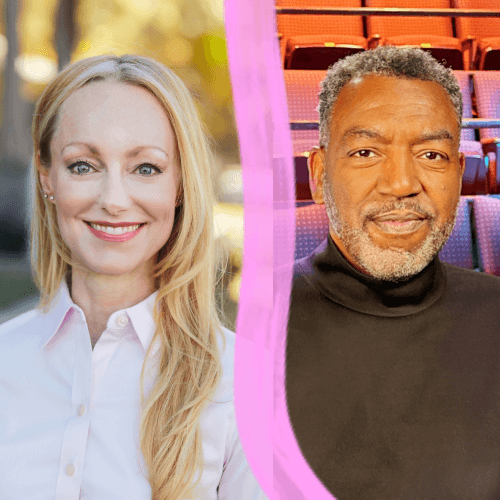
Follow our guests and hosts
Guests
- Russell Andrews @A.RussellAndrews
- Sheri Strahl @SheriStrahl
- ALS Network @YourALSNetwork
Hosts
- Dr. Daniel Correa @NeuroDrCorrea
- Dr. Katy Peters @KatyPetersMDPhD
BrainHealth.com
- X: @BrainHealth_AAN
- Instagram: @BrainHealth_AAN
- Facebook: BrainHealthAAN
Episode transcript part 1
Dr. Correa:
From the American Academy of Neurology, I'm Dr. Daniel Correa.
Dr. Peters:
And I am Dr. Katy Peters, and this is the Brain Health Podcast.
Dr. Correa:
Welcome back to the Brain Health Podcast. Now, we're getting into this fall. We've been talking about that transition in some of our past episodes. But Katy, I'm wondering, what are some of your top five favorite fall things or activities?
Dr. Peters:
I just love the fall. I love autumn. I love everything about it. Definitely apple picking is up there. I don't think raking leaves count, but-
Dr. Correa:
Yeah, I'm not sure a lot of people love that part.
Dr. Peters:
Yeah, I think that's just a chore. That's not a fall activity.
Dr. Correa:
I mean, when I was growing up, we'd rake up leaves, make big piles and hop in them. That was fun. That's a fun memory.
Dr. Peters:
Yeah, that is. I do remember that too. I do remember that too. That's a lot of fun. And decorating the house for Halloween and dressing up for Halloween. I already went to a "murder mystery" party that we had to dress up at, which is a lot of fun. It was a lot of fun. And then I learned from my good friend Monica in Texas, she's a historian about setting up the day DÃa Las Mortos-
Dr. Correa:
DÃa de los Muertos, yeah.
Dr. Peters:
... altar with photos and candles and food and water and marigolds, which are the important flower to honor our loved ones that have passed. And one year, my friend Monica, she's a history professor and she taught us all about this. We actually did a Zoom, I guess a little history lesson and it's now one of my favorite things to do. So what's on your list, Daniel?
Dr. Correa:
That's nice. I might think about incorporating that into how I honor some of my loved ones, yeah. For me, it's definitely that cooler weather transition, a break from that summer humidity, getting outside to hike and explore and see the changing leaves. And sometimes that hiking gets a little bit more fast and fluid with some fall season running. For me too, also the fall is always fun because of course it's also my wife's and my birthdays in October and September. So that's a fun time to celebrate the beginning of that transition. For me, one of the best things in the fall is that Thanksgiving and the food and activities to look forward to. I mean, I think we bundle in some work and other things between all the fall and winter holidays as we make these transitions.
Dr. Peters:
I know you always have Thanksgiving food on your mind. That's so weird. My birthday's in September and my husband's is in October. So I think that's very interesting. Very interesting.
Dr. Correa:
So one of the other fun things in the fall is we often are looking at what different things are coming out, plays and performances. We're looking forward to some dance performances here in New York City. And today we're featuring a stage and TV actor, actors, Russell Andrews, Russell's fiance, Erica Tazel, and also a representative from the ALS Network, Sheri Strahl. And they'll be talking about Russell's experience with his ALS diagnosis, the family impact, and how they've worked with the ALS Network for advocacy and awareness. And coming to this topic and honoring and noting some of the community members and our past guests, I wanted to note an honor for the ALS community that we mention in this interview and in past interviews, Brooke Eby. And as many in the community know, she has sadly passed. Our thoughts are with all those who held her close and I hope her energy, smile, and presence will always bring us joy. Maybe and hopefully all of us in the community, you and I, Katy together also can help carry the efforts to increase awareness for ALS.
Today we have a whole group and team together to discuss with us and connect on ways ALS impacts our community. We're joined by stage, film and TV actor, director, producer Russell Andrews, who is living with ALS and has spoken openly about changes in speech, independence, access to care. The decision to share his experience publicly has been a big impact for many, and he brings an important perspective on identity, communication and continuing forward with purpose. We're also joined by his fiance, Erica Tazel, who's a fellow advocate, along with Sheri Strahl, a ALS advocate, community leader and president and CEO of the ALS Network. She has been working on focusing on urgency, equity, and collaboration along with ensuring that people affected by ALS help shape the future of research and care. Thank you all so much for joining us.
Erica Tazel:
Thank you.
Russell Andrews:
Thank you. Good morning.
Dr. Correa:
Now, Russell, I wanted to start before all this. So before things changed and you were having some of these challenges, how would you introduce yourself and how do you see yourself and your identity?
Russell Andrews:
I was and still am a father, first and foremost. It is the biggest accomplishment of my life. It is the most consistent thing of my life. And it is as much as anything of the reasons that I'm speaking to you today. I've been fortunate to have a career in entertainment. They have also been with me since then. As they were born, they were in dressing rooms under the table, on the table, on the stage, in the audience their entire lives. I always include them in everything I do and say. So if I bring them up, them being my daughter Anya and my son Kai, if I bring them up again, it is because they are truly that important to me.
Prior to this, I didn't know. Things just began happening that we got a sense of during COVID mostly, but it had been years prior. And my fingers and my neck, I was having these things, I swear I though I was getting pinched nerves two or three times a day, but I didn't know what they were and they were coming so frequently. I'd had a severe head and neck injury in college playing football and throughout the therapies and all the physical therapies and all the other things. And over the years, we tried to take care of it, but I thought that that had gone away. But during COVID, it was interesting. The reason I thought I had a stroke is because of the pressure. I was at that point a single dad. I had both the kids home from New York for school and we were trying to do it all.
Dr. Correa:
As many people were.
Russell Andrews:
Yeah. And in our business, well, COVID hit everyone. I only speak from my chair as an actor. We couldn't work at all. Roughly three years and no work because we interface almost always. So that was gone. And then afterwards there were back to back strikes. So it was about three and a half, roughly three and a half, four years of no work. So the insurance was gone. I lost it. We have to qualify every year through our work. And regardless of what your station is in the business, you still have to qualify. Well, I'd lost it and hadn't gone. And so finally back to back jobs, I'm back in the system. I have the insurance, new doctors. And the process of elimination started with my primary care, Dr. Akbarshani.
She noticed the speech and other things and my movement and what have you within about 15 minutes and she said to me, "I think we need to get you to a neurologist." Well, then you know appointments can be three to six months out. She got it done in a few days. I was able to get to a neurologist at Caesars. We did the process of elimination of everything possible, no real white matter on the brain, so no stroke, this, that and the other. We did the final test... I jumped a bit. But we did the final test, the nerve test, and I sat there and she just was very calm, very kind. She said, "Well, Russell, it is what we think it is. It is ALS." And I said over and over how I felt, but even now saying it, there were no words. It was loud and quiet all at the same time. So my immediate question was, okay, so... Oh, I had no idea what ALS was.
Being old school jock, I knew about Lou Gehrig, but I didn't know in particular. And so I said, "So what am I looking at? Five months, five years?" And she said, "Well, we don't know." I would've preferred... She could have said five hours, at least I know. The I don't know part was what got me because immediately I thought of my kids. I thought of Erica. I thought, "Okay, where do we go from here and what do I do?" And she immediately doing her professional thing, but also trying to be sensitive as she saw the news was a little overwhelming. And one thing led to another, the resources and the help that would be available to me and that brought me to sharing an ALS Network. It all happened within a day of the diagnosis. Before then, like now I'm happy. I'm not angry. I am a little concerned if not afraid about tomorrow, but I'm genuinely a happy person and I am now.
I don't know if I am living my life differently. I've always been an advocate for so many things. I share what I have with everyone. We volunteer, my kids do. So my life hadn't changed other than there are some things that are a lot more beautiful, if you will. And I have a lot more patience, but I think I also have more of an open heart and more tolerance for things. And I look forward to every day, even though it is the unknown. I'm pretty much the same guy.
Dr. Correa:
Yeah. And Erica, we introduced you earlier as Russell's fiance and now also a fellow advocate. We kind of buried a little bit of the lead, or I'll say you buried it for us because I know that many of us, including myself, have enjoyed seeing you on various TV shows Justified and The Good Fight, but you've been through this alongside with Russell at various different stages. Did you see yourself before all this and has it changed? Because the family member or someone sitting there alongside with someone finding out more information about this diagnosis is a space that many people can relate to.
Erica Tazel:
Yeah. I don't know that I see myself differently. Before we got the diagnosis, I was a big cheerleader alongside Anya and Kai. We all have our set of pom-poms as they were. And after I found out, I was actually out of the country when he was technically diagnosed and I got back the next day. And I guess I'm that phone call. There are things that stress me out and freak me out when I hear it, but things like this, I'm just calm under pressure or I didn't get upset. I probably should have been, but I wasn't. And my immediate need was to affirm that I wasn't going anywhere, that we didn't know what this would look like, how it would be, but I was absolutely not going to run away from this and that he and Anya and Kai would not be navigating this without me.
And so that's something that has always been present, ALS or not. And we always sort of encourage each other. There's a lot of tough love here sometimes even before the diagnosis, but certainly now. So to answer that question, I feel like I'm sort of the same. ALS is just sort of... The diagnosis itself is revealing, I guess, who we all really are, and what we've learned is that who we have always been is the same person pre-diagnosis and after to him and to each other.
Dr. Correa:
And Russell, you were talking about some of that beginning of when you were noticing these changes in your speech, some of the muscle changes like you had nerve compressions or muscle twitching and dropping things. And when those things became connected as you worked through this process of the diagnosis and received the information, if you could think back to those initial three months or 90 days, for someone else who's receiving this information and diagnosis, what do you think would be important for them to think about in that first week, the first month and the first three months from your experience?
Russell Andrews:
That's a very good question because I know it affects all of us differently. And I was introduced to Brandon who was with the ALS Network as well. And we talked through some things about, again, what was available to me. And I'm giving you all of that for this reason. I didn't know what to do. I didn't know what to say. I didn't know in what direction to go. However, what I did know via my first conversations and meetings with the Cedars team, which we call the marathon appointments-
Erica Tazel:
Medical marathon.
Russell Andrews:
The medical marathon. ... is stay off the internet because everyone has an opinion. And I did. I didn't want to know. I did hold the information for almost three months because my kids were in New York. I think Anya was still in Ghana as well. And I did not want to share that via phone or Zoom or text or whatever. So in the first three months, those were the moments I mostly felt alone. The alone wasn't... But that actually wasn't the fact. I was afraid. I was afraid of the unknown. And I think we all are because while staying off the internet, I did realize that I'm about to walk into something that I could not have prepared myself for in life. And my fear was how I would appear. My fear was how would I function? My fear was about being "the breadwinner" still.
My kids were graduating and my son was... And they're still young and they still come to me for so much, and conversely, I go to them for so much, but now I'm asking them to do something totally off the mark, to give up a certain aspect of their life to do this. I never wanted that for them, but who sees that? Who knows if that's coming? So I think being able to talk about it, I won't say it changed everything, but it helped because it took some of that light I thought I was walking under as this specimen or this victim. It took it away and it gave me... It's a cliche to say I became more empowered, but I became more in control of my thoughts, even though the next 24 hours day to day was still rather confusing. But the conversation of advocacy came up and I thought I was scared before. I was terrified when that came up. What would I say?
Dr. Correa:
I wanted to first before... I want to of course come to the question of advocacy, but also come back to that point of really having a community to talk to about your experience and your concerns. And that sounds like it has been so helpful and essential, and I can relate a lot to some of your describing both in terms of not wanting to put that burden on others, and then you talked about delaying a little bit about sharing this with your kids. So if I can be a bit provocative or step into that tough love, because thinking of myself as a son, how was it when you actually then sit and talked with your kids about it and they were aware of that delay and the time that you spent alone? How was that part of the conversation? How did that go?
Russell Andrews:
During the COVID months, they heard it. Again, I thought it was a stroke. I thought I was tired. So I gave you that brief setup to say, I think they sensed something, but they didn't know. And everyone went to Houston, which is my home. I took them home.
Erica Tazel:
For Thanksgiving.
Russell Andrews:
For Thanksgiving, forgive me, to be with my family. And it wasn't a Cosby Show moment, but it was something I needed to tell everyone. My kids had never been to Houston collectively to see my family. So it was a moment for everyone. And it was difficult because whether it's in my imagination or real, I'm a hero to my kids and vice versa. And so I had this immediate thought of being inadequate and how do we move forward and what are they going to do? And it was difficult because I didn't have an answer. It'd be different if I said, "Okay, dad broke his leg. It's going to be six weeks." But this was gigantic because none of us knew what it was. My nephew was a paramedic in the Navy, so he had a sense of what was happening, but looking at them and how they looked at me and what they were thinking, and they're such really, really smart, compassionate kids. They didn't lose it, if you will.
They went into the mode of, okay, what are we going to do for dad? And so that became even heavier. We all kept it together emotionally to whatever degree we could, but I saw them go into a mode or a position, if you will, that I was proud of in the aftermath because I said, "You know what? Those are the two kids that I raised." They were not hysterical. They were concerned. Daniel, I know in their quiet moments, there's no telling what they think or feel, but they didn't show me then and even up to now don't really show it. So I really go with what they feel. I have my own thing, but I go with what they feel. So sharing with them was difficult, but what they showed me, I won't say it lifted me, but I was a little more comfortable and at ease than I was five minutes before telling them because they are product of their environment and they showed me something that I had hoped for but had no idea when I would see it.
Dr. Correa:
And I'm sure they and all of your family appreciated being there with you to share and to talk about in this, but I'm wondering if in reflection, either you or your kids thought they would've wanted to talk about with this on the phone, even though earlier and known earlier, even if it wasn't a perfect setting.
Russell Andrews:
They would, and they alluded to it and it was, should I say unfair? Maybe, but that was me going into the overprotective mode.
Dr. Correa:
Yeah, there's no perfect way.
Russell Andrews:
Yeah. Right? I'm thinking I'm sparing them not knowing that fortitude, that strength that they had. And so it was said to me, "You could have called or said something," but looking back on it, I think I'd do it the same way because again, everyone, even your parents, everyone thinks that their children are wonderful. Everyone thinks their children are great as they should. I have a special two people and I wanted to do what I thought was fair, but I wasn't giving myself credit for supplying them with that foundation to be able to handle most things. And maybe I'd do it the same way again, but who knows? I have so much respect for how they handled that. And even now, that's a very good question now because I say all that and then I realize that they can handle it. So yeah, I'm a better person.
Dr. Correa:
To have that deep and radical confidence in our families is important.
Erica Tazel:
Well, to your point too about community, there's also family and the choice to get everybody in one room. And I stayed here in LA to let them have that moment to know that he doesn't have to hide from them, that his big brother, his sister-in-law, his niece and his nephew, the great nephews who are good for hugs and kisses, everybody knows. And for me, it was a relief because I was the only person who knew for two and a half, three months. And I shared recently that I didn't speak to Anya and Kai on the phone because they're very discerning people. I would communicate by text, but I didn't... Because I knew that he absolutely wanted them not to find out over the phone, for example, because where are they when they take that call?
So there's the greater community like you and people like Sheri, but there's also that of the family. And because the kids hadn't spent a lot of time in Houston to also see that they have cousins and an uncle and extended family that will also be here for them as well outside of their personal friends and me and whatever. So those tiers of community are very, very important in terms of support emotionally and mentally, I would imagine in this shoe. Yeah.
Dr. Correa:
And earlier I introduced... And for our listeners, we're doing this episode also in partnership with the ALS Network, and I had introduced Sheri who's also joining us. And Russell, you were talking about how these first 90 days and each person's experience can be so different and how the community of information and support is so essential. So Sheri, as a part of the ALS Network being one of the many various resources that community members can get information and the support, I'm wondering your thoughts of the variety of experiences and what might be really essential in those first 90 days and to speak to about the communities of family and the broader ALS community.
Sheri Strahl:
It's an incredible privilege for sure to work with people like Russell and Erica and to have the great honor of being in the close circles of families who are navigating this disease. And Russell is right. It's different for everyone. I think that one of the ways we approach our families who are navigating a new diagnosis is to quite frankly just meet them where they are. And for some, that means a lot of... I want to know as much as you can tell me, give me the download, tell me all of the things, all of the resources, all of the people. And for others, it's a very overwhelming moment, understandably, and less information is more. So we spend time sitting quietly in rooms with people. We share tears with families. We share laughter with families. The resilience of the human spirit is quite beautiful and frankly, beyond the boundaries that I thought before I was working with ALS families.
But it's really about... If the question is what would I advise families navigating a new diagnosis, it would be to listen to their own hearts and minds and souls and to know that it's completely and totally okay to walk that journey To take that journey in whatever way is right for that family. And there's no one right way. If you're open to it, lean into the resources. I know at ALS Network and Russell and Erica have gotten to know us well. We are in it. We are committed completely. I feel like this is my life's work and our staff, it's very similar, deeply mission-driven. So there's a lot of love, support, connection and practical resources as well if you're someone who wants to lean into what's out there.
Dr. Correa:
And we can hear some of your furry family there joining us.
Erica Tazel:
She's co-signing what Sheri has said.
Dr. Correa:
Yeah. No, it's no problem. Don't let that even phase you. I got my own little ones at home. And Sheri, for a variety of different patient advocacy organizations, and I've heard sometimes from families that they'll reach out when they need help or when there's a challenge or problem or something that they don't know, but maybe why should an individual or their family consider contacting one of the ALS organizations before they believe they need help?
Sheri Strahl:
Yeah, I think that there's so many aspects of dealing with ALS. An easy example is just benefits, navigating the benefits landscape. We know this healthcare system is incredibly complex and the timing and the order with which those things are navigated often makes a big difference. So just to be ahead of how do you get equipped there, it can take a long time to get a piece of equipment that's been prescribed. So sometimes a patient advocacy organization like ALS Network can start to help folks get ahead of that, see that, okay, you don't need this now, but you might need this in two to three months and it can take three to five months to get it. So what do you think about a conversation with your neurologist or your care team to start getting this moving? So it can really help smooth that ALS journey in ways that families may not even be appropriately may not even be aware of in the moment.
Not to mention the incredible community. We have an online Slack community that was created by a person living with ALS, beloved. Her name is Brooke Eby. It's called ALS Together. And a lot of people living with ALS eventually may find it difficult to be out and about and to have opportunities for social interaction and social connectedness. And ALS Together is one example of a beautiful online... You don't have to go anywhere. It works with eye gaze and people can find each other and laugh and joke, share stories, share wins, share challenges. So that's another reason to get connected in is to also find community. Connection groups can be incredible. There are lots of ways to be a part of a community of very special people who are all unfortunately part of the same club and fortunately part of the same club because it's a beautiful camaraderie.
Dr. Correa:
And for our listeners, some of you may recall, and if not, and you want to hear some more about Brooke Eby's story, we've interviewed her before with our podcast so you can look back at past episodes and she's shared her story through many of the ALS organizations. So there's a whole variety of voices to hear from. And Russell, you've joined in this voice of sharing your story. And as you were talking about this question of stepping into that advocacy role within the community, how that itself was terrifying. How have you come to that and opening that side of yourself?
Russell Andrews:
It's interesting because it was without calling names, Brandon, it was you don't have to, but you should consider thinking about advocacy. Again, I was terrified and my fear was because... It was more ego than anything, Daniel, to be honest. What would I say to someone who is so much further along in their journey than... I mean, I'm walking into a room, difficulty of speech being what it is. I'm physically walking in, and seeing people and families in wheelchairs and the breathing apparatus. And I didn't know how do you speak to them? What do I say? Why would it matter? And I come to find out that while everyone has their feelings, I have learned that I was the only one that was afraid. They weren't, and they were more encouraging than I was afraid. And so every moment became different.
I met Sheri at the gala back in January, it seems like 20 years ago, but it was just in January. Everyone was so warm and receptive and I didn't walk into a room or a family of despondent people who were just kind of felt like they were trudging through the mud. It was not that at all. Everyone that was there, whether they were in their chairs or walking or greeting or whatever, everyone knew the assignment. I walked into that, but I didn't walk in as an advocate. He just wanted me to see what it was and to see not if I could do it, but just to see what the community was. We were there after about 30, 45 minutes. I was in.
Erica Tazel:
If that, yeah.
Russell Andrews:
If that. I was in, because again, my life is service. It always has been. And I felt like, you know what? If I'm going to take this journey, take this walk, I want to do it being active, being involved. And every 30 minutes, 10 minutes, as the evening went along, I realized I still don't know what's going to happen, but if it's going to happen, I wanted to be part of this and this family. And so I committed. I committed. I didn't know I would be speaking publicly. Being in the business we're in, we get to hide on stage, but this was different. But the support and the encouragement has been incredible and the gift of meeting people. It's amazing. Things aren't ever really as bad as you think they are. They cannot be as good as you think they are, but this has been illuminating, yeah, but so humbling.
I think I said one time, I've always been in a situation where I've wanted to do more, and more has shown itself. And this is one of those that it is a not be careful what you ask for, but when your name is called, step up. And I am just as proud as I can be to know everyone, to be involved. And I see things coming. I can feel them. I can see them in my daily physical life, but it's okay. It's okay. I communicate with Sheri. I try to once a week or so, Cheryl and Eric, just to kind of tap in to see where we are. And I'm probably more honored to be here than anything, giving voice to my fears, but also giving peace to my family that we are all in good hands.
Dr. Correa:
Thank you, Russell, Erica and Sheri. We can't wait to hear more about this journey in our part two, so make sure to check out our following episode.
Wait, don't let this conversation stop here. Follow us at AAN Brain Health on Facebook, Instagram, and X to keep up with the latest science and brain health tips. And if you find a great story or other posts about brain health that you want to share on your social media, send it to our team at AAN Brain Health. So Russell and Erica really have done such an amazing job opening up their personal and their family's experience with ALS. And we wanted to continue some more discussion about ALS, the ALS community and the ALS Network with Sheri. So Sheri, what helps a person move from receiving an ALS diagnosis to becoming an advocate without making them feel responsible for speaking for everyone living with ALS?
Sheri Strahl:
Yeah, it's such a personal choice, and I find that you can kind of sense when somebody's looking for a different way to be involved. And oftentimes I will just say to family members, "As you figure out what this means to you and how you may or may not want to be involved in the larger ALS ecosystem, I'm here to talk about that with you." And just planting the seed that there are ways to move the field forward, and also if that's not your jam, that is also totally cool. So then when people do find that, yes, I want to lock in, I want to sublimate this, I have time, I have the energy, I have the resources, it's a fit for my interests, then it becomes about the ALS universe, which makes it really... It's funny because it is personal. Part of it is asking someone to share their personal story, but also they're not the only story.
Russell is sharing his story, Erica is sharing her story as Russell's caregiver, and others are joining them. And it's a collective sort of tapestry of voices. So I think that helps alleviate some of that responsibility to represent the entire ALS as one person.
Dr. Correa:
Yeah, absolutely. As people think about it, individuals or family members and even advocacy organizations themselves, what should those individuals or the organizations think about to help make participation sustainable for those who might have limited mobility, speech, energy or health, whether it's ALS or many other neurologic conditions?
Sheri Strahl:
A key to this effort is really understanding that we're all meeting each other wherever we're at. And what there may be energy for at one time may not be there later. And to just be flexible around that, Russell often says, "Until I can't, until I can't." And I think that's where we lean in with folks recognizing we're not getting married there. This is something you come in, you do what you can when you can. And part of the work then on the patient advocacy organizations is we're always meeting new people and bringing them into this work so that as others want a break or need a break, there isn't that pressure on them that makes it feel like that's not okay. It's totally okay. In fact, we encourage that and sometimes we even say to folks, we give them permission like, "Hey, you're doing a lot. Just know. You can turn down the volume. Just say the word. We're there."
Dr. Correa:
That's good. And a little bit earlier in our discussion, you described also the community research committee and made up of people living with ALS and current and former caregivers. So what do you foresee as some of the decisions that that group should influence from choosing research priorities or study designs? What do you see as their key role in really research moving forward in a better way?
Sheri Strahl:
Yeah, so we train our community research committee members up and we don't expect them to be ALS scientists. So we're really leaning into our community research committee on what's important, on what has the right sense of urgency, on where is the potential impact and alignment with what's important to the community. In our research program, the final funding decisions are made by the scientists and the community research committee likes that. They don't want that pressure of feeling like now they have to become pseudo PhDs. And we also are really careful to make sure it's not performative, that this isn't token-level participation.
And it was very cool because just we're in our second year with this committee and last year we had two projects that came back with differing opinions. And so we took the community research committee feedback back to the scientists and there was one project where the scientific committee said, "Okay, we hear that. We agree. We see that perspective. We're deprioritizing this." And then the other one, the scientists said, "We hear that, but the potential impact on the field, the exponential way this could move the field forward trumps that. It's too important for us not to do this." So it was very cool to see it play out in real time like, oh, it's working. It's working. They're pushing on each other in this dialogue.
Dr. Correa:
Now I've seen this in a few different areas. So I'd allow you to give me the opportunity to see, is this unique or has it kind of been based off of really efforts in other areas? And I think we have listeners across many neurologic conditions. So is this an effort that we're seeing in other areas and what kind of examples have you seen?
Sheri Strahl:
Yeah, I think that I can speak for ALS Network first and then speak to the ecosystem. Our ethos is to be buy-in for the community. And you can see that in our board composition, you can see that in our committee structure. So it goes way back to early disability rights activists who way back when decades and decades ago came out and said, "Look, nothing for us without us." So that ethos I think has resonated. I know it has resonated with us for, we're almost 37 years old, founded grassroots by the patient community. And then that starts to become sort of immersed across all of the different mission pillars that we're pursuing. I think similarly, that same sort of civil rights movement of our differently-abled communities decades ago, I think it's impacted other parts of the health access and health equity world.
So it's very rewarding to see that while we're proud to be leading in our own way on this front, we definitely aren't alone. And we're seeing changes at the FDA, we're seeing changes in how pharmaceutical companies and biotechs are designing trials. There's a lot more appreciation of how critical it is to involve the ALS community in ways that are meaningful and not just checking a box. And it's very rewarding to partner with these companies and organizations that are thinking that way.
Dr. Correa:
Yeah. And so essential. We've seen unfortunately too many things fail because really we've later went back and found out that some of the aspects that could have been addressed by community input really wasn't thought about in terms of how it's going to make it out to community or ways whether it actually matters to the community. So I'm so glad to see this progress. Now, Russell also mentioned, and we talked about voice banking and speech-generating devices. There's been a history of eye gaze symptoms and now brain computer interface is being developed. How can the ALS community offer early information without creating a false hope or making families feel that experimental technology is required for good care and good quality of life?
Sheri Strahl:
Yeah, I think that the thing that comes to mind is the first place to really go with that is transparency. And we're really careful to be very matter of fact. We're really careful about language that could be interpreted as hype and just being very realistic and pragmatic around all of these things. Of course, being sensitive too to the emotional, spiritual, existential aspects of living with an ALS diagnosis, but it really is just leading with true, real, factual information and then empowering people to make informed choices. And for some, we have some of our constituents who are in the brain computer interface trials and that's a fit for them. They're into it, they love it, they're curious about it, and it's just perfect. It's perfect for their sensibility. And for others, that's not up their alley. They're not really that interested in it, not interested in the surgery and other aspects of that experience.
And again, it's all personal. We don't know yet what the best practice is related to a brain computer interface for ALS. And we know more about voice banking and about using alternative communication equipment. That's a more traveled pathway. And again, really helping our folks to understand how to plan for that and that if it is something that they're going to want to do, and most folks do want a voice bank to start that early and what that will take. Now it's getting a lot easier because we're all recording our voices in so many different ways that people are finding when they need to provide voice banking samples. There are a lot of things they can already grab, voicemails, recorded voicemails that are saved. So for some of our folks who even come in a little bit late to voice banking, oftentimes there are lots of ways to get voice samples and to create that voice.
Dr. Correa:
And that's good and really essential. And as a part of that transparency, the ALS Network has information about network communication devices, voice banking. So we have so many amazing topics that we brought up in this discussion with Russell, Eric, and you, Sheri, that we're actually doing this as a part one and two episodes. And so we'll include some information in the show notes between the two parts and links to ALS Network information. And for the medical expert and science expert of our second episode, when we get into more of Russell and Erica's discussion about their thoughts on voice banking, we'll be following that up with a discussion with Dr. Leigh Hochberg, who's part of that brain computer interface. So we can also tell everybody realistically where we are, but also some amazing news and interesting things about this science.
Now, Russell also brought about information gaps and mistrust in the community. So as we wrapped up, I wanted to get a sense from you, how do we move towards more equitable access towards both ALS advocacy, these different technologies and care across the geography in the United States, across many different communities, employment and disability levels? We have so many challenges. Where do you think we can start and/or join the advocacy to help bridge some of those gaps?
Sheri Strahl:
Yeah, you said it. I mean, really that is going to take advocacy. We need as many registered advocates as possible. We do through alsnetwork.org. There are certainly opportunities for people to just register to become an advocate, and then we will keep them posted on what the action alerts are that are meaningful to them and their community. We also have that community advocacy committee, which is the parallels of the community research committee, and we work really hard to get the input of the community. There's a survey that we put out nationwide to the community to help identify and prioritize our legislative focus for each year. So it's really about triage in many ways. And for folks to register to be an advocate, there's so many ways to be involved. There's so much that we need to do.
Dr. Correa:
And Sheri, as we wrap up, if you could change one thing about a person with ALS and their initial experience with starting to consider an alternative communication device or the way they interact with all this process, what can we do or improve for them and their family in that process?
Sheri Strahl:
Yeah. If we're speaking specifically about communication, start early. Start playing with all of the different equipment early, start setting it up early, start practicing with an eye gaze early. And then if and when there comes a day when that's needed or that's the priority way someone's going to communicate, you've already overcome that learning curve sort of in the background of the day in, day out, which I think just makes that all go a bit more smoothly.
And then the other thing I'm just going to throw out there is we recently lost our beloved Brooke Eby, who is a well-known and fierce ALS advocate, and she created an online ALS community called ALS Together, and that community continues in her memory now. And there are a lot of different channels within that community that cover topics like this with people in the community talking to each other. And these are folks from all over the world. So there is an alternative communication channel. There's a channel about feeding tubes. There's a channel about research. So that's another way, just thinking back to your point about access to emerging information. I think about Brooke's community, ALS Together, and that's a great place to be to learn from each other and check, "Hey, what have you heard about this?"
Dr. Correa:
I can't think of a better place to leave off our listeners and those listening in terms of Brooke's memory, us carrying forward her efforts and joy. So please make sure to check out our show notes. Please go and look at the ALS Network for more information and resources along with ALS Together in memory of Brooke. Thank you so much, Sheri, for joining us alongside Russell and Eric in this discussion today.
Sheri Strahl:
It's been a pleasure. Thank you so much for all the good work that you do.
Dr. Peters:
Thank you for joining us today on the Brain Health Podcast. Follow and subscribe so you don't miss our weekly episodes.
Dr. Correa:
Also, for each episode, you can find out how to connect with our team and our guests along with great resources in our show notes. We love it when we hear your ideas or questions, and you can send these in by email to podcast@brainhealth.com or leave us a message at 612-928-6206. I'm Dr. Daniel Correa, connecting with you from New York City, and you can find me on social media, @neurodrcorrea.
Dr. Peters:
And I am Dr. Katy Peters, joining you from Durham, North Carolina and online, @katypetersmdphd.
Dr. Correa:
But most importantly, thank you and all of our community members for letting us be part of your brain health journey. You make this podcast what it is, and by listening each week, you're helping us promote brain health for all.
Dr. Peters:
Before you start the next episode, we would appreciate it if you would rate us five stars and leave a review. That helps more people find us. And don't forget our website, brainhealth.com. Subscribe to receive our newsletters and be a bigger part of our growing community. See you next week.
Episode transcript part 2
Dr. Correa:
From the American Academy of Neurology, I'm Dr. Daniel Correa.
Dr. Peters:
And I am Dr. Katy Peters, and this is the Brain Health Podcast.
Dr. Correa:
Welcome back to the Brain Health Podcast. So we've talked about it. I get hungry. I love food. I like to cook. Sometimes I think I'm a home cook with a work problem. And so I'm thinking about what's going to be on my Thanksgiving table-
Dr. Peters:
Of course you are.
Dr. Correa:
... and the activities we're going to do. So I mean, what are you thinking about, Katy? Or maybe you're just like, "You know what? I let somebody else handle that."
Dr. Peters:
I always know you're thinking about Thanksgiving. I think you started thinking about it last November. I know we had this discussion and I feel like you sneak Thanksgiving in as many times as you can on the podcast. We should just have a separate podcast called Daniel's Thanksgiving. No, I'm just joking.
Dr. Correa:
Hey, it's a reason to be grateful.
Dr. Peters:
I know you're very grateful. I'm thankful for you. I'm thankful very much. I'm thankful that you like Thanksgiving. But I did order my turkey from a local farm because we always get it from a farm that is free range for the turkeys. But I feel a little guilty this year because we go to a different farm that has really good veggies and flowers and they have really good ice cream and they have these two pet turkeys that are now running around the farm. And I've gotten attached to seeing the turkeys and talking to the turkeys and it's just so cute. So I may have to go out for a go turkey and I don't know, what's going to be on your table?
Dr. Correa:
Yeah. I mean, we'd love to look for a variety. I like to season the turkey with both butter and then garlic and some of the seasoning that we use for basically a roast pig or [inaudible 00:02:04] lechon in the Caribbean. So it ends up being a little bit like a lechon turkey.
Dr. Peters:
Oh wow.
Dr. Correa:
And we always look for a variety of other things. I'm also super into the sauces. And I think the key thing for us always is just after eating all that food, finding a way to stay comfortable and avoid that slump. And so we like to take a family walk or a bike ride together, be outside and breathe some fresh air after all that food. So we'll look forward to that. And just starting now to think of if we're going to add something new or slightly different to the menu or just keep going back to the classics that we love every time, whether that's creamed onions, mac and cheese, and the stuffing [inaudible 00:02:55] in variety. I know it's so hard.
Dr. Peters:
And you've got a list. You've got a list.
Dr. Correa:
The hard part is limiting it. It's like how do we invite 10 other people to make sure we can eat all that food? And this week, we're continuing with part two of our episode with Russell Andrews. Russell and Sheri help us think about how people living with ALS could shape research and how families can access communication support responsibly and think about voice banking and other possible technologies. And in this discussion today, we'll also be talking to a science and medical expert looking at one of the most rapidly developing areas of that research. And that's the brain computer interface and other tools for voice modulation, voice banking, and integration of voice for across different neurologic conditions, including ALS and other people who communicate, who would like to communicate when their speech or movement is otherwise severely impaired. So I hope you enjoy this discussion.
So glad to welcome back Russell, Erica, and Sheri for the continuation of this discussion and make sure to stay through to our discussion with our science and medical expert where we really get into interesting discussions about brain computer interfaces and where that science is for all of us. You talked about several different ways of your voice as an advocate and in yourself and in your own connection with your community and your family and talked about how your voice itself as a physical symptom has changed. So Russell, how do you think this has affected your identity and your sense of your work and how you participate in conversation?
Russell Andrews:
It's interesting because in the beginning I also lost my agent. This is a tough town and we live in the camera and that camera picks up everything. And so she noticed some things that she felt like were not going to help our relationship. I'm trying to be politically correct here.
Erica Tazel:
And this was prior to his diagnosis.
Russell Andrews:
Prior to the diagnosis. I heard, I sensed it, I could feel it as I spoke, and my energy as an actor has always been forward. My speech has been a little rapid. I'm from the South and what have you, but I noticed it slowing down. Cognitively, I've not lost anything. I always laugh when I say that because that's open to interpretation, but I've not lost anything. But it is a challenge speaking because I'm aware of it and I try to edit myself before I say certain things. And I do find myself having to repeat my name because I have to wrap my mouth around all the letters and phrases and what have you. I won't say it's not embarrassing, but it does cause me to be quite insecure at times when I'm in public having to speak, even if it's just at a gathering, not for any speech or anything like that.
But I just go through with it and hope that my passion about that which I'm speaking about comes through. But I do feel a little insecure sometimes when we're out in public and I have to say something. You would think I'd be in another business, but I'm not that person. I don't like to live in the light that we work in. So adding this makes it even worse if I can say that, but I'm getting through it. I'm getting through it and I will until I'm unable to.
Dr. Correa:
Yeah. I mean, it sounds like a very deep and personal challenge and almost just an odd attack to your work and your previous history that this is your expression. So I can feel that.
Russell Andrews:
And what's interesting, I lost that agent, but it's funny the way things are done. But then I got another one who saw it as an asset. And by doing that, one of the jobs I got with him was the show Criminal Minds. And it was an army vet who was having some neurological issues leading a support group. And he pitched to the casting director who I've known for years, who pitched to the producers that Russell is living with ALS. So rather than turning away from hiring, they said, "Okay, would you mind if we gave your character that diagnosis?" And it's a brief scene in the show that's I guess coming up soon, but I said, "Sure." And so everything was geared for, they wrote the line into my dialogue. That was who I was leading this group.
So again, one man's trash. And it has turned out to be an asset to a degree because people kept saying, "Well, you're so brave for doing this." They have no idea. No, I'm not. There's a bigger need. And if I can be part of that, I can put my fears away because they don't have a tremendous ego. I'm not sure if you've heard, but I have a tremendous ego, but it's not as big as my responsibilities. So I can set all that aside to do something and to be part of something that is bigger than me.
Dr. Correa:
In a past episode, an interview with musician John Driskell Hopkins, we previously talked about the use of voice banking and the connection between voice and identity. Sheri, what should families consider and the perspective of different ALS organizations about thinking about the timing, consent, and even preserving choice on things like voice banking?
Sheri Strahl:
Yes. That is another reason why it makes good sense if you're someone who's open to connecting with your local patient advocacy organization to jump right in because there is power in banking your voice early on and the technology is evolving literally every day. There are new apps coming through all the time. It's actually hard to keep up with the development that's happening around voice banking and synthesized voices that actually sound like one's own true voice that can later be used with eye gaze devices. So the technology is incredible. Starting early is wise and partnering with someone who can walk you through the steps makes really good sense. It's spectacular. I remember when we had the first Google voice that sounded like somebody's own voice. And at that moment, this was, I want to say four or five years ago, but don't quote me because time is a blur, it was so transformational. It was an unbelievable development. And now I listen back to it. I'm like, "Oh, that wasn't that great relative to what we have now." So absolutely worthwhile moving into that early.
Dr. Correa:
And do you have support also in helping people think about the respectful use of these voices and communication and helping a person navigate the feelings about maybe their voice being taken away?
Sheri Strahl:
That is really another personal part of the journey and the connection of voice to identity. And then of course, the ease with which real time vocal communication happens is taken for granted by most of us. And as that changes, that is a major quality of life and identity transition for many people. So absolutely doing it, of course, respectfully, carefully, thoughtfully is the only way, the only right way to do it. And also embracing the emotional journey of that too. There is loss and it's very common for people to talk about ALS takes and takes and takes and there's truth to that as it progresses. It is a taker. And that's not only a practical challenge. It's not only about getting the right piece of equipment and recording the right thing at the right time to manage that. It is an emotional, it is a spiritual journey as well. And that all needs, in my humble opinion, to be respected and honored throughout the process.
Dr. Correa:
And you've mentioned that in ways the health system changes and so many needs that need to be addressed across our system that the ALS network and the patient and community voice can be so essential. So before you go, I also see and understand it's essential to have that community's perspective in the creation of research. What do you think are the ways that that voice can help improve the research that's being done?
Sheri Strahl:
There are so many ways that the voice of the community is critical in research. And speaking for myself, one of the early ways we lean in is through our community research committee, which is all people who are either living with ALS or former or current caregivers. What's getting funded? Our scientists may have one idea and the community may prioritize something quite different. And it's been really exciting to watch that in action, to watch the community research committee push on the scientific advisory committee and find the answers there. And then of course we get into clinical trial design as we get further along the pipeline and talk about how things are going to be commercialized and moved to market.
We're really excited to not have so many things have to be administered intrathecally. We love easy administration of therapies and I know our researchers love that too, but to really reinforce some of the values of the community and how to make research truly both equitable and accessible, that's through the voice of the community. That's only going to happen that way. And a lot of the companies, they want that. A lot of our pharmaceutical companies are really open and starting to build their work around formally incorporating the voice of the community. And we're so grateful for that.
Dr. Correa:
Well, Sheri, I know you have to cut off, so sorry that we went through a little rapid fire there for you, but thank you so much for joining us.
Sheri Strahl:
The last thing I'm going to say, Daniel, before I go, is that being able to work with Russell and Erica is such a beautiful thing, and the friendship and the vulnerability and the mutual trust is precious. It's really precious and I'm deeply grateful.
Dr. Correa:
So Russell, we've talked about and you've shared a variety of different ways that could be barriers in the system for getting the support and care that you need. Which barrier has been both hardest for you and the hardest to try to explain and relate to others who have to navigate the system themselves?
Russell Andrews:
I think one of the barriers, not for me, but what I've discovered is information. There is a duality of things happening with my advocacy. To be blunt, there are people of color, Black, Latino, Asian, that also have been diagnosed and are living with ALS and have their family support and what have you. But I'll be particular in my community. Sometimes information, it's not that it's not there, but collectively there is this concern about getting medical help, especially in the experimental aspect, clinical trials and what have you. And I understand that. And I found that to still be even post the Tuskegee experiment and all the others we may or may not know about, I found that to be still in people's mind, a zeitgeist, if you will.
And I know that our faces, we have somewhat of a public appearance, if you will. It helps in terms of presenting our story. And I know that that's part of it. I also know that that's not the only reason we are here, but I think when someone can see that someone in whatever a public position, if you will, they're in are just as normal, just as approachable, at base, just as human as they are, because the disease does not discriminate across culture, class, politics. It does not. And I would say knowing that, again, all of what Sheri just said about the access to information and services and help, if there is an obstacle, it is that. And I think because some people don't pursue it, I think and hope it's out of fear more than any other thing. And if we can take away some of the fear, then I'm okay with that.
Dr. Correa:
And that's a lot about, I hear what you hope that the community hears and receives, people from a variety of different perspectives. Russell and Erica, what do you hope that researchers, clinicians, and policy makers hear differently because of your experience?
Erica Tazel:
I don't know if it's necessarily something that they hear, but something that they experience. There are people who have gone to the Hill, for example, who have spoken. There's a living, breathing human either speaking on behalf of themselves or on behalf of someone that they are taking care of. And I feel like in most things, even in our work, if there is a point of entry for empathy, that will take care of so many things. It will incentivize, it will have a sense of urgency, especially with ALS, that there are so many visible opportunities if that person is designed that way, to step back, put themselves in that person's shoes and ask the question, "If this were me, what would I need? What would I want?" Or even for a loved one.
So I know being present for most of these things that we have been asked to be a part of, if there is any way to tap into, if it's an ounce, a half an ounce of empathy, to touch that, to then zoom out, like our scientists that I spoke with earlier in the week who have the resources who are so close to so many breakthroughs to just give a face, a name and a history and the transition of finding out and where we are today. If they get stuck, if they get frustrated, that maybe perhaps something that Russell said or I said will be like, "Let's keep going." Because again, so many people are so close and a lot of people are so close that have the resources to keep going.
Dr. Correa:
Russell, you've shared before a mantra of until I can't. So what does that mean in ordinary day-to-day life for you?
Russell Andrews:
Daniel, it's starting to show itself in different ways. I want to work until I can't. I want to serve until I can't. I want to be with my family and enjoy what I can about it until I can't. That actual mantra or phrase came up at the end of, I think, my first speech that I gave. And I don't know exactly where it came from as much as I think I was looking forward, not in a bad or negative way, but the time is going to come that I won't be able to walk onto stage, that I won't be able to work in front of the camera on an actual theater stage, which is my life. I love it. But I will do everything I can until I can. But right now, the joy, if you will, there's a gift of advocacy. This one, I'm going to do it until I can't in whatever capacity that is.
And I hope that it means something moving forward. All of the work we're doing as advocates and all of the work that the researchers and scientists and the tech and all the pharmaceutical, all of the work they're doing, they're doing it for people who chances are really high, they will never meet, they will never see. But to know that there are people out there committed to that work and for the greater good, I want to be a part of that as long as I can. And whatever that means, whatever that looks like until I can't.
Erica Tazel:
And then we will continue until we can't.
Russell Andrews:
Yeah. Yeah.
Dr. Correa:
Yeah. So how do you each see this broader idea of brain health and what you can do each day for yourself and your family now?
Russell Andrews:
I had no idea that there were so many things under the umbrella, if you will, of brain health. I did not know. I mean, and how would I? I didn't seek the information, honestly. The little bit that I did know was based on things that I learned after having had my injuries in school, but that was so many years ago and science is so different. It evolves, my God, year to year. Things can change. And I don't know if I'm actually answering your question properly, but to know that, for instance, I'm on Radicava, one of the medications I take. If I'm correct, it was not initially a drug being used for ALS. So when I think about all the discoveries and possibilities and how I am fortunate at this time to have the medical team that saw early diagnosis and to be able to help in that manner, I'm learning so much.
I'm really at times overwhelmed with the information. I don't know how to process it all. And I can't speak logistically as others can about it because I'm learning as I go. But to know that it's being done even when I'm asleep, when it's being done, when we're doing our part as advocates and bringing light and attention to the unseen heroes of this, the doctors, the researchers and so forth, I am comfortable knowing that it might not happen for me, but it's going to happen for someone. One day you're going to walk into your meeting one morning and you'll say, "Team, I got it. It's here in this bottle. We've done it." And it will be worth it. It will be worth it. I know it's going to... Y'all are so close. Y'all are so close. It's going to happen.
Dr. Correa:
And Erica, are there things that you think about for your brain health or as a family now and the face of all this that you try to practice or work on and think of each day?
Erica Tazel:
Yeah. I think it's hard not to, not just brain health, but physical health in general, especially in the role, this ease into this role. Thank you for the slow progression here, that my physical health, be it my brain, be it my heart, be it my feet, my hands, my mobility, because I'm clumsy. I'm a little clumsy. And so in general, just taking care, being super aware of what I eat, the amount of rest that I'm getting or not getting at times and how that affects things. Also, this is my instrument for my work, but in addition to that now I'm probably bigger than that. How is this instrument, how well cared for will this instrument be to support Russell, to be present when his kids have to go somewhere or when I have to go somewhere and they physically too have to be here?
So it's also mine. It's also theirs, Anya specifically, who's here with us to just really take care of us, take care of ourselves. And emotionally for me, that is what is today. What is today? There's some value for me also being present. Yesterday is gone, tomorrow is yet to be, and all we have is today. As I say in the house, everybody's trying to live and we're trying to maintain some quality of life, and whatever and however we get there, gently or toughly, that's the goal. That's ultimately the goal.
Dr. Correa:
And if there was one piece of advice that you could leave with a person or a family that's newly facing an ALS diagnosis, what would you want to tell them?
Russell Andrews:
Again, it's so cliche to say that you are seen, that you are heard. I think for them to know there are people working on their behalf and their work means something to them. And while they don't see you as that individual, they see you as a body of people of need. And there are people who are giving time, they are giving money, they are giving expertise because it means something to them. I'm sporadic. I essentially got hit by lightning. So many of us have, and you wonder why. And it challenges your faith. It challenges your existence, your humanity, all of that. But people are thinking about us and they are doing for us. There are people now finding that extra dollar to donate and that we're not alone. Work is being done. It's going to be a long walk, I know for me, but work is being done. And to know that their thought they've been cared about is important. And also that their voice is important. If they can share their story, if they can share their journey, it helps. It helps. Those with and without a diagnosis, it helps.
Erica Tazel:
I would add something that personally happened when we went to DC. Nikki and Adrian Cantor, who are advocates with ALS network who lost their husband and dad to Eric, what's his name? She gifted Anya and I this amazing little book and it's called The Happiness Project. And so I would say I would share with a person living with ALS and even those that love them every day. It's a little book and it's five years and it has a quote of some sort, but you just log, even if it's in your own journal, something that was happy about the day. Even if it was the cup of coffee that the neighbor brought by or whatever, that I was able to put my own feet on the ground. It doesn't have to be like something monumental. I know for me mentality wise that that has really, really, really helped. And also made me notice or pay attention to so many things that are great and simple that I take for granted every day.
So if there's an opportunity, even if you don't feel like it, if you can find something in every day to be happy about and thankful for, because the road is long. Yeah. It may be long, it may be not, but find those moments of happiness.
Dr. Correa:
And thank you both for sharing this precious time, some of your joy, your voice and story with us, with our listeners. And as Russell said, reach out. The ALS network is there to help connect you with variety of community members to help you navigate needs. Appreciate both of your time and the special time and energy that you've spent with us.
Erica Tazel:
Thank you so much.
Russell Andrews:
Thank you, Daniel.
Erica Tazel:
We appreciate it.
Russell Andrews:
We'll see you again.
Dr. Correa:
If you've been a listener for long enough, you already know that one in two in the US alone is affected by neurologic disease or disorders. That's 180 million people and there's no time to waste in finding better treatments and cures.
Dr. Peters:
Our podcast is powered by the American Academy of Neurology, a global community of neurologists and neuroscience professionals. They've funded cutting edge research for decades, but they can't do it alone.
Dr. Correa:
You can personally support this work through the AAN research program where 100% of your donation goes directly to researchers. You can help drive breakthroughs that bring hope to patients and families. Learn more at brainhealth.com/donate.
So welcome back. And now after that discussion with Russell, Erica, and Sheri, we want to continue the part two of this episode in our discussion with one of our science and medical experts, Dr. Leigh Hochberg is a neurologist, neuroengineer, and the leader of the BrainGate Consortium in its clinical trials. He also directs the Center for Neurotechnology and Neurorecovery at Massachusetts General Hospital and is a professor of engineering at Brown University. He leads research developing neurotechnologies to restore communication and independence for people living with paralysis and neurologic disease. Dr. Hochberg, thank you so much for helping us understand some more about where science is going about the speech and brain computer interfaces. Leigh, thank you so much for joining us.
Dr. Hochberg:
Thank you. It's great to be with you and I look forward to the discussion.
Dr. Correa:
So for listeners who might have heard some about voice banking or augmentative and alternative communication, where's the difference between that and some things that we're talking about implanted devices or brain computer interfaces?
Dr. Hochberg:
Sometimes it's helpful just to start by defining a brain computer interface or a BCI. There's been a lot of interest and growing reporting about BCIs and implantable BCIs in both the medical and the general press over the past few years. And when I think about a BCI, I really think of them all as having three components. And those three components are a sensor, a decoder, and an effector or an assistive technology. And I'll talk about each of those three components for just a moment. So the sensor in a BCI is the device that records brain activity. And that could be a device, an electrode, as it's sometimes referred to as, that sits on top of the head, that sits on the scalp. Some people are familiar with EEG or electroencephalography. Those are scalp-based electrodes that can record signals from inside the brain.
And there's lots of other places that electrodes could be placed as well. They could be placed under the scalp. They could be placed under the skull in the so-called epidural space, which is on top of the dura, which is one of the wrappings or meninges around the brain. They could be placed directly on top of the brain or they could be placed in the brain. And in addition, they could be placed in blood vessels that sit on top of the brain. So as you can imagine, those are all slightly different locations relative to the brain itself, but each of those sensors is capable of recording from different parts of the brain and different richness, if you will, of brain activity.
So that's the sensor and we'll come back to that maybe in a moment. If we are thinking about somebody who's, for example, unable to move their arm or perhaps unable to speak due to a severe speech or motor impairment, we then want to place one of those sensors, perhaps a top part of the brain that is important for the control of voluntary speech. And so we've got a sensor that's now sitting on top, let's for the moment just say on top of the speech part of motor cortex, and it's recording neural activity that's related to either actual speech or the intention to speak. That neural activity, once recorded, that then gets put into what at least on a blackboard or a whiteboard, we might describe as a black box. That is, it's a decoder. At the end of the day, it's ultimately math. And what that math or that computer program does is it takes the neural activity that is associated with the intent to speak and it turns it back into something that could appear, for example, on a computer screen, such as text.
And if it appears on the computer screen as text, then it could also be heard aloud through computer generated speech. And the end of all of that is the effector part. So if today we're talking about restoring speech and restoring communication for people with a neurologic injury or disorder that results in severe speech and motor impairment, so a BCI would record from a part of the brain involved in speech production. It would decode the neural activity related to that intended or attempted speech. And then the output would either be text on a screen that could be read aloud or in other ways of building a BCI, perhaps even directly an output that would sound like that person's own original voice prior to the onset of injury or illness.
Dr. Correa:
So it's processing signal from a structure, in this case, we're thinking about an area of the brain, into outputting text or speech for someone who we're trying to replace speech as opposed to some movement. And I guess then it's different then from some of what we've heard and thought of in terms of voice banking where people are recording really audio that then gets matched with text. And so maybe that output, whether it's written or voice, could later be connected to something that is a banked voice.
Dr. Hochberg:
Yeah, that's exactly right. So once that voice is banked, and today there's really been some amazing advances in voice banking, so that voice that has been banked, which is then being used to hear aloud what, for example, might have been typed on a screen, that voice now sounds more and more like the person themselves before the onset of injury or illness. And just as you said, the typical way that these have been used over the past few years, for example, for somebody who's had ALS, but who still has reasonably good control over their eye gaze, is that person might look at the letters that appear on the screen and dwell on one of those letters and then move to the next letter and spell out a word. And then after spelling out that word, spell out the next word and eventually spell out a sentence, and then look at the button that says play, and upon selecting that button, the voice that would be heard speaking that sentence would, because it's been voice banked, would sound very much like that person did prior in this case to the onset of ALS.
For a brain computer interface, the goal would be to not have to type out each of those letters one letter at a time, but for the person to attempt to speak at their own speed of speech and then for what's heard aloud to be, again, that person's own voice, in this case it's been voice banked, but the neural signals are essentially converted back into something that sounds very much like that person's own voice and therefore like them speaking.
Dr. Correa:
And this might get too a bit complex or existential in a way, but just to try it out and as we're thinking about speech, so is this system decoding attempted speech, imagined speech, or an inner speech or some combination?
Dr. Hochberg:
These systems were built and have been designed, and so far most of the research has been focused on attempted speech. We all have lots of things that we think about saying and we may say most of them, and sometimes we purposefully decide not to say some of them. What we're capturing and what BCIs are really focused on at the moment primarily is capturing that intended speech, the speech that is intended to be output and that would be heard aloud if that person didn't have that underlying impairment of speech. And it turns out that the signals that we can record, particularly from inside the brain that are related to that intended speech, those are the strongest signals that we can decode. They're very clearly associated with, for example, the production of phonemes. So we'll take just a moment to think about the building blocks of words.
In American English, there are 30 odd phonemes or the pieces of each word that when put together in any number of combinations result in all of the words in the English dictionary. So in a first pass, what particularly the implanted brain computer interfaces are doing is to decode the neural activity and to identify which of those phonemes the person is attempting to create as they're intending to say those words. Those phonemes can then be put together into words by identifying which are the most likely phonemes and the order of those phonemes, and therefore the words and the order of those words. And then the output itself is either exactly what was just decoded or a language model, same kind of language model that updates sometimes what is being texted on a cell phone or what's being typed on a laptop. That language model can be applied to that phrase before its output to make it that much more close to what the original phrase was or to perfect it if it wasn't captured correctly the first time.
So that's the usual stream of capturing intended speech or the intended output. Now we and our BrainGate team asked the question just over the past few years, might it also be possible to capture what you just described as inner speech? So first we should take a moment to try to say out loud what we mean by inner speech. And I've asked this question of friends and family members and colleagues now for years, which is, and maybe for all of our listeners today, when you're thinking, do you hear your own voice, or do you hear something that's not your own voice but you recognize as your own thought, or do you hear nothing at all? And most people, if not everybody, is in one of those three groups and everybody who's in one of those three groups can't believe that there's anybody in any of the other two groups.
But it turns out that people, when they're thinking to themselves, different people really have a very different experience of what that is. And at least for the people who either hear a version of their own voice or hear something that they recognize as them thinking, that sensation, if you will, of hearing oneself think, you could think of as inner speech, that somebody who's able-bodied could imagine saying something out loud, but not actually say it out loud and that would be a version of inner speech. So now that we've just defined, as best I can at least, what inner speech is, a question is if we're listening to the part of the brain that's responsible for producing voluntary speech, is there any chance that we could also detect some of that inner speech? There's two reasons why that's important. One reason is that for people with ALS, also for people with brain stem stroke and other neurologic injuries or illnesses, the effort required to try to actually speak can be considerable. That is, it could be effortful to attempt to speak.
So we were interested at a first pass in if we can detect attempted or some version of inner speech, might it actually be easier and less effortful for the person who's using a brain computer interface in order to communicate? And so far, the answer that we've seen, there's some papers published over the past few years, one by Erin Kunz in Cell just last year, is that indeed, although we can't decode as well as we can when somebody is attempting to speak, if our goal is to try to attempt their silent speech or some version of their inner speech, then sometimes we can decode a portion of that and that it could actually be used as the basis for a less effortful brain computer interface so that somebody wouldn't actually have to try to make the movements associated with speech in order to use an implanted BCI. They could just use some version of their own inner speech to then have those words either appear on the screen or be heard aloud.
Now, I think one important component of this is that if we're able, even if not perfectly at the moment, to detect some version of inner speech, we get back to that earlier comment of do we always want everything that we're about to say to actually be heard aloud?
Dr. Correa:
Yeah.
Dr. Hochberg:
I think for many people, the answer to that is no. So the neuroengineering team that's been thinking about this and the neuroscience team realized that what we really want is for the users of implanted BCIs to have complete control over what becomes public, if you will, which really means what appears on the screen or what is heard aloud. And there's a number of ways that we can do that. And Erin and her colleagues at the BrainGate team at Stanford, they thought about giving the participants in the clinical trial a password. And the password would be something that that person would either think or would attempt to say and would have to be a fairly unusual word that the person wouldn't use in probably any other circumstance.
And they decided to use Chitty Chitty Bang Bang as that password, as that attempted speech or silent speech or inner speech password. And by using that, it became possible to really give the user a toggle for whether what was being decoded at any moment would subsequently appear on the screen or not. And I think that switch, if you will, which most importantly is under the control of the user of one of these systems, is one of many steps that we'll be able to take in this field to make sure that the user maintains the privacy of their own information and of course has control over whether whatever's being decoded is output to their friends and family around them or not.
Dr. Correa:
It's so amazing to think through and hear some of the thought process of how this is being developed, all the different components. And I wanted to come to the point now of in terms of a true speech brain computer interface or BCI, where are we with what has changed? What is still experimental? I've seen and read papers about the small demonstrations and some of the work that's been going, but what advances have been most meaningful and what can a person with ALS or another severe neurologic impairment realistically access today or what's coming soon?
Dr. Hochberg:
So today, all of the implantable brain computer interfaces or IBCIs that are being used as speech neuroprosthesis or speech BCIs, these are all currently in clinical trials. They're using what are known as investigational devices. They're research that is ongoing under a permission granted by FDA called an investigational device exemption. And in order for somebody to gain access, if you will, to one of these technologies today, whether it's in our BrainGate pilot clinical trials or other clinical trials, that person would enroll in the clinical trial. And I can talk about some of the success that's been seen so far as part of these clinical trials. And then we can get back to the really important question of how do we get these more accessible and how did these devices ultimately get to market?
So first let's just talk about the status of the demonstrations in the clinical trials. I think most people who have seen the progress made in the past few years in any number of ways, including me, have just been amazed by the speed at which we've gone from the idea of decoding speech and somebody who is unable to speak to actually having examples of somebody with severe dysarthria or anarthria, that is, severe slurring of speech or an inability to have any vocal output for those incredible people who have joined these clinical trials to use these investigational systems in their homes, importantly, for communication.
And what I think has really been an example of the very best of these systems thus far that we've seen reported in peer reviewed literature and the clinical trials has been one of the participants in the BrainGate trials at University of California Davis participant that is referred to by his trial ID, which is T15. And he and his family have also had some wonderful press coverage about the incredible work that he's been doing in the trial. But he is somebody who had a bulbar onset ALS and now whose speech has become so profoundly dysarthric that really it's been only his care partner and his wife who could understand his audible speech. Yet he's been able to use this investigational implanted BrainGate BCI for speaking up to 60 words per minute. He's been using it for Zoom meetings. He's used it to continue in his occupation and thinking about the environment and advancing environmental causes.
And that ability to speak at 60 words per minute, I use the word speak because sometimes I'm at a loss for words, if you will, for what exactly to call this, but he's attempting to speak using the implanted BCI and what is heard audibly is a version of his own speech. And AI created a deep fake for good, if you will, a voice banked version of his own voice. And he's been able to use that not only for having video conference meetings at 60 words per minute, but also to interact with his friends and with his family.
And one of the moments for me that was just so important and of secondary importance to the field, but really as I think of importance for the participant in the study and his family was on the second day of use of this device, the first day of use, the team had given him 50 words that the BCI would have been able to decode. And so the team went to work in the lab the next day and they came back to his home a day later for the second day in the clinical trial and basically gave him the entire vocabulary, an entire dictionary which he would be able to speak from and let him say whatever he wanted.
And the first thing that he said, and this was reported in the New England Journal of Medicine by Card et al. I got to make sure I get the year right. I believe it was either 2023 or 2024 and now I need to fact check myself. The first thing that he said on that day was something like, "Is this thing on?" Which was just a perfectly humorous, exactly the right first thing to say. And then the second thing that we decoded was, "I'm looking for a cheetah." And I remember seeing that and saying, "Well, okay, this is still a new system. There's no way that the second thing that somebody said on the second day of using an implanted BCI is I'm looking for a cheetah. That's a decoding error and that's fine. We still have work to do." But it turned out that his four-year-old daughter had just walked into the room dressed as a cheetah.
And because she was born right around the time that he had been diagnosed with ALS, in many ways, that would continue to be a conversation between dad and daughter, between parent and child. It may well be one of the first verbal conversations that she'll remember the two of them having. And it really jumped out to me as being a moment where, okay, this technology of an implanted brain computer interface for speech decoding could really have the kind of impact that we all hope that it's going to have of restoring communication and restoring this absolutely vital and central part to who we all are as people and how we interact with our family and our friends and our healthcare providers and our colleagues at work. So that's part of where we've gone to date in the clinical trials. And then if you'd like, we can think about what may be coming next.
Dr. Correa:
Well, I'd like to get back to some of what you were previously starting to discuss. And so what are the largest barriers and how do we get to move forward past a successful research demonstration and the clinical trial findings to a safe, durable, and available system to the rest of the community who has severely impaired speech, whether that's ALS or other neurologic conditions from which they're recovering?
Dr. Hochberg:
So this field of implanted brain computer interfaces has really gotten to the point that it's at as the result of 50 plus years of federally funded by the Department of Veterans Affairs, by the NIH, by other federal agencies. That type of federal research happening in academic medical centers and universities, that is what's formed the basis for the field today. And it's these types of demonstrations of one or two people in an academic clinical trial showing that it's possible to decode speech in real time. This is what's really de-risked the field for industry. And as a result of the ongoing academic demonstrations, exactly what we all wanted to have happened and what should happen has now actually happened. The demonstrations are there, the de-risking for industry is there, and now wonderfully, there's nearly a dozen or more companies that are developing implantable brain computer interfaces.
It turns out that academic medical centers and universities don't create the final form of implanted medical devices for all kinds of good reasons. That is ultimately done by, at least in the US, is done by a company. It's done by a company that takes the best of the academic research and hardens it to a product, to a very well-focused product that then will go through its pilot and pivotal clinical trials and hopefully then demonstrate both safety and efficacy. And some of that pilot clinical trial work is now happening through companies and there will be more of it in the future, which for me is just really exciting. I spend some of my time as a neurointensive care physician, so I see people in the neuro ICU who have acutely lost the ability to move or to speak, for example, as the result of a brainstem stroke.
I also meet people either in the ICU or in their homes who are gradually losing the ability to speak due to ALS. And what I want more than anything else is to be able to say, "I'm sorry that this happened, but we have a technology that will be able to restore your communication and you'll have it tomorrow." And not tomorrow in the metaphorical sense, tomorrow as in if today happens to be Tuesday, I mean by Wednesday. And the way to get there is going to be to have medical devices that are thoroughly tested, again, still through our academic medical centers for safety and efficacy, for those to be then submitted for regulatory approval from FDA. And then those same devices are also going to have to be adequately reimbursed in our healthcare system so those companies could actually make it available to the people who will benefit.
There's lots of steps to getting there and that's indeed in part why it's so important to have the industry partners who are doing this. But I think that we're just a few years away from actually the first of these systems becoming available so that when I'm in the neuro ICU and I see somebody who could benefit from one of these devices, we'll be able to offer it. I'll be able to prescribe it. And anybody who could benefit from it will have access to it.
Dr. Correa:
So it does sound like at this point we are at that both research advocacy and the side of many organizations and community members advocating for continued progress in this development. And so hopefully, as you said, we're only a few years away from really starting to explore how we can integrate it into what we offer to our community as doctors and clinicians in neurology. Now, in these discussions, we also always like to come back to our own home. So as we wrap up, I wanted to hear from you, Leigh, how do you think about and what does brain health mean to you? What's the most important things you're trying to strive for to do for your own brain health?
Dr. Hochberg:
I've listened very carefully and have really just enjoyed the increased focus on brain health that we've seen over the past decade. And whether it's the Brain Care Score and the elements of that important, really easy to understand, but still incredibly impactful tool, or any number of other strategies, whether it's for the people who ask me that same question, what can they do to improve their own brain health or for me, there are key components. Sleep is important to brain health. I'll give you one example of that. We're going to hop back to implantable brain computer interfaces for just a moment, but it does actually answer your question. Some people may be familiar with the kids' game called Simon, which is there's four buttons that are different colors and there's different sounds and it's a memory game of the beep, bop, boop, beep. And you follow the four buttons light up and then you follow the pattern, then there's five sounds in the order, and you keep going and you try to press the buttons in the order that they were presented.
So we did a neural version of that game with one of the participants in our BrainGate clinical trial, and he was using a neural cursor. Somebody with cervical spinal cord injury was just thinking about moving his own hand to play one of these games. And we kept giving him the same pattern over and over again for an hour. Every so often we'd throw in one different pattern just so he might still like us at the end of the hour, but mostly we just reinforced his moving or attempting to move his hand in this same pattern over and over. And then he spent the rest of the day as he typically does, and then the team went home. But we came back that night to record from the same part of his motor cortex as we were recording from during the day.
During the day, the output of that motor cortex was being used to move the cursor on the screen in the BCI. But at night, what we saw over and over again, just dozens of times, was that that little part of the brain was replaying the game that he had played during the day. That is the neural activity was really being replayed from the motor cortex. Now, why did this happen? I don't know. I have no evidence for why it happened, but I can make some guesses and hopefully in the future we'll be able to figure that out. It probably, or it could have something to do with memory consolidation or learning, or for people who are learning to play the piano or learning to play tennis, those are motor skills that are required. And many people have had the experience of learning to gain some motor skill and then seeming to be better at it the next day. And the only thing that happened between those two days was sleep.
And so when I saw that one of our participants in the clinical trial was replaying this game while he was sleeping or his brain was replaying this game while he was sleeping, I went home and I told my kids to go to bed. So I shouldn't have needed that little extra bit of scientific information, a bit of information to know that sleep was important, but clearly the brain is doing something important during sleep. So that's one of them. And now I advocate for that for anybody who asks. Clearly exercise, eating healthy, avoiding smoking, knowing what one's blood pressure is and keeping that blood pressure in range and using either lifestyle adjustments or medicine together with your physician to keep it in the proper range. Those are all really important aspects for brain health as is staying intellectually active. And I think all of those are things that we can all do in many ways. And so I do as many of them as I can.
Dr. Correa:
Yeah. I do agree. As many as there are things that there are to do, and it's a good reminder, both that memory and example that sometimes it's also important and it's an activity to slow down, to stop, to take a nap or just to go to bed tonight. So maybe we can all carry forward that idea and that plan for thinking about our wind down in evening. Leigh, thank you so much for joining us. And for our listeners, if you're interested in hearing more about brain computer interfaces or want to hear from Dr. Hochberg and the BrainGate team updates along the progress, please let us know. I know I still have so many questions, but we have little time and we need to slow down at some point, as we said. Thank you so much, Leigh.
Dr. Hochberg:
Thank you.
Dr. Peters:
Thank you for joining us today on the Brain Health Podcast. Follow and subscribe so you don't miss our weekly episodes.
Dr. Correa:
Also, for each episode, you can find out how to connect with our team and our guests along with great resources in our show notes. We love it when we hear your ideas or questions and you can send these in by email to podcast@brainhealth.com or leave us a message at 612-928-6206. I'm Dr. Daniel Correa connecting with you from New York City, and you can find me on social media @NeuroDrCorrea.
Dr. Peters:
And I am Dr. Katy Peters, joining you from Durham, North Carolina and online @KatyPetersMDPhD.
Dr. Correa:
But most importantly, thank you and all of our community members for letting us be part of your brain health journey. You make this podcast what it is, and by listening each week, you're helping us promote brain health for all.
Dr. Peters:
Before you start the next episode, we would appreciate it if you would rate us five stars and leave a review. That helps more people find us. And don't forget our website, brainhealth.com. Subscribe to receive our newsletters and be a bigger part of our growing community. See you next week.
Free brain health insights
Our email newsletters deliver tips, resources, and inspiration straight to your inbox.
We want to hear from you!
Have a question or want to hear a topic featured on the Brain Health Podcast?
Record a voicemail at 612-928-6206, or email us at podcast@brainhealth.com.
Read online at https://www.brainhealth.com/voices/podcast/2026/als-advocacy-russell-andrews-sheri-strahl/