Dr. Correa:
From the American Academy of Neurology, I'm Dr. Daniel Correa.
Dr. Peters:
And I am Dr. Katy Peters, and this is the Brain Health Podcast.
Dr. Correa:
Welcome back to the Brain Health Podcast. If you're listening during Thanksgiving week, we are so glad you're spending some of this week and time with us. Those of you who've been listening for a while know we love Thanksgiving and like to talk about it. So, Katy, there's a lot of attention this week on getting together with those close to us.
But I've been thinking also what makes someone that's close to us, friends, family, feel comfortable or included once they arrive at our homes or table? And what does it mean to make room for someone whose life has changed?
Dr. Peters:
I think it starts with asking instead of assuming. When someone is coming to the house, I usually start with getting a list of what are some of their favorite things to make sure I have it stocked and asking them what would make this visit easier for you? Also, what do you want to do when you're here? And list out opportunities that are available. I've even given people a brochure.
Dr. Correa:
I love that. And I love the focus on the positivity there. It's not like what allergies do you have? And just what are the ways we're going to have to adapt to you, how we can really celebrate what you want and who you are. I like that approach. And there's that familiar Thanksgiving or holiday question that people have of what are you grateful for?
And of course I love having those discussions and really talking about what's meaningful to people, but we should also be aware of that if you're living with a neurologic condition such as a brain injury, maybe supporting someone you love with a chronic condition or a degenerative disorder or missing someone in your life and love and family this year, this can really feel like a complicated question.
Dr. Peters:
I agree. Even when I'm with patients and I ask them, "How do you feel?" Sometimes the answer is, "I don't feel so great." And I think you have to be open to expecting different types of answers to that question and appreciate people just being there and showing up and still make room for if somebody is having a tough day to hear those tough answers because we deserve to have both of those, I guess, responses or space for both of those people in the conversation.
Dr. Correa:
Yes. And I think that's a great place for us to start and begin today's episode. So, we are talking with Adam and Kyla Pearce about supporting Adam's brother, Kevin, and his life after brain injury. The organization, they've grown to support many others living with traumatic brain injuries and helping develop a sense of connection both within small groups and within communities and finding ways to participate that fit each person's needs and abilities.
And make sure to stay for our expert discussion at the end where we'll also hear from exercise and brain health researcher, Dr. Brian Sandroff from the Kessler Rehabilitation Center about movement and brain health and what the evidence tells us about how activities can be adapted to different needs. And I hope you enjoy this episode.
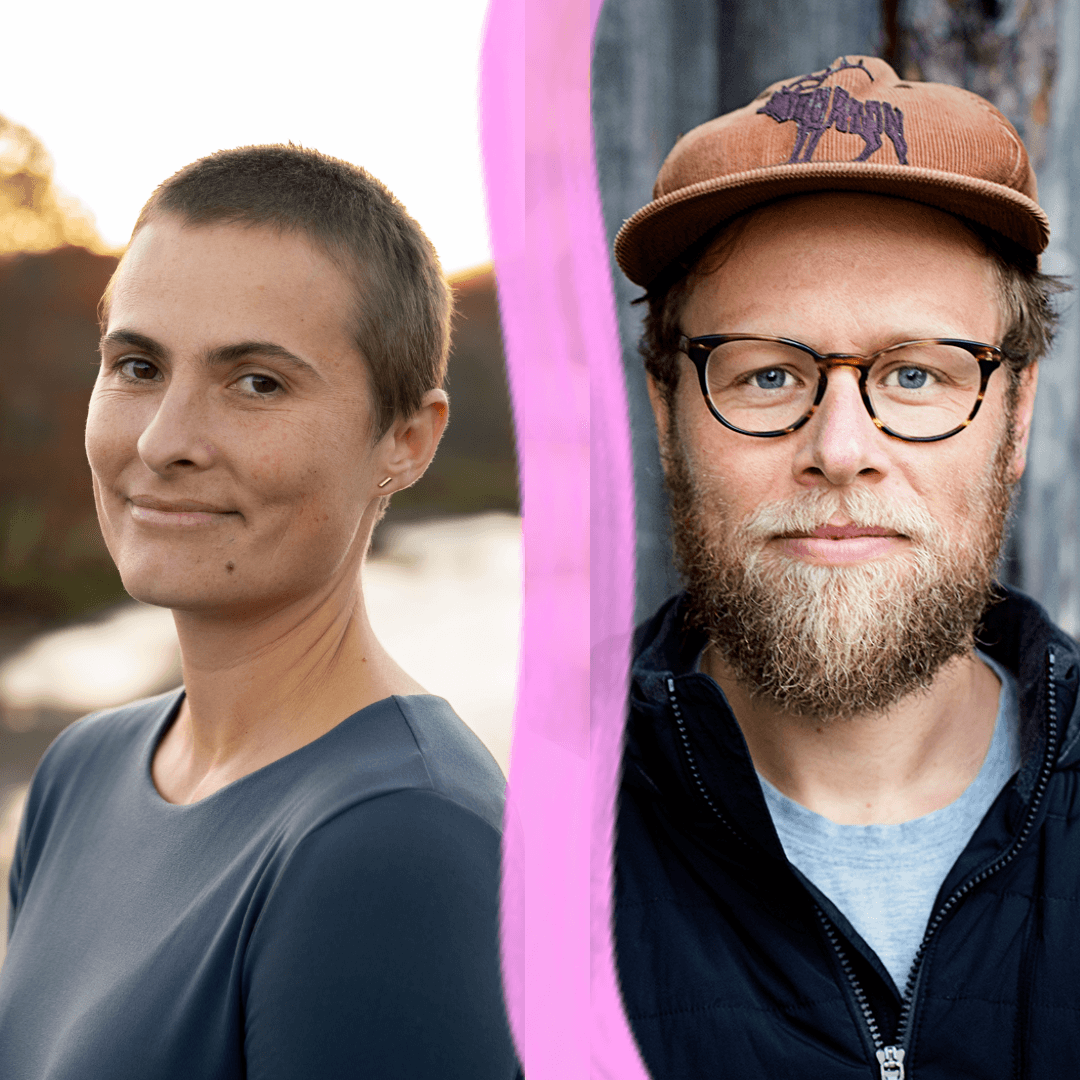
Welcome back to the Brain and Life Podcast. So, today we're excited to welcome a pair, Kyla and Adam Pearce, a husband and wife team who have helped grow a nonprofit named LoveYourBrain Foundation. It was founded in 2014 after Adam's younger brother, former professional and snowboarder Kevin Pearce sustained a traumatic brain injury while training for the 2010 Winter Olympics. They call it LYB, and LYB supports the mental, physical, and social wellbeing of people living with brain injury as well as their caregivers.
And they do this through a research driven approach of yoga, meditation and education. Not only do they offer free programs for people with traumatic brain injuries like the LoveYourBrain Mindset program, but they also partner with rehabilitation hospitals and help run professional trainings for clinicians and many practitioners within the space. Adam serves as the foundation's executive director and in 2023 was named a CNN hero for this work.
And we also have with us, as I mentioned, Kyla, she's LYB's senior director of programs, research and operations and leads the development of its yoga programming and many of its research based work. Thank you both so much for joining us here today.
Kyla Pearce:
It's a pleasure to be here. Thank you.
Dr. Correa:
So, I just described a whole lot of different things you're doing and it's amazing to hear about the foundation and the work, but I wanted to just learn a little bit more about you, Adam and Kyla. Tell me about who you are and what really brings you to wanting to do this work.
Adam Pearce:
I grew up with a family who... I'm one of four boys and grew up in a kind of a competitive environment where we were outside all the time, we're dyslexic, so school was not our jam. And we early on found snowboarding as this deep passion and that went from something fun to then became something more serious where we saw that as a career path and wanted to kind of chase our dreams. And that's when fast-forward Kevin, my youngest brother, started to get really good, started winning every contest around the world and was kind of the favorite going into the Olympics and then sustained this kind of freak accident and suffered a traumatic brain injury.
And that really changed the course of my life, his life and our family's understanding of what traumatic brain injury is, how prevalent it is, how complex it is, and just the nature of the ongoing need for care that happens with it. So, that was really the driving factor that introduced me into that world.
And as someone who was Kevin's best friend and he was almost becoming like my mentor in a way, it was kind of a non-decision moment where I said I'm going to spend the next year with him in the hospital trying to understand how I can be most supportive, how I can hopefully get him back to a place that we all felt excited by. And that was kind of the beginning of what formed LoveYourBrain.
Dr. Correa:
And before all this, so you didn't have a business management or nonprofit management experience and you just kind of grew into this role alongside with Kevin?
Adam Pearce:
Yeah. I was fortunate to grow up around some kind of an entrepreneurial family, so starting businesses didn't feel like it was something new, but I think for us it was really spending more time understanding how can we most support people with traumatic brain injury, and where's our kind of unique niche and where we feel like we can add the most value. And after Kevin's accident, we were fortunate to make a documentary called The Crash Reel that ended up winning a huge amount of awards and it started at Sundance and we kind of went all over the world with it.
And that experience really brought to light just how prevalent it is and how many people were suffering. And then we spent a few years trying to really understand what was working with Kevin and how we thought we could kind of move the needle a little bit forward to support other people.
Dr. Correa:
It's amazing how you've grown into so many of the needs, both for you and your own family. And Kyla, I mean, was this all before you even met Adam and were you already in movement practice and research or how did all these interests come together for you?
Kyla Pearce:
Well, a little secret is Adam and I actually started dating in high school. So, we go way, way back and retrospectively it all feels like somewhat of a linear path, but it has felt quite circuitous for me. So, in terms of my connection to LoveYourBrain, right at the time when Kevin had his injury and Adam was kind of putting his life on pause to support Kev. For me, my professional trajectory was actually in women's reproductive health, so was pursuing an academic career in that vein and also at the same time had gotten really into yoga and mindfulness from a practitioner perspective.
But also wanted to deepen my teaching kind of credential and certification. So, went to India to pursue my kind of foundational yoga teacher certification. And around that time, Kevin was also dipping his toes in yoga and finding for the first time how it provided a sense of, I think that kind of taste of agency accomplishment that he used to get while snowboarding.
So, a kind of flow state in his physical body, but then also the mental health component too. So, my career pivoted a little bit in that we decided when LoveYourBrain was developing its programs initially to really center yoga and mindfulness as two of the core components of what we were going to offer the brain injury community. So, took a little bit of a kind of detour and also ended up shifting to do my MPH and then later my PhD looking at the effectiveness of yoga interventions for people with neurological conditions, focusing mostly on TBI.
So, had a little bit of a kind of parallel research trajectory and then also continued to really teach and use people in our community as my greatest teacher and how to adapt yoga and meditation for the complex and ever evolving needs of brain injury. And of course was very connected to the Pearce family, so it felt like a natural kind of calling for how to apply practical teaching techniques as well as research and how to build our programs from the ground up.
Dr. Correa:
And Adam, you were already starting to tell us a little bit about Kevin's injury and what happened, but I was wondering if you could go into a little more to give us a context of what happened and some of the initial diagnosis and management that Kevin used as he moved forward.
Adam Pearce:
As I mentioned, he just came off a year of snowboarding where he was the number one snowboarder in the world. He had won all these contests and just on this incredible trajectory. And then this accident happened and we were left in the hospital. We were in critical care for 36 days and then an inpatient or outpatient in Craig Hospital in Colorado for another three and a half months.
And the reality was yeah, he had to relearn how to walk and talk and swallow and all these kind of basic things. And there was quite a long time we didn't really know what the quality of life was going to be for him. Started two weeks in a coma. We didn't know if he was going to live and then it was these just really small incremental moments of progress and that felt like it continued to happen.
But fortunately they continued to be kind of positive benchmarks or steps that he was making. At first, they feel really big because any little thing feels really big in those moments. But then the reality is we spent really, I feel like two years, five or six days a week doing therapy, doing kind of the OT, the PT, speech, all of these therapies. And then started to get to a place of recognizing that the progress was not happening, but just at a slower rate.
So, it would go from a day you'd notice something, then a week, then a month. What was exciting is that we would realize after a year or two years, many doctors were saying two years is kind of the baseline where you'll see most of the progress. Don't expect much more after that. But what we started finding is at year three, four, five, six, seven, eight, nine, he really was still progressing.
And we didn't necessarily have all the answers of why, but we're starting to really be more curious around is it the nutrition side? Is it the movement side? Is it the mental side? Everything he was doing from kind of a holistic standpoint was pretty rigorous and he was really intentional about all of those pieces. And we were just feeling like, wow, all of these great doctors are telling us we weren't going to see anything, but we are. So, how do we think about what's happening here? And we got to be able to share more of this with more people because it's clearly working.
Dr. Correa:
And then going back to that time early on and where you were there alongside him in rehab, when do you feel like it became clear to you that you were part of his caregiving team alongside him as a care partner? I wanted to, before we go more into Kevin's own journey, hear some about your own experience of how it affected you mentally and physically as you move through this.
Adam Pearce:
I would have said the early days were obviously hard because it was such a shock, but it was actually some of the easier times because we kind of knew what the schedule looked like and progress was happening, as I said, a little bit of a faster pace. So, that almost felt easier. It got really difficult, I would say like a year after where that progress slowed down.
I had to kind of reshape kind of all my expectations around this relationship that I once had that was completely different. And as competitive brothers, as you can imagine, me telling him to go take a nap was not going to make him very happy. So, I ended up going to India and visiting Kyla and she kind of gently pushed me into a 10-day silent Vipassana meditation retreat. And that really was probably the biggest personal growth from this experience that I had.
And it completely reshaped how I understood my own mind and how I think I could develop a deeper sense of discipline and focus and attention and awareness to kind of help myself kind of learn how to be in this new dynamic and relationship with Kevin.
Dr. Correa:
And since you guys have started the foundation and this work has moved forward, you've had an opportunity to interact and engage with many families and individuals as they're living with and recovering from their brain injuries. What have you seen as some common challenges that caregiving partners and caregiving teams face along these stages but might not recognize?
Adam Pearce:
Well, I would say from my own personal experience, I think acceptance is a big one from a caregiver perspective. I think the reality of having to accept someone who ultimately you want to be the person who once was, is a really difficult process. And the ambiguous grief that you have to process as you relearn how to love and relearn how to communicate and relearn how to set goals with, it's just a major hurdle to have.
And I think I look back on it and say, wow, I thought I had accepted who he was and did a good job, but in reality felt like there was so much more work that I personally had to do to be in a place that I really felt more acceptance around. And I think that can be such a roadblock for people because yeah, as we strive to want that other person back, what we're also doing in that is almost sharing that picture of why that person's not good enough or is not enough essentially.
And what I found is the more you put up that message, the harder it is to have a relationship that works. So, that's a big one. And then I would also just name, I think the thing that we found to be most common among caregivers and people with brain injury is just the isolation that happens. I think when you lose your abilities or you lose the dynamics that you once had, you feel like you're more alone.
And a lot of times people from both sides don't know what you're going through. They don't know the intricacies and the day in and day out workings that it takes. And I think because of that, you feel isolated and you feel disconnected from people who really get it. And that was a really big emphasis around the community side of what we do.
Dr. Correa:
So, Adam, you bring up these points of isolation and acceptance. And before you've described seeing vulnerability as a superpower, so how did you and your brother have to be vulnerable and were these lessons that you learned from your family's own experiences?
Adam Pearce:
Yes. So, glad you asked the question because yeah, we grew up with a brother with Down syndrome, David. And I feel like he was, my mom often say it was like a gift of having him in terms of how it prepared us to almost handle Kevin's situation. But I think we learned at a really young age that differences are not a negative thing. There can be so many strengths, but it's really how we look at it and really how we understand things.
So, I think a value that I think that was instilled in us was just how to be curious. And I think it was curiosity of looking at Down syndrome and we call it Up syndrome now with Dave because there's so many upsides to him as a human and how he operates. And I think one of the greatest teachings he brought us was around patience because someone with Down syndrome, you just have to be incredibly patient with many of those things when all of a sudden we were faced with, oh my gosh, is he going to be the same person?
Is he going to be different? All of those things, I think what we were surrounded by was this family who also shared in these values of rather than just try to make him what he once was, let's just be patient and open to how this unfolds and as supportive as we can be. And I think that helped all of us kind of deal with the different struggles and challenges that were faced.
Dr. Correa:
And thank you for sharing. And for our listeners, if you're interested in more information within the idea or the individuals who are living with Down syndrome, this episode's going to focus more on traumatic brain injury, but we've had several episodes with individuals and their family members and those even at older ages that are transitioning into more independence.
So, please check out those episodes for more experiences. Each individual's unique, but it gives us a variety of stories. And so, Adam, how did your brother begin to practice yoga or Kyla, you mentioned that he was doing some, but where did this come up for him as an opportunity or a consideration?
Kyla Pearce:
He was actually, so this is probably about four years after his initial injury and started dating this really lovely girl, woman, and she was a big yogi, so essentially followed her into a yoga studio and it just very much clicked for him. So, became a pretty devouted yogi in those early days of practicing consistently.
I think the benefit of practicing in a general population community setting was really normalizing, connecting, made him feel like part of something, a sense of belonging again, but then very much found like yoga met him where he was at in terms of physical capacity. I mean, he was doing handstands, which is not what we teach in our LoveYourBrain Yoga classes, but he felt a sense of empowerment physically.
But then as I was sharing before, also the mental health side of it to bring a sense of calm and inner resource, I think is a real value of yoga since so much of our attention is normally focused outward, but we bring our attention inward and can remember what an inner sense of steadiness really feels like.
Adam Pearce:
He also really liked to share around going to OT, PT every day. You're constantly going into these sessions reminded of what you're not good at or where you used to be or how much you need to progress. And I think what he would feel when he would go into a yoga class is there was not that mirror for him.
It was completely a place that allowed him to be present and in his body, watching his mind and his thoughts and find a sense of peace within that because I think anytime he wasn't on the mat, it was just chaos in his mind. And I think to have that moment where things can settle, things can slow down can be really empowering when those spaces aren't available as much.
Dr. Correa:
And it's interesting because within the neurologic rehabilitation space for many different conditions, both neurodegenerative like Parkinson's, acute injuries like traumatic brain injury and strokes, they've been showing a lot of significant improvements and impact on people's quality of life and their physical function with a variety of low impact physical activities.
But I wanted to hear from your perspectives and experiences of people working within LYB, why do you think, and you've already started to mention some, but why do you think in some ways for them, yoga has shown such efficacy?
Kyla Pearce:
Well, the way that we've also designed our yoga programming is, I know some listeners might associate yoga with just the physical practice, but yoga is more holistic in that it incorporates breathing exercises, movement, as well as meditation. But then also there's traditionally a kind of system of ethics, which we've adapted slightly to have some group-based facilitated conversation around themes that have been empirically shown to promote resilience.
So, for instance, in a LoveYourBrain Yoga class, you're with about 13 other people with brain injury or caregivers. And we go through a kind of protocol or kind of set of steps that includes breathing exercises to help focus attention, calm the nervous system, then some specific movement sequences that are really designed to bring more interoceptive awareness. So, more kind of felt sense of what's going on in the body that can often get disrupted after brain injury.
So, less a focus on specific alignment, but more around what is your felt sense experientially right now to help rebuild awareness of the present. And then we do a variety of different meditations that are designed to use visualization or mindfulness or loving kindness practice to help elicit certain moods like a feeling of steadiness or ease amidst challenge or a felt sense of kind of inner resource, so like a safe place. Then we end with a group discussion based on, for instance, one of the themes is realistic optimism.
So, this has been a kind of positive psychology approach that helped normalizes when we have challenge, but also empowers us to remember that we could still find a kind of plan B or plan C, and still work through that challenge and find possibility. So, this question of what is the mechanism or what's making the biggest difference is I think there's many things depending certainly on that individual, what they're looking for in their healing process.
But likely it's a blend of simultaneously working at the nervous system level, but then also really rebuilding a sense of community connection and belonging that there's so much research that shows social connection helps reduce stress and anxiety, which is amplified after TBI. So, working both at a kind of physical, mental health, and social health level.
And because brain injury is so complex, it's just essential to have holistic approaches that blend physical, mental, and social approaches.
Dr. Correa:
Yeah. I mean, I really appreciate that you guys are taking a look at some of the aspects that are clearly evidence-based within isolated practices, whether it's movement-based practice, meditative and mindfulness practices, but bringing them together. And then it sounds like that reflective approach also is allowing the individual or the caregivers to see, okay, where and what avenues do they need to follow or do they find benefit in exploring further?
Kyla Pearce:
Yeah, absolutely. And I think to this point of what are some transferable skills or practices that people can weave into their daily lives, and that's a big goal too is, so say somebody is feeling frustrated with forgetting where they put their keys in the morning or feels emotionally dysregulated, the tools within LoveYourBrain Yoga allow people in those moments to do a two-minute breathing exercise or a little kind of take five meditation that helps people return to a sense of steadiness that really makes small but meaningful impacts in their daily life.
So, I think that's also a kind of unique aspect of why yoga can be particularly helpful.
Dr. Correa:
Yeah. I know I've seen a personal benefit, not just from the movement practice, but sometimes what I find the most effective for me when I'm having a challenge winding down or getting to sleep is going to one of the free apps that I use for a yoga nidra meditation to help me transition to a better state to be prepared for sleep. Or most of the time I'm lucky enough that I don't actually finish the meditation.
Kyla Pearce:
Yeah, that's a great point. And we include yoga nidra guided relaxation also in our programming. And since sleep disturbance is so common after brain injury, it's a very helpful kind of 10-step meditation that is actually a little different than mindfulness where you're placing very conscious awareness on.
For instance, breath or felt sense of your body and touching something underneath you, but guided relaxation with yoga nidra is a lot more accessible sometimes to people with brain injury because you're really listening and dis-identifying with whatever the kind of sensory experience is. So, there's research that shows that can help with sleep as well and also mental health outcomes.
Dr. Correa:
And these kind of three-pronged components have shown each of them in combination benefits for many different medical conditions, including neurologic conditions. And you were starting to suggest some reasons, but are there specific thoughts and reflections that you have as to why specifically it may have a particular benefit for someone who is recovering from or living with a traumatic brain injury?
Kyla Pearce:
There's growing research that suggests yoga can also support neuroinflammation and reduce neuroinflammation. So, there could be some mechanism involved in reducing inflammation in the brain to help with recovery kind of on a physiologic level. But I think because brain injury often includes an increased twofold in mental health diagnosis, we know yoga reduces stress and anxiety and depression.
And just the kind of reciprocal impact of if you're living with chronic pain, how that impacts your mental health. So, to be able to work through yoga to help reduce some of the felt sense of chronic pain also improves mental health. So, I think it's because of this combination of different ways in that's really having the amplification of the impact.
Dr. Correa:
And whether it's traumatic brain injury or other neurologic conditions that might impact mobility or balance, people might wonder, how does yoga need to be adjusted and is it physically safe for someone with a traumatic brain injury?
Kyla Pearce:
Yeah, that's a great question. And we do a lot actually in our training programs, we run trainings for clinicians as well as yoga teachers and how to adapt yoga for brain injury. So, for instance, one of the techniques, so some of the common physical impacts are challenges with balance, challenges with vestibular symptoms. So, sequencing a practice where there's limited movement of the head is one approach.
There can be dysregulation in blood pressure, so not doing inversions or taking them stepwise to allow the nervous system to re-regulate. Cognitively, memory and information processing, so slow, repetitive queuing. Also, as I mentioned a little bit before, really emphasizing interoceptive awareness. So, even for the listeners right now, if you can notice what you feel in your feet, notice the sense of temperature or pressure under your feet. So, how do you know where your feet are without looking at your feet?
So, we bring in a lot of that type of queuing so that it A, slows down the practice, but helps rebuild the felt sense awareness, which also has been shown to reduce depression. So, there's kind of an emphasis on a style of practice that's more rebuilding capacities of awareness and less about fast movement.
Dr. Correa:
And we noticed that LYB also offers a variety of subgroups, specifically for young adults, athletes, veterans, stroke survivors, the caregiving community, BIPOC individuals and LGBTQ community members. So, what have you heard from those individuals about the importance of them having those specific spaces and conversations or anything that's different about their experiences with their brain injuries?
Kyla Pearce:
Yeah, I'll just jump in. I think that's been one of the most exciting aspects of our program evolution really since the pandemic is because we moved many of our programs online, we've been able to offer specialized or programming that looks at multiple intersections of identity related to brain injury that makes the experience unique. And kind of stepping back big picture, since social connection is such a huge pillar of what we're really trying to do, there's two underlying contributions to how social connection happens.
It's not only just, and it's very important to connect people with others who have similar shared experience, similar lived experience, but equally, it's also important for people to look at their own self narratives and interrogate some of maybe the limiting beliefs that are inhibiting their ability to connect with other people. So, when we've built programs, for instance, for the BIPOC community or LGBTQIA+ community, it just builds a sense of belonging and safety because people are able to feel themselves mirrored by others in the group, but then also examine some of their own thought patterns that might be undermining their ability to connect in a truly deep and meaningful way.
So, I'd say both in some of ours, so we use different research metrics to look at the impact of our programming on social connection, resilience, mental wellbeing, and see that those subgroups have improvements. And there are kind of unique aspects of people sharing that this is the first time I've talked to somebody who has a brain injury about how also having an identity as part of the LGBTQIA+ community has shaped that. And that just feels really impactful that we can support communities to come together and have that type of just honest and connected space to really show up as themselves.
Dr. Correa:
And you've each described some ways already, but within this podcast, we're always coming back to this broader idea of what brain health means to us, things that we're doing to it. And I'm wondering, Adam, Kyla, how do you think about your own brain health from all of these experiences that you've had?
Adam Pearce:
We have to love our brains. That's kind of the message I think that we began with, but I think it's obviously heightened when you see how an impacted brain operates to a healthy brain. I just feel like you really want to love it, like you love your kids or you love the things most dear to you, that's how you have to treat it. And I think, yeah, it's just opened my perspective of being more intentional around the different ways I think about that.
Kyla Pearce:
Yeah. And I think similarly, there's many mutually supportive doorways in from what I think of as brain health and trying to have a holistic approach. So, recognizing the relationships I have have an impact on my brain health just as much as my sleep and my diet and my exercise.
So, not doing that in a way that feels overwhelming, but more if right now I want to focus more on nurturing my relationships versus maybe next week it's more on my physical health, that each of those intentional actions is doing something that is really supporting me from the inside out. And yeah, that feels good to be intentional about the many different ways that can support.
Dr. Correa:
And if today we have a new listener, maybe that's a caregiver or a person actively in the ICU or newly arriving to their neuro rehabilitation center with a very recent acute traumatic brain injury, what would you want to leave them with?
Adam Pearce:
I think that there's hope. Yeah. When things are difficult and you're in a challenging situation, when you can see a glimmer of hope, I just think it can be all the difference. And I can tell you, we were in a place where it was hard to imagine that Kevin would be where he is 15 years later, married with three kids. You just would never believe it.
To me, the lesson is if you can be patient and if you can work hard and if you can be communicative and kind to yourself and others around you, I think it just shows like anything is possible. Yeah, it makes me emotional to save just because when you're sitting in that room just with a feeling of hopelessness, it's such a difficult place to be in. My hope is that yeah, there are organizations like LoveYourBrain and incredible doctors and people all working towards creating that hope. And yeah, it's possible.
So, just hang on and keep taking it step by step. I'll just say one last thing. A doctor that was really helpful for me in the early days shared that a brain injury, the experience is not, it's not like you're just walking out of the woods and all of a sudden it's just this big clear field and the sun is shining and everything is, the green grass is there. The experience is more like you're in a dense, deep forest and the woods just kind of start to become less thick. There's less trees, but there's not necessarily just this openness, but there are these openings.
And when you continuously keep working, these openings continue to progress. And I think that has been the experience for us and ensuring that your expectations are kind of in line with what is kind of possible.
Kyla Pearce:
Yeah. And the only other thing I'll add is you're not alone. There's no right or one way to approach this ever evolving process. So, to just remember also a big thing we talk about too is everyone already has the capacity for resilience. So, it's about just nurturing the many ways that we can reveal and remind ourselves of our resilience.
So, to think about what feels most available and accessible and start there, and then just trust yourself that if you keep showing up with care and attentiveness. Yeah, just trust that.
Dr. Correa:
Well, Adam and Kayla, thank you so much for the inspiration, for bringing together communities to open some of those spaces and to help so many people love their brain or your brains and for joining us here and our listeners on the podcast.
Dr. Peters:
If you're enjoying the Brain Health Podcast, we love your support. Take a moment to rate and review us on Apple Podcast, Spotify, or wherever you get your podcasts.
Dr. Correa:
And your feedback helps more people find us. So, if you leave a review, you might be the reason someone else starts their brain health journey.
Dr. Peters:
It's also a huge help if you subscribe. Thanks for listening and for helping us grow.
Dr. Correa:
We've just heard from Kyla and Adam about how yoga and mindfulness and this community programming and support that they've developed through LoveYourBrain can help individuals and they've seen in practice with those living with brain injury and their caregivers. Now we're going to explore another part of our conversation more broadly on how movement and exercise can support brain health and neuro rehabilitation or recovery from a range of neurologic conditions.
I am pleased to welcome Dr. Brian Sandroff. He's an assistant director of the Center for Neuropsychology and Neuroscience Research and the director of the Exercise Neuro Rehabilitation Research Laboratory at Kessler. His research examines and is working to understand at a deeper level how exercise and physical activity may support a person's thinking, mobility and their brain health, and particularly for people living with multiple sclerosis across other neurologic conditions. Brian, thank you so much and welcome to the Brain Health Podcast.
Dr. Sandroff:
Well, thank you, Dr. Correa. It's an honor to speak with you and your audience today.
Dr. Correa:
So, I mean, Kyla and Adam described movement and exercise activities, whether it's including yoga or otherwise as a part of a broader approach to living well after brain injury. But when you talk about this idea of exercise as medicine, how do you explain that at the neighborhood barbecue, what that means for our brain and nervous system?
Dr. Sandroff:
So, that's kind of funny because at the neighborhood barbecues, I actually get that question. So, the easiest way for me to explain it would be if someone asks, "Well, should I exercise?" And the response comes back, "Well, yeah, you should just do exercise." Well, that could mean a lot of different things. It could mean just simply moving for getting from one place to another. It could mean going to the gym for three hours and doing heavy weights.
Well, the nice thing about exercise from a scientific perspective is it actually has a very specific definition, and the definition is planned, structured, and repetitive physical activity that's done with the goal of improving or maintaining physical fitness. So, moving from one place to another isn't exercise, that's physical activity. It's being done to get more fit, to perform physical work a little bit easier. So, when we're talking about exercise in people with neurological conditions, we try to treat exercise like a drug where there's a prescription.
There's a specific type of exercise that you should do. There's a specific frequency, how often you should do it, a duration, how long you should do it for, and then an intensity. So, we're not just giving people advice that's very, very general. We can actually get pretty precise and we have some evidence to support different exercise prescriptions as being beneficial for improving different aspects of people's lives in different neurological conditions, whether that's MS or TBI or stroke or Parkinson's disease or healthy aging even.
Dr. Correa:
I'd love to hear then, from your review and experience across a variety of these different conditions, where is some of the strongest evidence of understanding the prescription that's needed either based on a person's activity and functional level or specifically their condition?
Dr. Sandroff:
So, that's kind of the end goal for a lot of these different specific conditions is to provide patients with an evidence-based guideline to be able to improve their brain health, whether that's something like you need to do aerobic activity three days per week, that's a moderate intensity. And then strength training activities for all major muscle groups twice a week at a moderate intensity for general health benefits. That's the physical activity guidelines for adults with MS.
But for brain health purposes, I don't think we have that very specific evidence yet that can span across conditions or that's very condition specific, but we're on our way towards understanding what that might look like. So, we've done a bunch of studies in MS that have taken us, oh, 10 to 15 years that have slowly tried to figure out what type of exercise might be best, what intensity might be best, what characteristics of people with MS who might benefit the most, what outcomes in people with MS might be most sensitive to exercise.
And we're slowly but surely inching our way towards figuring that out specifically for cognitive function and brain health in people with MS. So, right now what we think is the case is aerobic walking exercise may be the way to go. We've tested it in some small laboratory-based studies that have shown an effect on cognitive function, specifically the domain of cognitive processing speed, which is the most common cognitive issue in MS.
And also brain outcomes that are related to the thalamus, the brain's relay station, which makes sense as when your relay station gets better, you can process information faster.
Dr. Correa:
Now, I mean, two things you talked about in there. One, you brought up intensity and what actually that ends up meaning. I know a discussion sometimes I've even had with my own running coach, with the physical therapist I've seen and patients that I've seen. And so, what we really mean for what mild, moderate, or more significant intensity means for the individual.
And then you also mentioned walking and aerobic walking as a structured exercise, but how do we determine how much and that intensity level for the exercise, for the person who just looks up and sees some TikTok or article that says just 20, 30 minutes or something like that, but they're already walking an hour plus a day or significant distance. Then they're like, "Well, what does that actually mean for them?" And then there's the other individual who's not walking or has had a difficulty just getting around their house or up and down out of the couch.
And so, how do we adjust for what the person's current mobility and capability level and what the intensity means for them?
Dr. Sandroff:
So, I guess I'll address your first question in terms of what does intensity mean for different people? The American College of Sports Medicine has all sorts of different guidelines for heart rate reserve based on your resting heart rate and your maximal heart rate and whether or not you can reach your maximal heart rate from a maximal exercise test to prescribe exercise. And to do that, you need some pretty sophisticated equipment and some highly trained people.
So, they also recognize that and they have a much easier way to determine that for the average person, and that's the talk test. So, if you're exercising and you can sing during exercise, that's probably not intense enough to generate health enhancing benefits. The talk part of it is can you keep up a conversation while you're exercising? If the answer to that is yes, very easily, it's probably not intense enough.
But if the answer is yeah, but it's a little bit difficult, that's really where you start to get into moderate intensity where you can barely keep up a conversation. If you can't talk at all, then you're probably into vigorous intensity, which is good for you. But if you're just starting, if you're not really familiar with exercise, you don't currently engage in a lot of exercise, that may be doing a little bit too much too soon.
So, the talk test is a really easy way to start. Also, for people who might not be able to walk at high intensity. We have some other research going on in our lab group from my colleague, Dr. Carly Wender, which focuses on using virtual reality during stationary cycling as a way to really train your brain so that if walking becomes too difficult or you have a neurological disorder that makes walking very, very challenging, cycling exercise may also provide that kind of mental load that can afford the opportunity to generate benefits for brain health.
Now, the last part of your question had to do, how do people monitor intensity specifically with walking in the real world? Well, one thing we've done now it's been 10 years where we gave people pedometers and we had them walk on a treadmill in the lab and we hooked them up to some metabolic equipment to figure out how much energy they're actually expending. And we figured out with people with MS that walking at a step rate of 100 steps per minute equates to moderate to vigorous intensity physical activity.
And that moderate to vigorous intensity is important because that's what generates health benefits based on the US Surgeon General's guidelines for physical activity, something for all Americans. The interesting part about that is that 100 steps per minute is kind of a magic number because if you have a Fitbit or an Apple Watch or a smartphone and you're walking for 10 minutes and you look up at your phone and you see, "Hey, I've walked a thousand steps." Well, doing the quick division, you know that you've walked at 100 steps per minute for those 10 minutes.
So, it's fairly easy to track on your own. And we've done a couple of studies that have done this for brain health benefits in people with MS over four months and then over a year where walking at 100 steps per minute generates benefits for cognition and for brain health in terms of MRI outcomes too.
Dr. Correa:
Yeah. And I like the idea of the talk test and how that might allow a person who has other mobility differences or changes to maybe adapt other types of activities. If you find if it's an activity of continuous movement of any part of your body that you're capable of doing that gets you a little bit out of breath and not able to talk, then that's probably the right one for you and where you are at your level. So, I like that adaptability of that approach.
Dr. Sandroff:
Yeah, that's one of our main missions in our research enterprise is that it has to be doable. If it's not doable, if it's something that only involves very specific equipment at a specific place, how likely is that going to be integrated into people's lives who really need these kinds of interventions or who want these interventions?
We want something that's unsexy. We want something that's simple, that's easy to follow, that people enjoy doing, that is very doable and people can keep up with it over time.
Dr. Correa:
Now people and many individuals dealing with different neurologic conditions could be navigating fatigue issues, brain fog, pain or changes in balance, other mobility or cognitive challenges. So, how do you help someone identify safe and meaningful starting points, adaptations, the duration beyond the intensity discussion that we were just having?
Dr. Sandroff:
So, as part of our research, we pair participants up with an exercise trainer if it's a supervised study or a behavior coach and if it's a remote study. And the trainers and the behavior coaches are really well-trained in behavior change techniques to communicate with participants who may have that kind of a struggle with fatigue, brain fog, challenges associated with balance dysfunction.
And they work with them to give people the skills and knowledge necessary to change and maintain their exercise behavior over time. And part of that is overcoming barriers. Part of that is understanding your situation specific ability to do exercise where if I wake up and I'm feeling fatigued, what's the best way that I can keep up with the program? Whether that's taking a break for a day, that's okay. Whether it's just starting small, whether it's just even if I'm not walking at the appropriate intensity that the prescription says I should, still doing something.
Something is better than nothing always, unless maybe it's just one of those days where a day of rest can help you recharge your battery a little bit so that you can do a little bit more tomorrow.
Dr. Correa:
And is there something that you have also seen about the difference between independent or individual exercise versus exercise within a community, in a program, in a group?
Dr. Sandroff:
So, I think that has a lot to do with individual preferences. So, I'll take myself for example. I don't do well in group exercise classes because I see people who are way better than I am and it doesn't make me feel very good versus when I'm exercising in my basement and there's no one there but me, I feel great even if I did a little less than I did the day before.
But then there are other people who really need that social support to get them going and it's that social aspect that's an exercise class, whether it's with someone who looks just like you do in terms of let's say stroke or MS, or if it's someone else who's an exercise class leader who's really motivating, who gets you going when you don't feel like it. It just depends on the individual.
Dr. Correa:
Now, as you mentioned before, your research and group has particularly focused on multiple sclerosis or MS, and you were mentioning some of your findings over the time before, but what have you kind of learned and where are you now on the potential effects of mobility, fatigue and thinking for people living with MS as they're incorporating exercise into their management?
Dr. Sandroff:
Yeah. So, if you look at the literature, and this is one of the things about my job that is not very exciting to the average person, and that is I read a ton. I really like to understand what's going on in the full field. And to date in the last 30 or 40 years, there have been over 500 studies on exercise benefits in people with MS. And if we're going to summarize 30, 40 years of research, we know that exercise is associated with moderate to strong benefits on fatigue, which is the most common symptom of MS oftentimes.
And it's also one of the biggest barriers to exercise, which is kind of an interesting paradox where exercise reduces fatigue, but people who are fatigued with MS have trouble exercising. So, that's something that we continue to try and address through behavior coaching in part of our interventions at least. We know that exercise reduces depressive symptoms in MS. We know that it improves walking mobility in terms of walking speed, walking endurance.
We know that it has benefits on balance, whether that's dynamic balance, static balance, or even self-report balance. We also know that it improves physical fitness, which is good, but the areas that aren't so well understood are cognitive performance or thinking performance and changes in brain structure, function and connectivity. The research just hasn't caught up to these other areas. And so, far, there have been some mixed findings where some studies report huge benefits, other studies report no benefits.
Really, there isn't any kind of trend where one type of exercise, like aerobic exercise or strength training has a disproportionate benefit than the other. But in our research, what we've done is we've tried to take things in kind of a stepwise hierarchical fashion. I know that's a kind of a scientific term, but step by step is the big deal for us where we start small with a study in 30 people where we found an association between aerobic fitness, the ability to kind of cycle for longer periods of time and better cognitive performance in people with MS.
And that was now 15 years ago. And we've slowly started to build from there to where now we've done five or six different randomized controlled clinical trials that have shown that when a person with MS who starts with cognitive impairment does our exercise program for a period of time, on average, they improve their cognitive performance. They improve the way that their brain connects within their brain over time. And our most recent study is that after a year of exercising, we've shown that people with MS can preserve their thalamic volume, which is a big problem in MS where on average, people have shrinkage of the thalamus every year.
And in a year we've shown that with our exercise program, we don't observe that shrinkage. Now it was in a small sample, but we're really excited to move the research into larger and larger samples. We've recently shown that exercise actually slows brain aging in MS, which is pretty cool, where we put in a year of exercise and our brain ages only six months with MS, which is a pretty interesting rate of return.
And finally, the other area that we're very, very excited to move forward in is something where our programs could maybe be delivered through neurological clinical practice, through the neurology clinics, because that's where the magic happens. It's not in a research lab. It's in the real world with neurologists. Patients with MS want exercise information from their neurologist. So, our next study that we're planning on is doing a large nationwide clinical trial where we do remote exercise training with people relative to the standard of care.
And then we see whether or not it can potentially be delivered through clinic, which is then phase two to see if neurologists and nurse practitioners and occupational therapists and physical therapists can deliver this intervention that can potentially result in benefits for people with MS.
Dr. Correa:
We can all hope that pushes forward both within MS and many other neurologic conditions, and we learn the different ways that these approaches could improve things for everyone. I mean, a few weeks ago, the week of the New York City Marathon, we had an episode that we released with Elizabeth Pehota who lives with MS, has run the Boston Marathon, run a world record attempt, set the women's world record for the fastest marathon for a person living with multiple sclerosis or a woman.
And last year we did an episode with Lilibet Snellings Kyte, also an author and marathon runner who lives with MS. And they both, and many individuals with MS, have to deal with, especially in these endurance exercises, with symptoms that fluctuate and mobility changes that fluctuate or the heat of prolonged activity and especially being outdoors for those activities. And I think those are things definitely everyone could relate to.
So, how might someone who's approaching doing more exercise adapt and work with the issues of fluctuating symptoms or extreme temperatures like heat and their effects on their condition?
Dr. Sandroff:
So, with extreme temperatures and heat, there's a really great resource from the National MS Society that talks about the effects that potentially could be negative effects of exercising in warm environments. And they provide a lot of guidance for how to make sure that you can control your outside environment so that you don't overheat if you have thermo sensitivity.
There's some research on the benefits of cooling vests actually during exercise on cognition and brain health outcomes in people with MS too. But really the fluctuation of symptoms that you mentioned is a big challenge for everybody with MS. And it's really all about listening to your body on that particular day and doing the best you can. And sometimes you can't quite get to your goal and it's important to give yourself some grace and say that that's okay.
Doing something is always better than nothing, unless nothing is really good, but also just doing 1% better than yesterday. Even if your goal was 20% better, doing 1% better than yesterday is moving you in the right direction. So, sometimes with mobility challenges, if you can't walk quite as fast, that's okay. If balance is an issue and maybe instead of walking where balance could be a potential fall risk, maybe get on an exercise bike and just try and move your legs a little bit.
Every little bit helps and it's like saving money where that exercise reserve that you continue to do on a day-to-day basis builds up over time.
Dr. Correa:
That's good. I like that focus on consistency. And we heard a similar 1% phrase from Dr. Riley Bove when we had our previous episode. So, I like this consistency and the messaging and the importance of getting back out there each day or listening to your body if maybe this is the rest day for the week.
And so, turning to advice more broadly into access and neuro rehabilitation. So, Adam and Kyla spoke about the value of adapting activities and building community. So, for a listener who wants to move more, but isn't sure where to begin, maybe has limited access either to rehabilitation or an accessible exercise program, what might be some practical first steps for them to consider?
Dr. Sandroff:
So, the first thing that comes to mind is engage in more physical activity, not necessarily exercise training that's structured, supervised, or formalized, but just moving a little bit more. We have some other studies going on that have looked at physical activity behavior as a lifestyle behavior that leads to all sorts of beneficial effects in people with MS and in other neurological conditions too.
But as an easy example, if you're driving to the grocery store and you want to park in the spot that's the closest spot to the front of the store that you can because no one likes to navigate their way through the parking lot, if your goal is to get a little bit more physical activity, try parking a little farther away on purpose. You can get some extra steps in, you can move your body a little bit more. Another one that, again, depends on someone's level of mobility, but stairs instead of elevator.
I did that with my kids this morning. They both wanted to go in the elevator and I was mean dad and said, "No, let's take the stairs today. Let's get a little bit more activity if we can." And then at the top of the stairs, they were much happier with me than they were at the bottom.
But little things like that, trying to, instead of sitting down all day long at a desk, one thing you can do is you can have these exercise snacks throughout your day where you maybe set a phone alarm for every hour, you get up, walk down the hall, come back, and it doesn't reduce your productivity at work all that much. But sitting less and moving more is something that is a great starting point for anybody who wants to get more active and as a precursor to getting involved in an exercise program.
The other thing you might consider doing is if you live in a place where there is a university nearby, chances are there's an exercise science department that may have research studies that could be opportunities to engage in exercise training that you might not be aware of. Local health clubs are always a good place to go. YMCAs, our local YMCA in New Jersey has a really great program for people with Parkinson's disease that might not be something that everyone with Parkinson's knows about.
But check into your local Y, your health clubs, maybe even universities. They might have programs that are adaptable, that are kind of these neuro rehabilitation type exercise programs as opposed to just lifting weights to look good for spring break.
Dr. Correa:
And I love that idea. So, when someone is considering or looking into a program, what should they look for and what might be some considerations when they might need a discussion with a clinician or rehabilitation professional?
Dr. Sandroff:
So, I think that's a really great starting point before even engaging is talk to your doctor, talk to your practitioner, see what they might recommend. As neurologists, general practitioners, physical therapists, occupational therapists, your comprehensive care team, chances are they know of a program or two that's local that may be a good fit. Now it might not come to mind immediately where they might bring it to you as a patient, but if you bring it up to them, that might cue them in a little bit to give you some recommendations.
Also, social media is a really good place to meet others with neurological disorders who might live in a local area. I know Instagram is huge with different hashtags for exercise and MS, at least with other social media outlets like Facebook or Twitter X, may be good places to meet other people who may be interested in teaming up or raising awareness for certain programs or other societies like the National MS Society that may be a good starting point to either meet others who are interested in exercise or may have embedded programs themselves.
Dr. Correa:
And here on the Brain Health Podcast, we also like to hear about our guests and science experts' personal or family experience. So, I imagine exercise is important for you and for your home, but maybe beyond exercise and more minutes or activity, what's the most important thing that you're trying to work on for your health or your own family's brain health?
Dr. Sandroff:
So, for us, it's limited screen time because I have little kids.
Dr. Correa:
That's real. Yes.
Dr. Sandroff:
Sometimes it's impossible, but it's like if you're watching something that has a plot or is like a live event, we're okay. But those shorts, the more evidence comes out that those are not good for developmental brain health in seven and three-year-old boys. So, we're trying to avoid that. But the other thing is every day we try and get outside while the weather's still good.
We try and get the kids involved in activities, whether or not that's super high intensity running like soccer or if it's just socialization, just getting out and meeting other people because that's important for brain health too. Dietary, trying to get a balanced diet, which is hard in kids. But my wife and I are really making a concerted effort to try and limit those ultra processed foods and try and focus on whole natural foods for our kids. With Halloween, that's impossible, but we're going to do the best we can.
Dr. Correa:
Yeah, we all have to pick a few priorities. So, it's good to hear. Yeah, screen time is a good reminder for all of us. And for someone who is living with multiple sclerosis or another mobility or functionally limiting neurologic condition, what would be one piece of advice you would want to leave them or their family member with?
Dr. Sandroff:
Would be just to sit less and move more. Every little bit helps. Even if it's something that is far less than you used to be able to do before diagnosis, it's okay. Just every little bit helps starting slow and hopefully that's the pathway towards your journey with exercise and physical activity that can help improve your quality of life.
Dr. Correa:
Brian, thank you so much for joining us here on the Brain Health Podcast and particularly for being one of those who's pushing this science forward. We need so much more understanding about exercise, mobility, and rehabilitation steps across so many different neurologic conditions. Really appreciate your work in MS.
Dr. Sandroff:
Thank you so much for having me and spreading the good word to everybody.
Dr. Peters:
Thank you for joining us today on the Brain Health Podcast. Follow and subscribe so you don't miss our weekly episodes.
Dr. Correa:
Also, for each episode, you can find out how to connect with our team and our guests along with great resources in our show notes. We love it when we hear your ideas or questions and you can send these in by email to podcast@brainhealth.com or leave us a message at 612-928-6206.
I'm Dr. Daniel Correa connecting with you from New York City, and you can find me on social media, @neurodrcorrea.
Dr. Peters:
And I am Dr. Katy Peters, joining you from Durham, North Carolina and online, @katypetersmdphd.
Dr. Correa:
But most importantly, thank you and all of our community members for letting us be part of your brain health journey. You make this podcast what it is, and by listening each week, you're helping us promote brain health for all.
Dr. Peters:
Before you start the next episode, we would appreciate it if you would rate us five stars and leave a review. That helps more people find us. And don't forget our website, brainhealth.com. Subscribe to receive our newsletters and be a bigger part of our growing community. See you next week.