Dr. Correa:
From the American Academy of Neurology, I'm Dr. Daniel Correa.
Dr. Peters:
And I am Dr. Katy Peters, and this is the Brain Health Podcast.
Dr. Correa:
Welcome back to the Brain Health Podcast. All right, so it's getting a little bit serious. This upcoming weekend, I will be running the New York City Marathon.
Dr. Peters:
Go you. That is like-
Dr. Correa:
For a while, it was just getting to the point where I was just trained and comfortable for it, and ready for the distance, and getting out there and just listening to my body, how it was going. And I wasn't sure if I was going to run it as a goal or just be out there for fun. And the last few weeks, my body has done really well, and I'm glad and thankful for it. So I guess I'm going to be really going out there and see what ways I can improve. I'm really excited about it.
Dr. Peters:
Congratulations on you for even considering running the marathon. I'm going to be cheering you on. I think that's just amazing. Such a great accomplishment just to get there. I've been so sad, the pool, we're closed now because it's too cold and we can't have the heater on. So definitely, I'm bumping up a bunch of my Pilates and yoga because it's just such a great activity. And because it's so nice out, hiking is now at the top of the list. So getting out there, getting in nature, do a little forest bathing, it's the right thing to do right now.
Dr. Correa:
And the wild part is for a lot of things that we do, professional and personal, sometimes we end up scheduling things so far out. So as I'm getting ready now to run the New York City Marathon, I enjoy running throughout my year, and I just got an invite from the CURE Epilepsy Organization to be on their team CURE Epilepsy for the London Marathon in the spring. So I'm just now starting to organize things. I'll run New York City, hopefully stay healthy, take some time off, recover well, sleep extra. And then I have now motivation to train and do some exercise for the London Marathon throughout this winter.
Dr. Peters:
That's amazing.
Dr. Correa:
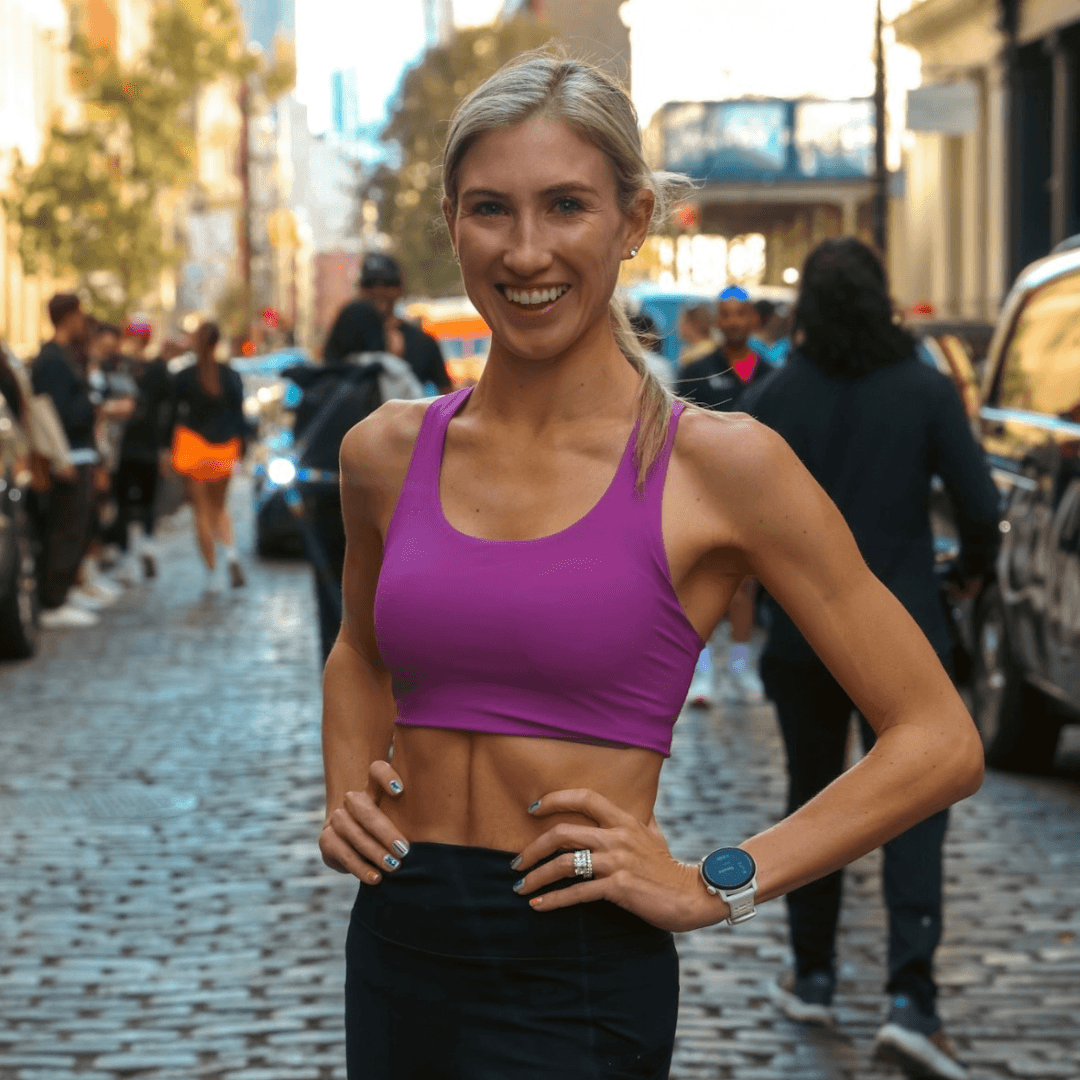
Yeah. I'm so excited. And along these lines, our guest today, Elizabeth Pehota, is a Boston-based runner. She worked as a reporter and an advocate who was a longtime runner, and you'll hear more about her story, but then was diagnosed with relapsing-remitting multiple sclerosis. And she herself has done fundraising and advocacy work with the MS Society through her running and activities and much of her social media content and support to increase awareness around multiple sclerosis. And you'll hear about her running a Guinness World Record attempt to be the fastest woman living with multiple sclerosis to complete a marathon in just 3 hours and 12 minutes and 13 seconds. So please check out this episode and look for ways to support maybe some of the other organizations that fundraise with activities and movement or challenges, whether it's a 5K or something else in your community. Many places will have a turkey trot or something. There's many ways that you can help and participate to fundraise for many of the organizations and conditions that people live with across neurologic and brain health conditions.
Welcome back to the Brain Health Podcast. Today, I will slow down from some of the movement and running training that I've been doing to have a conversation and introduce you all to Elizabeth Pehota. She's a Boston-based runner, reporter, content creator, advocate, and mom to be who is living with relapsing-remitting multiple sclerosis. She was diagnosed in 2022, just days before the Berlin Marathon, after developing some unusual sensory symptoms during her training. And then in 2025, set a Guinness World Record at the Chicago Marathon, finishing in just 3 hours and 12 minutes and 13 seconds, those seconds matter, as the fastest living individual running with multiple sclerosis. Today, she shares her experience to building awareness of MS, and often, the invisible challenges of chronic illness. Elizabeth joins us, and we'll be discussing adapting exercise, making treatment decisions through this medical condition, and finding support, and the planning of her life ahead. Thank you so much, Elizabeth, for joining us today.
Elizabeth Pehota:
Of course, Daniel. Thank you so much for having me. I'm really excited to be here.
Dr. Correa:
So as much as I want to get to the world records and the finish lines, and before we talk about MS, what would you want listeners to know about you, and who you are, and what you did, and your life before any of this entered it?
Elizabeth Pehota:
I've always been a person who's very go, go, go. And as a whole, I was always burning the candle at both ends. I was working a full-time job. I went to Boston College. I was a professional cheerleader for the Celtics while working a full-time job. So I have a kind of crazy background. I also worked as a reporter and host for the New England Revolution for a long time, did an arena hosting for the Boston Celtics. So as you can imagine, with all of those commitments, I was doing a lot of nights, weekends, and really just enjoyed spending all my time doing activities that I really loved. I considered myself to be a pretty healthy individual before my diagnosis, a lot of working out. I ate very healthy. I've always had a passion for baking, and I love baking healthy versions of desserts where you're using less sugar or substituting maple syrup to have more natural sugars involved. So I've always been a very healthy individual before my diagnosis and a very happy person. So MS obviously changed my life, but I am proud to report that I am still that same happy individual.
Dr. Correa:
Yeah. And part of that going, going, going and moving and many of those activities you were talking about was the running that you've been doing for years before that. And what did running bring into your life before your diagnosis?
Elizabeth Pehota:
Running came into my life at a very good time. My running journey... I would run maybe three miles here or there with friends to keep in shape when I was in college, or maybe on the weekends if I didn't have access to a gym, but I wasn't running crazy distances. But I went to Boston College, which is at Mile 21 of the Boston Marathon. And every single year, I was so inspired when I saw those runners go by. And I made it one of my lifetime goals to have that on my bucket list, and I was going to run the Boston Marathon. But as a cheerleader, I cheered for Boston College and for the Celtics. Nights and weekends do not accommodate for early mornings for training, for running. So I waited until I put down my pom-poms and I picked up running shoes. And that was really the start of when I got more serious about running.
So I joined the New England Revolution as their full-time reporter and host in 2017. In 2018, I set out to run a half-marathon just see, "Can I run 13 miles? How possible is that?" And in 2020, I signed up for the Boston Marathon. Unfortunately, I didn't do it in Boston, I did it virtually. I fundraised $10,000 for the Patriots Charitable Foundation. But along the way, I really just found a joy for the sport. I was really happy, excited, and empowered every time I would go on a long run and conquer a new distance. There's a lot of areas of your life where your success depends on other people. Say, your job, if you want a promotion, it really depends on your organization and your boss, even if you do a great job. Your relationships, it depends on who you're with, your partner, your family. There's always other people involved.
And something with running that I've really enjoyed is that accomplishment is all on you. If you put in that work, you see the output. And I find when you cross a finish line, it's very, very empowering. So I really stepped up my journey for running before I was diagnosed with MS and when I put down my pom-poms for cheerleading.
Dr. Correa:
Wow. I think sometimes, people wonder why do you need a finish line 26.2 miles away to have that experience and learn those lessons? What was your reason and why for really getting additional out of that kind of endurance training, but still what you took into other aspects of your life?
Elizabeth Pehota:
Well, what's funny about running is that your why can constantly change, and that's something that I personally have definitely experienced. So when I first started running, I just wanted to see what was possible and inspire other people to move their bodies. Movement has always been such a big part of my personal routine and something that I've found to really anchor me in my life. It's just brought me joy, it gives you endorphins, and it just gives me time to really think, be myself. And I've met a lot of friends through fitness in Boston, and honestly, around the world at this point. And when I first started running, I gained a whole new community, and it really showed that I think there's a lot of areas that can be a little bit more cliquey when you're in school or if you're in a high school college sport.
But when it comes to running, you can be any age, any background, come from anywhere in the world, work any job. And everyone is so kind. They're so nice, they want to hear your story, and everyone has a different why. For me, that just kind of evolved over the years. When I first started, it was more of just I wanted to help people and inspire people who were looking to get into fitness. And after I ran my first marathon, I ran it virtually, as I had mentioned earlier, and I was only six minutes off of a Boston qualifying time. And at that point, because it was virtual during COVID, the charities took the money and they didn't offer us a spot to run the race in person. And you don't sign up to run a marathon in your backyard. Who does that? And so I decided that I wanted to train to get faster to run the Boston Marathon.
And so I trained for Chicago the following year. I got an 83 degree day, it was just brutal. I remember bawling my eyes out at Mile 21 when I realized the heat just wasn't going to make it possible for me to get a qualifier. And a couple of weeks later, I ran a local race in Boston called the Charles River Marathon that I ran a BQ, which is under 3 hours and 30 minutes at that time. I think I ran a 3:29:15, which I was very excited about. And that brought me back to Boston, that goal I had been chasing for, at that point, two and a half years. And it was one of the most spectacular days of my life. I put it up there with my wedding day just for reference of how big of a moment it was. I was smiling the entire 26.2 miles.
You hear people cheering your name. And it really showed me that I'm capable of anything, and that you can set a dream and you can chase it. And it changed me crossing that finish line. It really made me realize that we are in control of our own destinies and we can set goals. We can go out and achieve them. And I wanted to keep chasing that feeling. And that was in April of 2022 before my diagnosis.
Dr. Correa:
Yeah. And then as you were pushing forward your training and you were on another cycle of marathon training for Berlin, you described some unusual sensations in your feet during that training that was different. And a lot of people can imagine all the many miles in the training that you might do for running at this level and running these distances, there's going to be some discomfort. But what made you realize that it was different from the ordinary training discomfort that you'd experienced before, and what happened that led you to seek more answers?
Elizabeth Pehota:
In May of 2022, I realized that I was having this tingling pins and needle sensation in my feet that just wouldn't go away. And we've all had the pins and needles before, but this was just so different because I couldn't shake it. And I said things to my family and my friends, and everybody was like, "Oh, you're just a runner. You're training for a marathon. It's nothing. It's totally fine." And over the course of a couple of months, I noticed the pins and needles really start to spread, and it spread from my feet to my ankles, to my calves, to my knees, to my thighs. And this was over a couple of months, so it was very subtle. But I just realized it wasn't normal anymore, even though people said, "Oh, it's nothing really to worry about." And I remember if I massaged my legs, it would feel weird and uncomfortable.
It wouldn't feel painful, but I would just feel like pins and needles. And at that point, I realized that I needed to go see my doctor about this. I made an appointment with my primary care doctor. And she was wonderful, she believed me as soon as I walked in that something was wrong and said, "We really need to get you into neurology." She scheduled some ultrasounds for my legs to check a couple boxes and told me to call every single day to get into neurology. They originally told me they weren't going to be able to see me until December, which was a few months out at that point. It was early September. And I called every day. I'm lucky I live close to the hospital, but I got a cancellation a couple of weeks later. And if I hadn't gotten that cancellation, I honestly think my symptoms would be much worse because MS can progress pretty quickly, and you don't always see regression in your symptoms.
When I went to go see my neurologist, he did some simple tests, walking, running, reflexes. And he noticed one reflex that was off with my left elbow, and that's when he called for MRIs. I went into MRIs and I really didn't think too much of it. I thought it was just another standard protocol, didn't know what could be on the other side. But I vividly remember when my doctor called and told me... he asked, "Do you have a minute to talk about your results?" And instantly, I knew something was wrong. And he told me, "You have multiple sclerosis and there's no cure."
That was really hard to stomach hearing. At the time, I had no idea what multiple sclerosis was, but hearing that there's no cure for something really is daunting. You don't know what life is going to look like. And he told me we were going to meet the next day and we were going to chat everything through, but asked if I had any immediate questions. My one question was, "Can I still have a family? Can I have kids?" And I'm proud to share that I can have kids. And I'm actually pregnant right now. My husband and I-
Dr. Correa:
Congrats.
Elizabeth Pehota:
Thank you. My husband and I are starting our family, which is very exciting. But speaking of my husband, I then had to go downstairs and tell my boyfriend of 10 years at the time that I had been diagnosed with MS. And we had been together for so long. We met my first day of college, actually on the cheerleading team. But as much as we love each other and had been together for so long, he didn't sign up for this for the rest of his life. And I was afraid going downstairs that he might leave me, he might bail and say, "I don't want to do this." And I think the worst part was if he didn't want to, I couldn't blame him, I didn't want to do it either. And we had a spiral staircase in my apartment at the time and I just remember walking downstairs, and he instantly knew that something was not right and asked me. And I told him and he was in shock. He didn't know what MS was either. He is a chief technology officer, and I mentioned how my doctor told me not to Google anything.
You tell a CTO not to Google anything and it's nearly impossible. So he, of course, Googles MS and finds the absolute worse symptoms. He was in worse shape than I was that first day because I didn't Google anything. From there, we had to call my parents and tell them. That was a really difficult conversation. Your parents, they want to take it from you, they were saying how they wish it was them instead of me. And that was really hard to tell the people that I care about the most, and very exhausting. But I'm very lucky, I have an amazing support system. My mom came up right away and she went to the doctor with me, to my neurologist, the next day. In hindsight, I don't know what I would have done if she wasn't there. I thought I could handle it on my own.
But the shock of what the diagnosis that you have and absorbing all of that information, it's really helpful to have a second set of ears and someone that can ask questions that maybe you're not... you're in shock and you can't really process everything, so you're not equipped to ask at that moment. And she was extremely helpful. And my husband, Matt, I'll just call him by his name at this point, spoiler alert, we did get married, and he was incredibly supportive as well. But one thing that my doctor told me was that I could run the marathon that I had been training for all summer, which really something... that wasn't something that I was expecting him to say. I thought at that point, that I wasn't running. And it really wasn't a top concern of mine, but he told me that I wasn't going to be able to have the treatment at that point because everything needs to go through insurance and you have to figure that all out with your provider.
We weren't quite there yet, but he said he felt comfortable because I trained through the symptoms, that I could go to Berlin and I could run. So I did. It was the hardest race and hardest week of my life. I was emotionally and physically unwell, but I wanted to go because I wanted to show that I was still the same person with the same grit, tenacity, spirit, and mindfulness that I was the day before I was diagnosed. Yes, I had been handed this diagnosis, but I wanted to show that I was still capable of doing hard things and achieving my goals and dreams. So Matt and I went over to Berlin. I really didn't sleep a wink when we were there or on the way over. So I was running on fumes at that point.
And luckily, Matt was actually running the race with me. He was an incredible person during the race, running to all the aid stations to get water, filling up a bottle for me. And you could literally hear my feet on the ground just because they were dragging and it was hard for me to pick them up with the numbness. And I didn't know if I was going to finish that race, I could have given up. And there were times where I wanted to, but when I crossed that finish line, I was so proud and so empowered to never let my diagnosis define me. I didn't want to be the girl with MS. I wanted to be the girl who still goes after what she wants with MS. And I think there's a big distinction there. Because some people, when they get a diagnosis, may let that dictate the rest of their life. And I didn't want to let my MS diagnosis define me.
Dr. Correa:
And once you got back, you had spent all that time, both during the race and that week, mentally processing all of this together with Matt, but you were also coming back to the decision of what does the management and treatment options look like and what are the next steps? How did that decision go with your medical team?
Elizabeth Pehota:
I'm really lucky. I go to Mass General Brigham, and I have an incredible care team that I feel really looks out for me holistically. Even you can tell from that decision to go and run the marathon, they were honest with me and they said, "We know you love doing this, and if you want to, you still can." So that was pretty incredible with me. But I spent time talking with Matt, with my family, my parents, my brother and sister, and figuring out what this new life looks like because you have to adapt a lot of things in your life when you have MS. And as I mentioned earlier, I have this really on-the-go lifestyle, and MS does involve making sure that you're keeping your health first. And sometimes, that doesn't happen when you burn the candle at both ends. So I had to learn how to reprioritize myself and not my commitments. So that was a bit of a learning curve.
And then finding treatment, I talked with my providers to find what was best for me. They were really great with suggestions. And truthfully, I love my team. I love my neurologist. I'm really, really grateful for them. They diagnosed me very quickly, and they're in constant communication with me when I have a question. So just talking with your provider and finding what's best for you is really the best course of treatment. But I think beyond that, having a support system and relationships in your life that can really help you is huge. My mom and Matt, usually, they trade off, but they come with me to appointments. And having an extra set of ears makes such a big difference when you're getting heavy news, and even when you're not, just to see a fuller picture.
My mom actually used to be the caretaker for my grandfather as he was declining. And so she had kind of known what kind of questions to ask from a health perspective versus as a 29-year-old woman at the time. I had no knowledge of this. And so having her around really made a big difference. And Matt made a big difference from cooking me meals to holding my hand, hugging me when I was crying and just processing the diagnosis. Having someone who is with you and lets you grieve and then also pushes you in the good moments too is really important. I feel very blessed and grateful to have my family in my life. My siblings are always there when I need them, and my dad too is a huge, huge part of my life. I just don't know what I would do without my family. This is jumping ahead a little bit, but I actually was away with them all.
A couple of weeks ago, we went on a big family trip. My dad is retiring, and it was a big family celebration. And usually, I dread my diagnosis' anniversary, it's September 21st, and I happen to be away with all of them. We had a great day. And we were all at dinner, and I didn't say anything that it was my diagnosis day, I just didn't really want to bring it down, but I made a toast at dinner and I just told them how much I love them and appreciate them for all of their support. And I'm not going to lie, I didn't hold it together, I had tears streaming down my face because that's just how much it means to me to have their support in my life. But having people like that, that really have your back and are always there for you, it makes such a difference.
And my friends are incredible too. I'm really, really lucky on that front. And I do think when you get a diagnosis of this gravity, that it puts into perspective who's important in your life, it really shows who's there for you through thick and thin. And so that's a silver lining, is that you're able to really value and put effort into those relationships that matter because you know that you're both going to be there for a long time with each other.
Dr. Correa:
And once you then did select a treatment and a management course together with your family and your care team, how did you decide what things you were going to carry forward in your life, whether it was the running, the types of changes and adaptations you were going to make to your day-to-day life and work? Take us into that conversation.
Elizabeth Pehota:
Some of it was trial and error, to be honest. It's really difficult to see a previous version of yourself where you could handle so much and then know that you're different now. So there was a period of time where it took a bit to accept that I needed to slow down or I needed to be a little bit more mindful of what I included in a day. I'll give you an example. There was a day where I was jumping between meetings around Boston, and I probably didn't eat as much as I should have, not as product of not wanting to, just I was slammed and it wasn't something that was totally on my mind, and I hit a total wall. And prior to my diagnosis, that wouldn't have been an issue for me and it's something that I could have pushed through, and it was something where I had to go home and that was the end of my day. I had to call it the fatigue was just that bad.
And so now, I've learned ways that I can manage some things like that, like going to bed earlier, sleeping longer. I used to sleep maybe six to seven hours a night, and now, I sleep probably closer to eight to 10 depending on the day. It's just important for me because it helps me to be able to prevent the fatigue that happens if I am running on low fuel. I always have snacks with me because if I'm not making sure that I'm eating, that can happen as well. So I try to be really preventative on those fronts, and I'm lucky to have a support system that is there for me. And my husband, he helps with all of our meals and making sure I'm set with that regard too.
Dr. Correa:
And following all this, and when you decided to get back to running, it wasn't just the idea of doing a few short runs each week or something. You ended up working up to running a full marathon, and not just running a marathon, but ended up doing a world record attempt. And so take us through the adaptations that you had to make, and as you said, kind of adapting to your new self without an expectation of your previous running.
Elizabeth Pehota:
Yes, it definitely was an adaptation. Just in general, my life as a whole, I, at the time, was working for an agency and I ended up leaving the agency and starting my own business through my social media. I'm @healthycheers on Instagram, TikTok, Facebook, YouTube, all the places. And I work with brands, I'm a running coach, and I really try to use my story to inspire other people. So I think investing in myself in that way and also having a more flexible schedule has really allowed me to pursue my passions a little bit more. And as far as running goes... So I got diagnosed in September of 2022, and I had signed up to run the Boston Marathon in 2023. I ran a qualifier, and I remember begging the National Multiple Sclerosis Society to let me on their team. I was craving a community and I just wanted to meet more people.
And when I ran that race, I did run it with them, and I was very proud of myself. But I hadn't shared my story yet, I kept it private for a couple of years actually. And that was maybe my first taste of starting to share it. I was on the course and I just was recording a video for future use or just for myself and said, "I'm running a marathon after I was diagnosed with multiple sclerosis. I'm doing this to show you can still achieve your dreams." And the woman next to me was like, "You're making me cry. I'm so proud of you." Just hearing me record this video. And I think that was really the first time I realized how powerful of a story it was. And I did want to share right away, and my parents and Matt really urged me to give it a little more consideration.
Just at the time, I was ready to put it all out there, and they were like, "You might want to process what this is before you go and do all of that." And I ended up sharing my story in February 2025 ahead of the Tokyo Marathon in March. And I was overjoyed and overwhelmed in the best way with the response to sharing my story. People were so receptive, engaged, and wanted to know more. I had people that were coming from all different backgrounds saying how they have MS, their mom has MS, they know somebody with MS, their friend has MS, and nobody talks about it. They don't know how to deal with it. And seeing that I've accomplished so much behind closed doors really gave them hope. And that was when I knew I had something really powerful, and I wanted to make a big impact.
After that, I was really lucky, I was... Abbott, the World Marathon Majors is this really big thing in the running world. And I was on my way to earn my six star medal, which is a big achievement. It's basically like you run six of the most prestigious marathons in the world. Tokyo was my fifth, and I had London, that was my sixth that April. And I was really lucky, I was able to run London in April, and it was a dream come true. I earned that six star medal. And it was a goal that I set out to do as soon as I was diagnosed in Berlin, just because I wanted a long-term goal to keep running and keep aspiring towards something. I'm a very goal-oriented person. After that, I was like, "What now? I've been working towards this goal for so long. I have this incredible story and I really want to help people." And so Matt and I sat down and we thought, "Okay, how can we make a big impact?" So we came up with the idea of breaking the Guinness World Record for the fastest female marathon with multiple sclerosis.
And so I set out on this huge campaign. I put a very public goal out there. The record at the time I believe was 3:52 something. And I knew that I could break that record pretty easily, but I wanted to really make a splash. So I set a personal goal to do it in 3 hours and 15 minutes, really shatter that record. And kind of coming off of that shattered concept, I started calling it Project MS. So you have MS, which is multiple sclerosis, but I was also playing on the whole misconception shattered concept. And I wanted to show people that there's certain ideas you have of things of challenges, of people, of diagnoses and pave your own way. And so I was trying to shatter a lot of conceptions around MS, and that you can still live your life and pursue your passions, and that mine was specifically through running.
So I set out that summer to really make some noise, is what I called it. I was raising money for the National MS Society. I just really wanted to make people aware of what it was. I was finding, especially people in my age group, they didn't know what it was, and I wanted people to have a better idea. I also think there's something really powerful in knowing how to approach somebody when they're going through a challenge in their life and what the right thing is to say. Maybe there's never a right thing, but how to approach people with empathy and kindness. And I think being able to be kind is a really useful tool overall. So spreading that message as well. And when it came time to race Chicago, I had a crazy weekend. I wasn't feeling that great, which can happen with MS. Your immune system is really down. You can get sick really easily.
Other challenges I had while training, my feet tend to... They still have that numbness. So sometimes, when I'm later in a run, when I'm running a further distance, my feet gets tired, and I have to be a lot more conscious of picking one off the ground after another, keeping my form. So that's been an adaptation that I've had to make. I also need to really listen to my body. I have to know where all the bathrooms are on the route. I need to make sure I have plenty of water. I need to make sure that I have electrolytes, that I'm fueling properly the night before, the day before, and really during as well, which I know are things that people should be doing anyway, some of them, but even more so when you have MS because of that fatigue that can really hit at any time.
But I'm really proud of what I've been able to do. And on that day, I actually ran with Matt and we crossed the finish line together in 3:12:13. I was elated, very, very proud of myself. The impact that it had was pretty incredible. There was a line of people waiting to speak with me after the race in the finish line area. So I'm talking just runners who were like, "Did you do it? Did you break the record?" They really wanted to know, and people who are coming up and sharing how I inspired them as well. So that's meant a lot to me. And it's been really fun to see the impact from there, continue to share my story. I'm actually running the New York City Marathon in a couple of weeks with Abbott to continue to share that as well. I'm also a running coach, so it's been fun to help other people achieve their dreams.
Dr. Correa:
Yeah. And this amount of engagement and advocacy work that you've been doing, it's so great, and it's amazing the response that you've received. I imagine it can also be very difficult to have a story and to be an object of hope that you're hoping to represent, but then there are days when you have to make adaptations for yourself, or I imagine both during a marathon in those late last few miles, or sometimes, in other situations in your life. How do you manage adapting, or stopping, or changing what was planned, whether it's in a workout or for your day, to take care of yourself in the face of this role of representation?
Elizabeth Pehota:
I used to be my own biggest critic, and maybe to a degree, sometimes I still am. However, I've learned to give myself a lot more grace, which is not something I was very skilled in before my diagnosis. So when something goes wrong, instead of being hard on myself, if there's flexibility to move a workout, move a call, change something around, I will lean to do that instead of pushing through. I've learned after many attempts, that pushing through the symptoms is not wise and it only makes it worse. So being able to have that holistic perspective and be kind to myself. I'm very kind to others, and sometimes, I maybe wasn't always kind to myself. But now, learning to give myself grace and treat myself that same way has been a big way that I've been able to continue living and enjoying my life.
Dr. Correa:
And you shared earlier, and again, congratulations on expecting and that you're a mother to be-
Elizabeth Pehota:
Thank you.
Dr. Correa:
... it's so great for you and for Matt. And you two had been together for 10 years before all of this entered your relationship in life, but how did MS change your discussion, and how you thought about when and whether and how you would build a family?
Elizabeth Pehota:
I always knew that I wanted to be a mom at some point in my life. That was never in question for me. And Matt will probably hate that I'm telling the story, but when we were in college, he asked me what's my greatest goal in life? I said, "To be a mom." I was 18, I think he was 20, and he literally said to me, "You should probably try to do something bigger." And we laugh about it now, because now, we're both mature and not in college anymore and realize how big of a deal it is to raise a family and be a parent. So we laugh about it all the time now. But we had to start those conversations very early about having a family. Even before we were married, when I was diagnosed and I had one question to ask my neurologist, the only question I asked was, "Can I have kids?" So that just puts into perspective how important it's been for both of us in our lives and relationship.
And we started talking about it pretty soon after just for planning purposes with treatments to understand what could be right for us. And we talked with my doctor, what that would look like. And that wasn't something that we waited until marriage for. At that point, we knew we were going to be together, we were going to plan to get married, we started having those conversations right away. So I urge anybody who's going through that process to make sure that they talk closely with their doctor, because it is a really big part of your life, and it's important to plan ahead for it.
Dr. Correa:
There's so many questions that come up across different neurologic conditions about whether or not and what medications to use when someone is family planning and/or pregnant. How was that discussion for you with Matt and your neurologist?
Elizabeth Pehota:
We've been in talks about it for a long time, so it's not something that came up suddenly. I think having MS, I have to be a mom's mom first, because if I'm not taking care of myself with my symptoms and my treatment, I can't be taking care of a baby or growing a baby. So making sure that everything that I'm doing is safe for the baby, I'm setting them up for success, but also in tandem, making sure that I'm prioritizing my own health.
Dr. Correa:
One thing where I want to make sure as we're kind of wrapping up is to set some context. So you've set extraordinary marathon record, you've run an extraordinary number of marathons for any individual, let alone someone that's living with MS. But how do you share, and talk about some of these achievements, making room for different experiences with MS and other neurologic conditions?
Elizabeth Pehota:
Running a marathon is very different for every individual. And I'm really lucky that my condition where I'm at with it, I have the relapse and remitting point, I'm still able to move my body the way that I am, but I do reserve that I know that there's a future where maybe that's not the case. I think what I really try to stress to people is that you can still achieve your dreams, and they might look differently than you thought you would, but you can still go after them, and that your diagnosis isn't you, it does not define who you are. And I think really stressing that point to people makes a big difference, because you can let your diagnosis take over your life where it's running it. You're living through more of a negative lens, resentful, or you can choose to look at life positively and say, "How can I still do the things I love even if they look a little bit different?
How can I still have a family even if the plan isn't how I thought it was going to be originally? How can I still move my body when I'm dealing with these symptoms?" And so figuring out what works best for you is really important because it's so individualized, and what works for me with MS doesn't necessarily mean that it's going to work for somebody else. So not letting your diagnosis define you, treating yourself and others with kindness, you never know what somebody's going through, and I think that's always a huge thing to keep in mind, to talk to people with empathy, and to really make sure that you're not letting your diagnosis define you.
Dr. Correa:
All that is to be said, if we could go back and you could be a friend sitting there on the couch with Elizabeth and Matt and came down that spiral staircase, what would you share with someone newly diagnosed?
Elizabeth Pehota:
One piece of advice. We talked about it, but I think that giving yourself grace really is the biggest piece. That one took me a long time to learn, a long time to put into practice. And as I mentioned, it's really hard to see a previous version of yourself and know that you're not that same person and you have to make adjustments. So giving yourself grace and having faith that it's going to be okay. When I walked down that staircase, I didn't know if Matt was going to leave me. I literally thought that he could walk out that door and not want to be with me anymore. And I should have had more trust in our relationship, that what we built together over 10 years wasn't going to be defined by one health issue. And he liked me for me, not because I was the go, go, go girl who was always moving and doing all these different things and running races, truly love me for who I am. And so maybe having a little bit of confidence in yourself too can make a difference down the line.
Dr. Correa:
So Elizabeth, you mentioned many people who are participating in this Hidden Gems campaign and yours and Matt's opportunity to partake in it. Can you tell us a little bit more about what that is?
Elizabeth Pehota:
Absolutely. So the Hidden Gems campaign basically explores individuals who are living with MS and the unpredictable challenges that come with it, but also pursuing their passion. So the disease can progress in a bunch of different ways, but being able to still do those things that you love. So one of those things that I really love is running. And so I was able to really share my story and how I have adapted my training since I've been diagnosed, what I do differently, how I prioritize recovery a lot more, how I focus a lot more on form with the numbness that I deal with. And it's been really special to be a part of it. I also really enjoyed having Matt involved in it too and showcasing how he's been such a big part of my life with MS. He is my caretaker. We go on all the runs together.
I've run 19 marathons to date, and he's run, I think nine, but he's trained for all of them with me. He doesn't need the glory, but he loves to be there, loves to support me and really helps me with a lot of the symptoms that I deal with on a day-to-day basis, both while running and at home. So having him there and being able to be a part of this campaign and really just show not only me pursuing my passions, but our story together, and how, as a caretaker, his role is really important, it means a lot. Because it does take a village when it comes to MS, and it's really important to have other people who care about you and support you around you. And as far as running goes, I really wanted to be able to inspire other people who are dealing with MS and challenges, that they can still pursue the things that they love, even if they look a little bit different.
So for me, running looks different than it did previously, but I'm able to continue to do it, and it brings me so much joy, and I'm really lucky that I've been able to continue with it. And talking with your doctor about treatment plans and what works best for you is a way to really prioritize that.
Dr. Correa:
Thank you so much, Elizabeth, for sharing all the many steps and races that you've been running and everything that you're doing to help bring more awareness to the community and understanding for everyone about what it is to live with MS.
Dr. Peters:
If you're enjoying the Brain Health Podcast, we love your support. Take a moment to rate and review us on Apple Podcast, Spotify, or wherever you get your podcasts.
Dr. Correa:
And your feedback helps more people find us. So if you leave a review, you might be the reason someone else starts their brain health journey.
Dr. Peters:
It's also a huge help if you subscribe. Thanks for listening and for helping us grow.
Dr. Correa:
Well, we could tell from Elizabeth, even just pace speaking, that she's going to be running the New York City Marathon at a much faster pace than I am. I'm so excited, hopefully, to get a chance to catch up with her on the day. And it's just amazing to hear about her efforts going out there, pushing herself, and for all the steps that she's taken with her family in managing and living with her condition. And now, I'm happy to welcome back Dr. Riley Bove. For our longtime listeners, you may remember that Riley has joined us as a medical expert, not only on our very first episode with dancer and choreographer, Courtney Platt, about living with MS, but since then, she's returned to help us talk and understand more about how MS can affect individuals and families at different stages of life, in our conversation with Samantha Irby, where we talked about and explaining MS to children and supporting families.
And then following that, our conversation with author and runner, Lilibet Snellings Kyte, she joined us to discuss advances in MS research and considerations for family planning. Dr. Bove has also been promoted to professor of neurology, you probably hear from past episodes at different levels. And she's still at the University of California in San Francisco, is a neurologist at the UCSF Multiple Sclerosis & Neuroinflammation Center, and her work focuses on how MS care can respond to a person's goals and experience. So we thought she was a perfect fit after hearing Elizabeth's stories. Riley, thank you so much for joining us. I look forward to this discussion around updates in family planning and pregnancy, life stages for women, or XX sex chromosome individuals, as well as how people living with MS can approach exercise. Thank you so much for joining us again, Riley.
Dr. Bove:
It's a pleasure being here with you, Daniel.
Dr. Correa:
It's just amazing to look back and reflect on the conversations we've already had together. Now, Riley, the one thing I wanted to add on, I think people might be listening to the episode are hearing the topic around multiple sclerosis and may have caught some in the news a lot of discussion lately about the diagnosis and diagnostic process about MS, and whether or not it can be misdiagnosed. Some people might be seeing in the news that Christina Applegate came out and said some more details about information that's been shared with her from her doctors. And we're not going to comment, and we don't know necessarily of her story, but just from your perspective, just to know how in the updated process do we diagnose MS, and how often is the diagnosis changed or we determine it's a different condition?
Dr. Bove:
Yeah, there's always some subtlety and humility around making a diagnosis of MS. So as you know, we use MRIs of the brain and spinal cord, we use vision testing, we look at the spinal fluid by performing a lumbar puncture, a spinal tap, and we also look at sort of the clinical picture and scenario. And all these things together can give us a really good sense of whether someone has MS in a lot of cases. Sometimes, we need a bit more time for the process to unfold, and sometimes, we need additional tests because MS does have mimics. And so I think even today, we're really trying to make the diagnosis as early as possible so we can start the most effective treatments as possible to just kind of stop MS in its tracks. But we know that in doing that, we're not necessarily having the benefit of watching it unfold without treatment and maybe figuring out whether we didn't get it quite right.
And so even today with our new criteria, there is a risk of misdiagnosis. And so we have to continuously, almost every time I see a patient, I just kind of review their data and just ask myself how confident am I that I made the right diagnosis for them.
Dr. Correa:
It sounds like also in some situations, we may have enough information to start treatment, and then there might be sometimes a chance to step back when we're seeing that they're not responding the way we expect a treatment. In your experience of that, how often do you feel like we're in that situation where we're taking a look again and reevaluating the whole process?
Dr. Bove:
We say somewhere between 5, 15% of people will be misdiagnosed. We expect it to happen. Even at these comprehensive academic specialty centers, we still expect some misdiagnosis. The goal is to get enough information that we're confident before we start the treatment in the first place.
Dr. Correa:
And I guess it's very much now at a stage where we miss a lot of opportunity to prevent decline and prevent more degeneration and damage to the brain by waiting longer. So we have this faster time to treat in various different conditions, whether it's on the order of seconds and minutes, like stroke, or in shorter time, like MS, but often then we have to be aware of that we still have to carry forward that humility and curiosity to make sure. I wanted to then kind of come to some more of what has changed around our understanding of MS in pregnancy. And Elizabeth described making plans for her future while living with MS with her then partner, now husband. And for someone who may have received their diagnosis during reproductive years, how has our understanding of pregnancy and MS changed?
Dr. Bove:
Yeah. We're really in a wonderful position today where if someone is diagnosed with MS, in all likely, three times out of four, that'll be a female, and 9 times out of 10, that'll be someone in the reproductive years, i.e., before the age of 50, that we can tell them at diagnosis that we don't expect MS to affect their family planning in any way. So they should plan to have the family that they otherwise would've wanted to have and that we can help them with medication management and timing to bridge them across periods of high risk for relapses, which is the postpartum period. With modern treatments, we can really just help bridge patients and keep them very clinically stable. And so really, we tell patients that MS is not a reason to change your plans. Our modern medications can keep patients very, very clinically stable up until the point that they want to start a family, and we can get them through that period as well.
Dr. Correa:
Are we seeing any differences in fertility or pregnancy outcomes among those living with MS?
Dr. Bove:
Yeah. So we say that in general, we don't see that a diagnosis of MS affects a woman's ability to get pregnant for a given cycle or a different sort of bout of unprotected intercourse. We don't see that having MS affects the hormone levels, or the uterine function, or anything else that would make it biologically difficult for women to get pregnant. That said, having MS can affect decision making and choices. It can affect partnerships. It can affect mood, sleep, libido, things that kind of get you to the point of trying to have a pregnancy. So the data are really reassuring, and what we see in larger population level is that women with MS, their fertility rates have just are catching up with the general population. We're not seeing them really change their family planning goals after an MS diagnosis.
We do see that they may tend to get referred for fertility evaluation a little earlier, but that's more to do with sort of counseling and really making sure that all of their fertility treatments and MS therapies are kind of optimized, but not because they have infertility. And we also see them responding to fertility treatments just like women in the general population. So altogether, we do not see that MS affects a woman's ability to get pregnant, to stay pregnant, or to affect the outcomes of her pregnancy. It's great news.
Dr. Correa:
And even better news now, that over the span of these last few years, that this data is actually available and now being reviewed and presented by you and many of your colleagues.
Dr. Bove:
Yeah. So if I can expand on that? At the European and American MS meeting ACTRIMS, MSToronto, just in October 2026, we did present the first ECTRIMS guidelines on pregnancy lactation management in women with MS, NMOSD, and MOGAD. And so this is the first time that we have had guidelines sort of espoused by the entire ECTRIMS corpus to really guide neurologists. Our hope is that this will provide very clear guidance for, yes, MS neuroimmunology experts, as well as general neurologists, and also the other types of clinicians who care for women with these conditions. So it's just a huge step forward that this sort of organization got behind the need to do this. Sandra Vukusic and Kerstin Hellwig presented the data. We were a really dedicated group of experts who participated, and I think this will really simplify the guidance and make it more likely that a woman living with MS, wherever she is, is able to have the family that she wants.
And a lot of the medications have really good safety data for pregnancy and lactation. We have to adjust the timing. We, in general, don't treat with most of the medications during pregnancy. We also have a lot of new data that supports breastfeeding and maternal treatment in the postpartum period. So again, there's caveats and some subtleties that are really clarified in the guidelines, and I hope we'll really see that piece shift for patients as well.
Dr. Correa:
And for our listeners, Riley mentioned NMOSD and MOGAD. These are acronyms for conditions with similarities on the process of how it attacks the myelin in the brain. And we have some other episodes where we've talked about those, but we're going to stick here on this discussion. And one thing you mentioned was about the likelihood of relapse in the postpartum period. And I know that it's very interesting and intriguing that in the past, and medically, there was this kind of old assumption that the pregnancy period itself was such a significant stressor, there must be worsening of different conditions related to stress on the body. So what is the likelihood, and what do we understand of relapse during pregnancy and then after delivery in that postpartum period?
Dr. Bove:
Yeah. So there's a fascinating biology whereby the immune system responds to signaling during pregnancy, maternal hormones, fetal placental signals, and those are intended to shift the immune system towards immunotolerance, towards a state where the mother's body doesn't reject the foreign fetus DNA, in fact, hosts it and nourishes it to carry out this pregnancy. And that biology is fascinating. What it means for women living with MS is that during pregnancy, the shifts actually make it less likely for a woman to relapse, especially in the second and third trimesters. In the postpartum period, there's then sort of like this recalibration and pendulum swing, and women are at higher risk of relapses. We say that in the untreated MS population, about one third of women have clinical attacks early postpartum and about one half have new injury on brain MRI. They have new brain injury in that postpartum period.
So historically, it's been a very high risk period, and over the life course of someone with MS, it's one of the highest risks periods. That said, with modern medication, when we're planning pregnancies and really partnering shared decision making between patients and their loved ones and their clinical teams, we can get that risk of relapses down to much, much lower. And so we're seeing 1 in 15 women, or even fewer, having these clinical attacks. It's an enormous difference, and that's really thanks to the use of medications timed in a thoughtful and safe way.
Dr. Correa:
And for our listeners, I really wanted to highlight a few things there. So Riley is pointing out to us clear reasons and situations that the relapse rates might be different during pregnancy and after delivery. And before that, you mentioned how important it is to understand the updated data in planning treatment during and before and then after pregnancy, and that some of the data and updates that you and other teams around the world have been producing also are providing updates on postpartum care and breastfeeding. This is all added in specialized information and I think comes back to a reasoning why, where possible, especially for women living with MS, that they should seek out specialized care centers. There's specialized care centers for a variety of areas within neurology with a lot of limitations in access, which we fully understand. But I think this is an example of one of the places where a population living with a neurologic condition could really benefit a lot in how well they live in many of their outcomes by getting care from a specialist.
What would you add to that and some more of what you can get from whether it's several hours of travel or the challenges that might come with getting to a specialized center, even for secondary support of another neurologist who's managing, what would be some of the other areas that you think would be important for women living with MS?
Dr. Bove:
I think your point about access is a critical one. So we know, for instance, in our UCSF center in Northern California, patients drive on average six hours one way to come see us for their MS care. And we talk about these MS deserts and a lot of sort of MS societies, foundations are really trying to do things to bridge these gaps in access. Of course, the use of telemedicine has dramatically changed things because patients living in more geographically, or economically, or just logistically remote situations can... or just busy earning their hourly wage with work travel or childcare can access expert guidance much, much more readily. And sometimes, for sort of pregnancy planning, it's really a conversation, they don't need to come into the office. It's really about counseling and conversation.
That said, in addition to sort of encouraging patients to get a one-time referral or to get a telehealth visit with people who have the expertise, we also want to make sure that the information is available if people just take the one minute to look online at the ECTRIMS guidelines. So it used to be that around pregnancy childbearing, a lot of people use the excuse of, "Oh, well, I wish we knew more," or, "We don't have a lot of data." Today, we have a lot of data, we have a lot of guidance, and sometimes it's just a question of going online and finding it. And I think I also want to sort of encourage patients to request that from their clinicians as well.
So on the one hand, I absolutely agree with you, that being cared for in a specialized MS center really gives people access to the best and newest information and can really help set them off well in their long-term MS trajectory. If they don't have that access, we still want to make sure that their clinicians can access the information readily as well.
Dr. Correa:
Well, I think maybe that then gives us an opportunity to say and ask, we have a few links that we're considering, but if you have suggestions of places, either resources from the MS Society or some specific items that maybe listeners can bring to their neurologist to start this conversation, we'll include those in the show notes. And so then that way, we can all take that to grow the discussion and knowledge within our community. And I'd love the call-out to the support of the patient advocacy organizations like the MS Society who are helping really to bridge the gap for those who don't have as much access and different ways to maybe get these added consultations, and hopefully, grow the understanding across our field of medicine and neurology. I wanted to then also come back to the point for Elizabeth, she received her diagnosis literally days away from planning to travel to the Boston Marathon, but we ended up getting a clearance from the team who diagnosed her to go ahead and continue to pursue this love and this activity that she'd been doing because she had tolerated the training leading up to the marathon.
She's managed running the multiple different marathons with some adaptations. So what does the evidence tell us about exercise for people with MS, from someone beginning with short or even adapted activities to someone like Elizabeth, interested in long distance and long endurance types of events?
Dr. Bove:
Yeah. So of course, Elizabeth is absolutely phenomenal and inspiring and humbling for people living with MS and those who also are not living with MS. What she's been able to do and really conquer is absolutely incredible. I think in general, the evidence is very strong that exercise matters at all phases. The healthier, the more physically fit someone is from a balance perspective, from a strength perspective, from a flexibility perspective, from a cardiovascular perspective, the better they're starting off their MS journey, and the better they'll be able to weather the challenges. When I moved from Boston, where I trained, to California, I really noticed a difference in the fitness of my patients. I think part of it was that California lifestyle perspective. But I also think that my patients living with MS in Boston, during the winter when they were afraid of going outside, risking slipping on ice, breaking something, shoveling snow, all these things that are much more rugged, those patients I did notice experience deconditioning over the winter months.
I think the ability to stay active across the year is probably a huge benefit to people living with MS. Whether that's walking around a safe mall, whether it's going to the gym, a home adapted exercise program, or like Elizabeth, running marathons. I used to work with this social worker who told people that everyone can exercise 1% more. So not everybody can add on the marathon, not everybody can walk to 10,000 steps a day, but everybody could do 1% more. I think even when people are facing limited mobility in terms of not being able to walk very far, or walk at all, being able to activate that heart rate, get the heart just pumping is really good for mood and it's really good for cardiovascular fitness. And that is really important for people living with MS as well, because these heart comorbidities, high blood pressure, heart disease, et cetera, they also affect the way that MS progresses.
So yes, for people who can get out and about and who can really flex the full range of strength, and fitness, and flexibility, and balance kind of exercises, that's fantastic. But for others as well, getting the heart moving and working on the muscles and function that they do have is very important for mind and body.
Dr. Correa:
And whether or not someone has even a physical or mobility limitation, you pointed out in many places, like Boston, during certain points of the year, there can be various different situations that we all become aware of as limiting how much we're getting outside and doing activities, whether it's the temperature extremes of the winters in Boston, or the heat in the Southeast or different parts of the country, humidity levels. And then for people with various different neurologic conditions like MS, how they recover from an exercise activity or a temporary worsening of symptoms can be limiting issues. So how should someone approach those things, either broadly, all of us, and then also thinking of those individuals who are living with MS?
Dr. Bove:
Yeah. So I want to point out one thing about individuals living with MS, which is that we talk a lot about dosing of exercise. One analogy is the gas tank, the other analogy is the spoons. So to use the gas tank analogy, someone with MS wakes up with a gas tank of different sizes every day. So one day, their energy gas tank is five gallons, and the next day, it's going to be 10 gallons. It's unpredictable how big their tank will be. They know, but it's hard to tell from the outside. And so on a day where your tank only has five gallons, if you use four and a half gallons, you're going to be pretty depleted, and the next day, you're going to pay for it, you'll feel more fatigue. Whereas, if you only use three and a half gallons and you leave a bit of energy in your tank, the next day, you will experience the benefits of the exercise without paying for it.
So a lot of early education and rehabilitation for people living with MS is to recognize how many gallons they have in their tank or how many spoons of energy they have that day, and to figure out how to use as much as possible to get all the fitness and wellness benefits without going to the point of deficit, to depletion, where they feel like the next day, they're worse. Because exercise is good, again, for so many aspects of MS, and it also boosts energy. So it's really good for addressing fatigue as long as you're not getting to the other side of it. So I think that's an important caveat. And whether you run marathons or whether you do a home exercise program for your arms, it's the same concept, figuring out just how to get the maximum benefit without the point of depletion and paying for it.
And so that's I think one caveat. And then people often ask, what is the best exercise? The best exercise is really the one you're going to do. I'm often just recommending that people turn on music and do dancing in their home if that makes them happy and move around a little bit more than they would otherwise. Having an accountability partner, whether it's someone else living with MS, or a friend to walk the dog, or a gym trainer, if you can afford it, the accountability partners are really good at that behavioral medicine component, making sure you'll do it. And then of course, there's a number of online adapted yoga, adapted strength videos and opportunities for people. So it's really what is going to be safe for you, what are you going to do, and when are you not going to run into a deficit doing it?
Dr. Correa:
Yeah, I like that. And both within rehabilitative medicine and even in endurance training, there is that idea of the most important things both being consistency and 70 to 80% days, not big hero days. And I think all of that is fully encapsulated in how you explained it. And for some of our listeners, they might be wondering how exercise fits in alongside their medications or medications within MS and its impact on long-term MS activity. What do we understand about the interaction and its understanding of its benefit?
Dr. Bove:
Yeah. So it's really one of those situations where I tell people exercise and lifestyle approaches are key, and the little old you will thank the current you for what you do today. So in terms of exercise, the Lancet, which is one of the major medical journals in the world, as you know, has published this list of 14 lifestyle and risk factors that prevent dementia. And if people could really optimize these 14 factors, you could prevent almost 50% of later life dementia. And exercise is really part and parcel of a healthy lifestyle entering early, mid, and later life. Again, it prevents cardiovascular comorbidities, it maintains muscle, it maintains bone health, and then it keeps people active and prevents deconditioning, prevents further setbacks, and it keeps the joints moving as well. So for all those reasons, exercise is really important. We see that people with MS who exercise regularly, who can really develop a strong exercise routine and who are out and about in their communities do better in the long term, both by directly maintaining neurologic and muscle function, as well as by preventing those comorbidities, the heart disease and other things that affect MS.
And so through multiple channels, both general health as well as MS specific gait, balance, endurance, strength, all those things, we see that exercise is really important in the long run. And so at whatever phase, even if you haven't been doing it up until this very moment, it's never too late to start and to reap some benefits from the MS perspective.
Dr. Correa:
We talk and come back to the question about brain health in general often on this podcast. So Riley, for yourself, of those 14 factors from the Lancet Journal or all the different ways that people think about the pillars for brain health, what's the most important one that you're trying to work on for yourself in terms of dose and consistency?
Dr. Bove:
Yeah. So being a Gen Xer, I'm in that sort of midlife point right now, and I think sleep is absolutely critical. So having a full night's sleep that's restful is really critical to daytime functioning, energy to get out and do things, and brain health. So that's the one I'm working on the most right now.
Dr. Correa:
Yeah. Yeah. My hand raised also. The last two nights... It's a little bit that I am in the week before the New York City Marathon, and sometimes, everything feels a little more restless. So I've already had two recent nights that I'm like, "Oh, I'm not sleeping as well. What can I do to work on and improve my wind down?" And lastly, to leave our listeners, Riley, if you were going to leave some piece of advice for an individual with a family or they themselves with a recent diagnosis of MS, what would you want them to know?
Dr. Bove:
I think we've made all these amazing gains in terms of treatments and we're seeing all this explosion of new, really exciting treatments. And I think absolutely starting treatments early and managing the side effects carefully is very important, but just as important are all the things that people can do for themselves. And Elizabeth is just demonstrating this absolutely beautifully and in a very inspiring way. But I want anybody, regardless of how well they can move in the world and function, to know that there are a lot of things within their control, social engagement, targeting sleep, having the purpose in life, exercising just 1% more. It can really improve quality of life on a day-to-day basis. And over the lifespan, those really compound to better health. And I see it, I have the vantage point as a physician of seeing my patients who've made all these changes earlier in life who are really thriving later in life, not just surviving, but thriving.
And so I just really want people to take away the idea that there are a lot of things within their control that can really help compound and lead them to age better, more healthily, and in a more meaningful way.
Dr. Correa:
Thank you so much, Riley. And for our listeners, if you want to hear more from Dr. Riley Bove, she is at the UCSF MS Center and Neuroimmunology Center. But also, check out some of those past episodes I mentioned, our March 2022 episode, Courtney Platt Dances Through Life with MS. In November 2023, our interview with Samantha Irby, her journey as a young caregiver for her mother with MS. And then last year, in April 2025, Embracing Each Day with author and MS advocate, Lilibet Snellings Kyte. And make sure to subscribe so you don't miss our next discussion with Dr. Riley Bove. Thank you so much, Riley.
Dr. Bove:
Yeah, it's a pleasure, Daniel. Thank you.
Dr. Peters:
Thank you for joining us today on the Brain Health Podcast. Follow and subscribe so you don't miss our weekly episodes.
Dr. Correa:
Also, for each episode, you can find out how to connect with our team and our guests along with great resources in our show notes. We love it when we hear your ideas or questions, and you can send these in by email to podcast@brainhealth.com, or leave us a message at 612-928-6206. I'm Dr. Daniel Correa connecting with you from New York City, and you can find me on social media, @neurodrcorrea.
Dr. Peters:
And I am Dr. Katy Peters, joining you from Durham, North Carolina and online, @katypetersmdphd.
Dr. Correa:
But most importantly, thank you and all of our community members for letting us be part of your brain health journey. You make this podcast what it is, and by listening each week, you're helping us promote brain health for all.
Dr. Peters:
Before you start the next episode, we would appreciate it if you would rate us five stars and leave a review. That helps more people find us. And don't forget our website, brainhealth.com. Subscribe to receive our newsletters and be a bigger part of our growing community. See you next week.