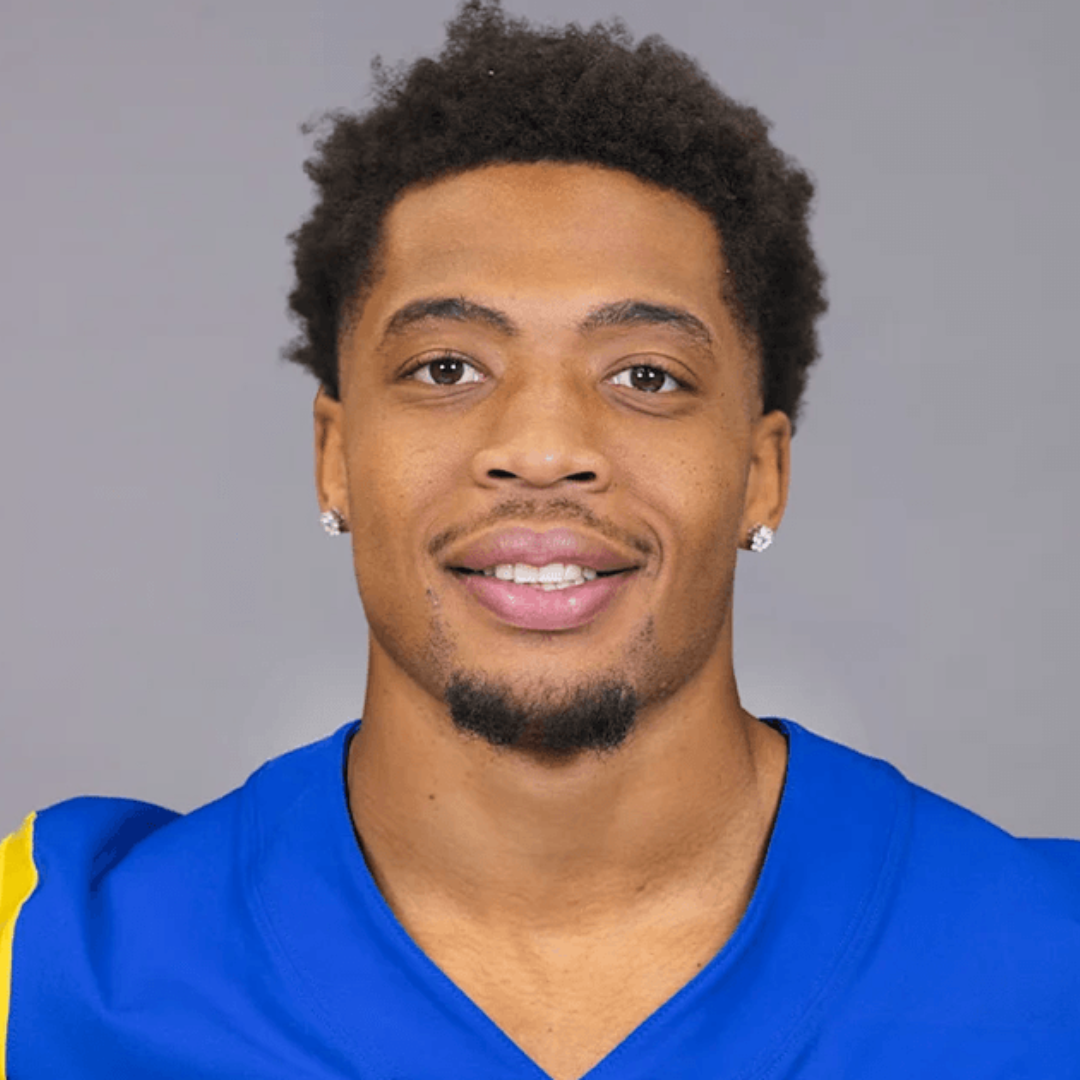
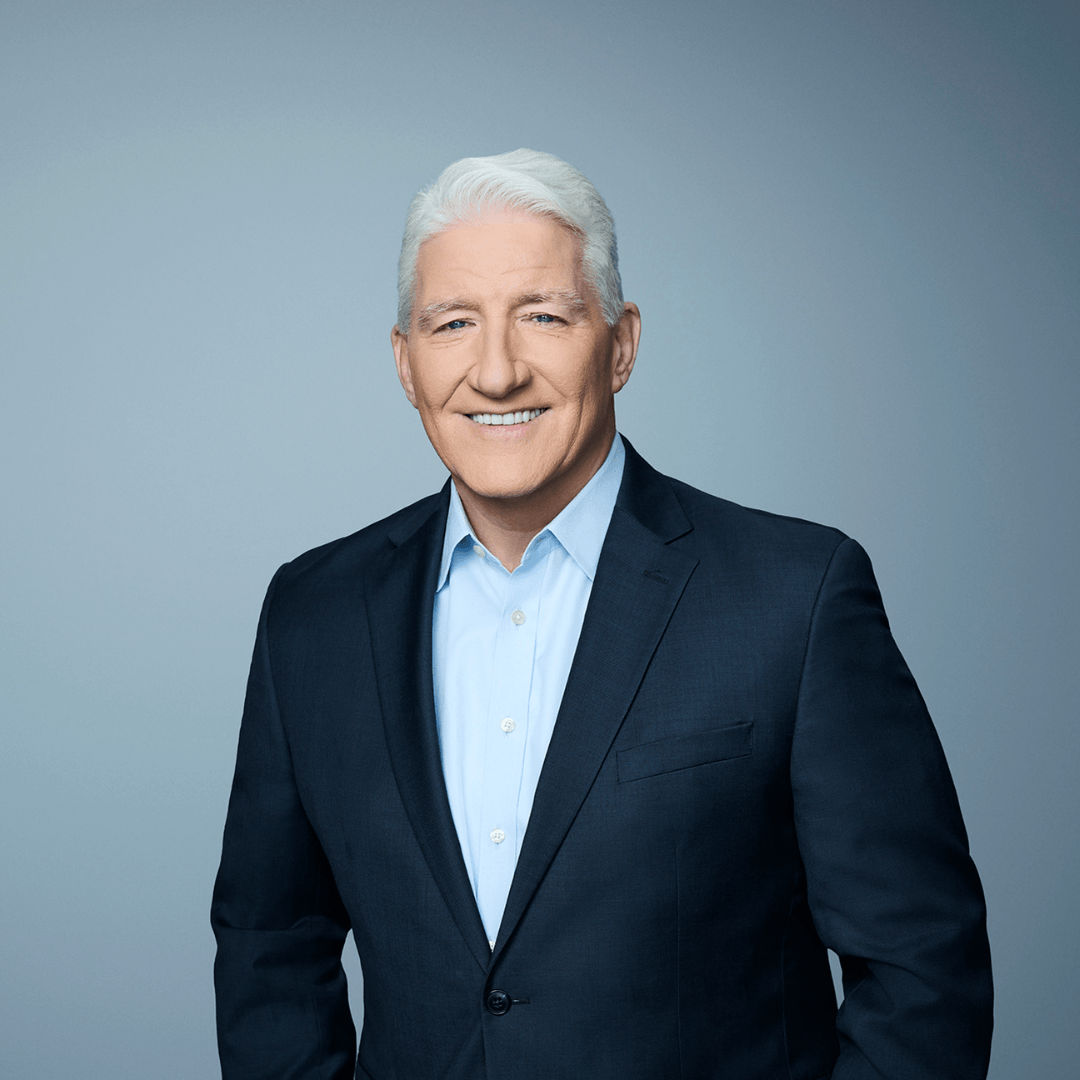
Dr. Correa:
From the American Academy of Neurology, I'm Dr. Daniel Correa.
Dr. Peters:
And I am Dr. Katy Peters, and this is the Brain Health Podcast.
Dr. Correa:
Saludos and welcome back to the Brain Health Podcast. This morning, I was thinking, as I often do at some point each week of my late grandmothers who lived with dementia and mobility issues throughout late their life. Without the care of my aunts and uncles, home health aides, and many other care team members, we would not have had the time as grandchildren to connect with them in those later years and have an opportunity to get to connect and share in those times when otherwise I think we'd just be distracted by everything that's going on.
And at the same time, I recall how challenging this care and support stage was for my mom, my parents, because it was grandparents on both sides and family members who lived either in the home or nearby. Katy, what are some of the ways that you've seen the gifts and challenges for family caregivers of a family member who's living with a neurologic condition?
Dr. Peters:
A myriad of things go into caregiving for our patients with all types of neurologic conditions, for me, including brain tumors. So, it's so vital to recognize our caregivers and what's going on with them personally. Just yesterday in clinic, I had a patient whose caregivers were there. He, of course, is having some issues with speaking and some issues with strength on his right side. And I think there's been a lot of frustration in the past because of his ability to communicate and the caregivers didn't really know how to navigate it, because they want to be an advocate for him, but they also want to give him autonomy.
And during this interaction, now that it's been a while, he was there with his caregivers and it was so much of a better interaction for everybody involved. And one of the things that the caregiver was doing is she was slowing down, letting him talk. She's like, "I learned this from the speech therapist." And so, I love that they had the challenge, but then they sought out the tools to go through. And if he continued to have problems, one of the things that they prompted, they're like, "Do you want choices?" And he's like, "Yeah. I want choices now."
And so, it was really nice to see them adapt together, but how that caregiver also had to adapt. So, I would say it's really about adaptation when you have ... That was such a special moment, but it was also about they had challenges even in that relationship and it's dynamic and it does change. I have to shout out to one. All my caregivers are my favorite, but a favorite caregiver is one of our guests, Janet Fanaki at Resilient People. She has her own podcast and she's doing a special series of podcasts with WeTrials and it's called Caregiver Chronicles, which I think is just so cool.
And I got to participate in one of the podcasts talking about caregivers. So, it's wetrials.com, Caregiver Chronicles. So, check it out. It's A lot of fun.
Dr. Correa:
I'll have to check that out. These challenges are only magnified when there's uncertainty about a diagnosis and what will happen, what's needed, and really points out the need and value of having a community of caregivers and resources to tap into. And especially it overlaps with where we're going with this discussion. And as you experience, when there is a disruption and ability to communicate and socially connect, that just makes it all even much more difficult.
And so, today, we'll hear about Bruce Willis's diagnosis and the course of his condition and how his family has navigated some of his care needs with frontotemporal dementia from his wife, Emma Heming Willis. And we will also discuss what she had learned from other caregivers. And then we'll hear from Dr. Chiadi Onyike from Johns Hopkins and the Association of Frontotemporal Degeneration. So, please, I hope you enjoy this episode and share it with someone else who you think this would be helpful for.
Welcome back to the Brain & Life Podcast. Today, our guest that I'm joined by is co-founder of Make Time Wellness, and New York Times bestselling author, Emma Heming Willis. And following her husband's diagnosis, a prominent advocate for frontotemporal dementia caregivers worldwide. We're so glad to have Emma here joining with us today. I really appreciate you taking time to share yours and your family's perspective.
Emma Heming Willis:
Thank you so much for having me on.
Dr. Correa:
So, Emma, I wanted to go back and before we center everything around frontotemporal dementia or the whole caregiving space, just get to hear some about you and Bruce and your family before any of this really started to happen.
Emma Heming Willis:
We were married in 2009. We always dreamed of, Bruce already has three daughters, but I always wanted to start a family of our own. We have two girls, Mabel and Evelyn, and we're a family that always really loved fun, having lots of fun and lots of joy and laughter, and we loved traveling. We loved being outdoors and hiking. I just would say your average family, loving to be together, making memories with each other was always just on our high priority for us.
Dr. Correa:
I'm just wondering, going back to your two girls as young children together with Bruce, is there some memory or trip or activity that really just stands out for you?
Emma Heming Willis:
Bruce used to have a property in Turks and Caicos on this really beautiful island called Parrot Cay, and it was a very quiet, sleepy island. And we really always enjoyed going there because we were able to, again, be together as a family. It was so quiet. There wasn't this rush of the crazy world I think that we live in. Everything just slowed down over there. Bruce loved fishing and being able to go out on the boats and build sand castles with the kids. We really love just a beach holiday. So, I would say that is a place that we loved and really enjoyed.
Also going to Idaho because we love bike riding and hiking and I'm not much of a skier. Bruce was a skier. I preferred the hot cocoa waiting for him at the end of the run. But yeah, I just think the great outdoors is where we have always made some of our best memories, I think, as a family.
Dr. Correa:
Yeah. I'm definitely with you there on the hot cocoa and the hot tubs and the friends can go skiing.
Emma Heming Willis:
Yeah. No. I'm not big into the cold weather. Again, that's why I like a beach holiday, the sun, that's where I thrive, not in cold weather.
Dr. Correa:
That really sounds like some great and special times together. So, many of us know and have seen Bruce through many of his characters and roles and movies and TV. But I'm wondering at home, how was he and what was it that started to change that you and the family noticed?
Emma Heming Willis:
Bruce has always been a very present dad, very present husband. He's always said his most important role is that one of being a father. Bruce eventually was diagnosed with FTD, frontotemporal degeneration, and the variant that he was diagnosed with is called primary progressive aphasia or PPA. So, what I started to notice was that his stutter started to come back. Bruce always talked about having this severe stutter when he was a young child and he got into acting and then realized that by being able to memorize these words on a script that he was able to recite them back without stuttering. And I think that brought him into this world of acting.
And I started to notice that stutter started to come back. Our communication wasn't really there like it had been in the past. I mean, it's very subtle. I think it's very hard when you are dealing with this form of dementia of really trying to understand where that person stopped and where their disease came in. So, it was really language and communication was probably what I was noticing, but never in my wildest dreams did I think this was a young onset dementia that was surfacing. That wasn't my first thought.
Dr. Correa:
And for Bruce and what he shared starting off, did he feel that it was the same as the stuttering experience that he'd had as a child or that something different was happening about his language and his vocal production?
Emma Heming Willis:
I mean, to be honest, it was never brought up, which I always thought was interesting. Because it was something that I noticed, but didn't seem to bother him.
Dr. Correa:
Yeah. And as some things continued to change and progress, did he or did you notice other challenges or limitations that he was having doing things or cognitively or was it much more the language progression before anything else started to get impacted?
Emma Heming Willis:
Yeah. Definitely the language. Definitely the language. And like for most people, what we hear about FTD, that it can take an average of three to seven years to get to a diagnosis. It is underdiagnosed. It is misdiagnosed. It is not flagged enough in the doctor's office. I think what happens is that this gets looked at as sometimes a midlife crisis or depression or someone being bipolar or age. Oh, language, that's just part of age is just a part of aging. So, there's a lot of dismissal for people trying to uncover what might be happening.
Dr. Correa:
Yeah. I mean, in that path for so many people and getting an accurate diagnosis and information about what's going on in its progression is so prolonged. I think we as a community were very much of course outside of the initial diagnosis and information until your family started to share more with the community. And I'm wondering, early on, what was that experience for you and for Bruce and the information you received? Did he get relatively quickly to the information about the variant and it being a frontotemporal degeneration or was it one of these things where they weren't sure, they called it other dementias and then later on was more specified?
Emma Heming Willis:
Yeah. I mean the first diagnosis that we received was aphasia and it wasn't until a year later where they landed on FTD. So, that was a misdiagnosis, obviously, because aphasia was a symptom of a disease, not the actual disease. So, we finally received that diagnosis, the proper diagnosis at the end of 2022.
Dr. Correa:
How do you think for you and the family, his children, the actual diagnosis and that information changed things?
Emma Heming Willis:
I remember hearing FTD, frontotemporal dementia, and through that year I learned about different types of dementia and I just always remember neurologists talking about FTD and then saying, "FTD, oh, boy, that's the one that you don't want." Then hearing it in the doctor's office, it was like I could hear nothing else. And then to be sent away with really no support, no roadmap, no "here's what to do next." It's kind of a, "Well, here's the diagnosis and just check back in a couple of months." It was a really traumatic time for us.
And that's not just our story. That is so many people's stories is that at that diagnostic appointment, it's really a diagnosis and good luck, because there really aren't treatments. There's obviously no cure. And we are sent away to try and pick up the pieces and figure out what to do next. And I just think that's just a really tall order to ask of caregivers and people newly diagnosed to also have to figure out what they need to do to support themselves on this really hard journey.
Dr. Correa:
And I mean, what did you guys do with the next steps and what were some of the resources that you found without that roadmap?
Emma Heming Willis:
I mean, I dived into the World Wide Web and looked up what frontotemporal dementia is. And as we know, looking up any kind of disease, even a common headache on the internet is a scary place to go. And it was just terrible to really gather all the information that way. And I'm sure there was a lot of information there that wasn't accurate. So, I just had to sift through it, really figure out what support do we need? What do I need to find? And slowly by slowly, I just started to put all of those resources together and be able to reach out and try and get some kind of support and some kind of education that could really help me guide us through this next chapter of our life.
Dr. Correa:
And once you did start to find some of those things, were there specific organizations and resources that you found most helpful? We're going to be making sure to include for our listeners the information and links to several organizations and resources in the show notes.
Emma Heming Willis:
Yeah. I mean, the Association for Frontotemporal Degeneration was a really great resource for us. I mean, I think even at that diagnosis appointment, if they would've just said to me, "You know what? Here's the diagnosis. But here is a place where you can find resources and support." If they would've just said, "Here's a pamphlet for the AFTD, here's their website, look it up." And that's where you're going to find the right information about the disease, the kind of support that's there, the resources. It's all there.
And I had to go the long way around to figure that out. So, what I always say to people if they receive a diagnosis, and if it's not FTD, maybe it's Lewy body, maybe it's Huntington's disease, that it's important to get to that organization or to that association. So, that's always, I think, a really good first step, a really good first resource to look to as opposed to going online and just trying to cobble things together yourself.
Dr. Correa:
Absolutely. And after that initial diagnosis and that information, sometimes there is that just an anchoring on whatever the cognitive symptoms that are part of that dementia, or in this case, the language progression. But probably there's been little opportunity to talk about what are all the other aspects at this time or maybe in the future with frontotemporal degeneration or as dementia progresses? And what have been some of those things that are outside of just cognition and language that have been an experience for you and for Bruce over this time?
Emma Heming Willis:
I mean, I think what was really important was, again, the education and understanding what FTD is and understanding what I need to do and how I can effectively show up as a caregiver. And one of the people that I found while I was in my online discovery was Teepa Snow, who was a dementia care specialist or who is a dementia care specialist. And I was able to reach out. I was able to get an appointment so that I could really understand what this would look like for me as a caregiver to really understand what I needed to be able to show up.
And she wrote this book called Understanding the Changing Brain, which was a really important book for me. Because what it did was it allowed me to understand what a healthy brain looks like versus what a brain looks like that has a disease. And it made me then learn and understand how to separate my husband from his disease, that what he was doing was not on purpose. He didn't mean to be doing what he was doing. It was that his brain had a disease.
And I think that was a really important realization for me, which then brought back so much more, I think, compassion and patience and empathy when I realized that this is what happens when a disease is challenging a brain. So, I think that was helpful to me. And Teepa really educated me on the progression of the disease and how to show up in certain ways and what's helpful and what's not helpful. And that there's 120 different forms of dementia and that each different type of dementia needs different support.
So, someone that has Alzheimer's is not going to need the same support as someone that has FTD. So, I think understanding that was really important as well. When we think about dementia, we automatically think about Alzheimer's disease, because that is the most common form of dementia. But FTD is the most common form of dementia for people under the age of 60, and you're going to need to show up differently for a younger person with a young onset dementia than you would someone who might get Alzheimer's a little bit older as they're older in life.
Dr. Correa:
Yeah. Absolutely. And I've heard consistently from families how helpful that book is. So, for our listeners, we'll make sure to also include that information. Because I think if you or a family member are in this situation supporting anyone with a type of dementia, I think that can be a really excellent resource.
Emma Heming Willis:
I think it's also important because it allows you to get out of the denial of what is happening. We're quick to not accept what is actually happening. We don't want to. I mean, it's painful. But I think it's so important for us to educate ourselves about whatever type of dementia that we're going through with our loved one, friend, family, so that we can learn how to really support them and just cut out that denial part like it's not happening. That just makes it so much harder. You just end up losing this uphill battle as opposed to just embracing and educating, I think is really just very helpful and lowers the stress a little bit, a little bit.
Dr. Correa:
Allie, I really appreciate you joining us and thank you so much for everything that you've shared. I'm really looking forward to as we continue this conversation next week.
If you've been a listener for long enough, you already know that one in two in the US alone is affected by neurologic disease or disorders. That's 180 million people and there's no time to waste in finding better treatments and cures.
Dr. Peters:
Our podcast is powered by the American Academy of Neurology, a global community of neurologists and neuroscience professionals. They've funded cutting-edge research for decades, but they can't do it alone.
Dr. Correa:
You can personally support this work through the AAN research program where 100% of your donation goes directly to researchers. You can help drive breakthroughs that bring hope to patients and families. Learn more at brainhealth.com/donate.
And we're back. Thank you again for joining us for this episode, and I really appreciate Emma and the Heming Willis family's openness about sharing their experiences with Bruce's own condition and his cognitive changes. And now, I'd like to continue our discussion with Dr. Chiadi Onyike. He's a psychiatrist and dementia specialist and a professor at Johns Hopkins University who has dedicated his career to understanding a variety of neurodegenerative conditions, including frontotemporal degeneration.
He serves as the chair of the Medical Advisory Council for the Association for Frontotemporal Degeneration, and they help and work advancing research, education, and supporting individuals and families who are affected by FTD. Chiadi, thank you so much for joining us today.
Dr. Onyike:
Thank you, Daniel, for having me. This is a topic that, as you just mentioned, I've dedicated a lot of my time, my career to. It's a labor of love in many ways. And so, every opportunity we can to get people to know what we're up against is welcome.
Dr. Correa:
And along that, I think thankfully, we are getting a lot more awareness in the community about dementia in general, about some dementias like Alzheimer's disease, but not as much understanding about frontotemporal degeneration. I think some people's understanding or even hearing the term probably raised a lot when Bruce Willis family started to share some more about his own condition. But how do you tell people either in the community or family members of someone, what is FTD and how does it differ from other forms of dementia?
Dr. Onyike:
So, FTD, frontotemporal dementia, sometimes also referred to as frontotemporal degeneration, and it used to be called Pick's disease many, many ... a generation ago. It differs in the public consciousness. Alzheimer's disease dominates understanding awareness of what dementia is, and often it's referred to by the euphemism memory disorder or memory problems. And in fact, many clinics that focus on Alzheimer's disease, and in some cases, they focus on other dementias besides Alzheimer's disease, but they refer to themselves as memory clinics.
And so, this has proposed a challenge in a way for articulating what frontotemporal dementia is and how it differs from Alzheimer's disease. Fundamentally, frontotemporal dementia presents as a progressive change in people's temperament, in their judgment, in their dispositions, and in their self-control. The way I like to think about it or present it is that it erodes those things that we learn at an early age, how to conduct oneself in company, in public.
And so, those things that would refer to as good manners and consideration for others, those kinds of aspects of human personality are the things that are destroyed by frontotemporal dementia. And in some cases, rather than present that way, it presents as progressive erosion of the ability to communicate verbally. So, you have a condition that either results in progressive decline in a person's conduct and capacity for self-control and/or in their ability to communicate verbally.
Dr. Correa:
Yeah. And we hear that as the example and the description that Emma shared about Bruce Willis's own experience, that a lot of the degeneration and loss of ability to communicate, at least in verbal language, still a lot of the actual interpersonal connection and communication that we might express visually and with our interaction of those around us that we love. Some of what you were describing, we talked about some degeneration of some of the things we learn early on socially, and maybe some of that even in verbal communication.
But Chiadi, at the beginning I was describing again, you're a psychiatrist, so some people might wonder, well, why isn't that just a psychiatric condition?
Dr. Onyike:
Well, that would be a terrific question. I think the boundary between psychiatry and neurology is fuzzy. And psychiatrists have traditionally been concerned with conditions that affect mental life, that affect behavior. And many people will draw the boundary whether there is an identifiable lesion in the brain or not. But it turns out that psychiatrists, by virtue of their training and focus and their familiarity with certain kinds of treatments, are very well-positioned to manage the problems that arise from a condition like frontotemporal dementia.
And psychiatrists, by the way, are very much involved in the care of people with Alzheimer's disease and other dementias as well, particularly when they pose behavioral problems. I would add that Alois Alzheimer himself was a psychiatrist, so was Arnold Pick who provided the original description of frontotemporal dementia, and so were many of the other leading lights of that generation who described other kinds of dementias.
Dr. Correa:
Yeah. Both of our fields have gone through so many evolutions over time, and for many years, many of the leaders were both. They practiced both psychiatry and neurology, maybe leaning more in one direction or the other or more time in a laboratory.
Dr. Onyike:
Absolutely. Absolutely. In fact, people reacted surprised when I let them know that Sigmund Freud was a neurologist.
Dr. Correa:
Yes. Yes.
Dr. Onyike:
Yeah. So, I think a lot of that time where there was so much unknown about brain function and brain disease and psychiatric disorders of mental life, I think a lot of that time, people worked on what was interesting, on what they were interested in, more so than defining themselves rigidly as being a specialist in one area or the other.
Dr. Correa:
Yeah. I think I've often thought of it as this separation, at least in our current practice, as with neurologic conditions you described, you said and pointed out kind of a lesion or maybe I'd say a dysfunction, because there are some conditions that are more like networks or connection of different parts of the brain. And when there is that damage occurring with a neurologic condition, there can be, and often, even if it's not a primary part of the condition, going to be some substantial psychiatric comorbidities or we would say basically side effects and complications that can come with it.
And then I think of the psychiatric conditions as those where, hopefully, a lot of the brain and structures are working well on their own, but it's something more about the dynamics of how things interact that relate to our behavior. But that's where I'm trying to put it together.
Dr. Onyike:
Well, there's a lot we don't understand about brain function. We know that certain regions observe or underpin certain functions. So, there's an area without which memory function would be impaired. There's an area without which executive functions will be impaired. But how it gives rise to foresight and hindsight and affection for another person, these are things that we don't yet understand. But as you mentioned, they probably arise from network dysfunctions or network perhaps miscommunications and things that are otherwise working fine.
Some of my teachers would make the distinction between hardware and software and they'd say, "Well, software may require rebooting or reinstallation." Now, we can't reinstall people's minds, of course. But the underlying idea being that the brain itself structurally is complete. There's no lesion. There's nothing broken. It's just not functioning smoothly.
Dr. Correa:
So, we've been already laying out some of the complexities of our interaction between psychiatry and neurology and some of these medical conditions or diagnoses that we really border and cross both fields. We're grappling with even just the broader concepts, but a diagnosis of FTD can be so overwhelming for an individual and their family. What do you wish every family understood or had at their fingertips in the first few months after a diagnosis?
Dr. Onyike:
Oh, there's so many things.
Dr. Correa:
Yeah.
Dr. Onyike:
Yeah. I mean, the first thing, and I would say this is the unfortunate thing, is that by the time people get the diagnosis, quite a bit of suffering has already happened. You see a loved one beginning to behave in ways that aren't characteristic, in ways that are embarrassing, in ways that get them into trouble. And just getting an explanation for many people is a relief. And then beyond that, it's knowing where to go with this. Where do you go for support? Where do you go for care?
So, to my mind, that's the very first question to answer. What's going to be your home, so to speak, your clinical home for this? Who's going to help you with this problem? Recognizing that today we don't have a cure. Sometimes people say there's no treatment. I beg to differ. There's always treatment. There has always been treatment. That's why medicine has been here for thousands of years. What we haven't had is cure. That's what we seek.
But in the meantime, there are many things that we can do that constitute treatment. Some of them are pharmacological, some are not. And I guess you could classify them as behavioral interventions and care interventions and psychotherapeutic interventions, but they're all treatments of a sort. So, where to go is, to my mind, the first question that people need. And then the second is where to get support beyond the clinic. This is where the AFTD comes in, this is where community networks, many of which are supported by the AFTD, come in to help people with the challenges of day-to-day care and with the adaptation, living life under new circumstances.
So, how do you adapt to this? How do you live life, continue to live? Because in my view, we must continue to live to the best of our ability. I'll give an illustration. It's not unusual for people to get a diagnosis and then be immediately told they have to stop driving. And it may be that they drove to the clinic. And our view would be that the condition should take, so to speak, take the ability away. We should not take it in advance of the person losing the capacity. Because when we do that, we compromise the ability to live.
Dr. Correa:
That idea of really focusing on supportive care, supporting the quality of life, both for the person and their family and the resources to help them with that are so essential for this in many other conditions. But as you said, the where. So, if an individual and their family don't feel like they have a home, a team that's really identifying with them as let's be your primary area of support and questions as you're navigating this, what should a family do?
Dr. Onyike:
Well, I think firstly, connect with the AFTD. And the reason for that is because the AFTD has networks and also the AFTD knows where the clinicians are. Now, unfortunately, if one were focused on the specialist centers, there are not enough of them to go around. The United States is a big country. Sometimes people are faced with a five-hour journey to get to the nearest place. That's not entirely practical. But many of these centers partner with local neurologists, mostly it's neurologists more so than psychiatrists once you get to community care.
But in our case, for example, we see people from far-flung parts of Virginia, West Virginia, remote corners of Maryland, which is where I am, the state I'm in, Delaware and parts of Pennsylvania that are closer to us, for example, than to the center in Philadelphia. And we partner all the time with the community neurologists. We partner with primary care physicians. And what I say to people is expertise, believe it or not, expertise can be outsourced. What is important in a physician who will help you is that they're available, that you connect with them, and that they are capable in providing care at the basic level.
And as long as you check those boxes, and many good physicians will, every good physician will, you can be connected to a center and also be served by someone local as long as these two are communicating. So, that's very much possible. But for many people, it's the where to start, as you point out, as we're discussing, it's where to start. And this is where a place like the AFTD comes in, because you can go on their website or you can call the helpline and get at least the recommendation to start with.
Dr. Correa:
Yeah. And as you pointed out, some people and their families may go months and undergo a lot of both personal injury about what is going on and uncertainty before they even have the name. And we'll have in our notes both of the lines for both of these helplines. But I know that the Alzheimer's and Dementia Association, their helpline supports anyone who's developing any kind of progressive cognitive issues. So, even if you don't have a name of diagnosis, they can go to them to start.
If someone is unclear about their diagnosis, but it doesn't really seem to be fitting in with Alzheimer's, they've been told that, can the AFTD organization also support them in helping find the right place to be going for their support?
Dr. Onyike:
Absolutely. And I think you raise a good point mentioning the Alzheimer's Association being able to, regardless of the kind of dementia, and that's true for the AFTD, and it's true for all the other organizations. The Lewy body dementia, for example, there's also an association, the Lewy Body Association that helps, that is the primary advocacy organization. And these advocacy groups to the accredit talk to each other, they collaborate, they collaborate in trying to get the word out. They have areas of emphasis, of course.
But they also collaborate on the bigger picture, which is to help us all manage the challenges of brain aging and the afflictions that can come with brain aging, the challenges of ensuring public awareness and public support, including research funding. And so, they have many reasons to collaborate. The more the merrier in many ways for many things. So, yeah, if one suspects dementia, even if you don't have it right, approaching the organization that you approach, they'll steer you to the correct place or they'll at least get you to a center that can help you identify the diagnosis. And then from there, you get steered to the right community resources.
Dr. Correa:
Thanks, Dr. Sabbagh, and I really look forward to our continued discussion about this next week.
Dr. Onyike:
Thank you so much for having me.
Dr. Peters:
Thank you for joining us today on the Brain Health Podcast. Follow and subscribe so you don't miss our weekly episodes.
Dr. Correa:
Also, for each episode, you can find out how to connect with our team and our guests along with great resources in our show notes. We love it when we hear your ideas or questions, and you can send these in by email to podcast@brainhealth.com or leave us a message at 612-928-6206. I'm Dr. Daniel Correa connecting with you from New York City, and you can find me on social media at neurodrcorrea.
Dr. Peters:
And I am Dr. Katy Peters, joining you from Durham, North Carolina and online at Katy Peters MD, PhD.
Dr. Correa:
But most importantly, thank you and all of our community members for letting us be part of your brain health journey. You make this podcast what it is. And by listening each week, you're helping us promote brain health for all.
Dr. Peters:
Before you start the next episode, we would appreciate it if you would rate us five stars and leave a review. That helps more people find us. And don't forget our website, brainhealth.com. Subscribe to receive our newsletters and be a bigger part of our growing community. See you next week.