Dr. Correa:
From the American Academy of Neurology, I'm Dr. Daniel Correa.
Dr. Peters:
And I am Dr. Katy Peters, and this is the Brain Health Podcast.
Dr. Correa:
Welcome back to the Brain Health Podcast. So Katy, since the changeovers of brainhealth.com, have you had a chance to check out some of the website and some of the recent article updates?
Dr. Peters:
Yes, I have. And it looks great. Have you been?
Dr. Correa:
I have, yes. I'm really enjoying the look of it.
Dr. Peters:
Good. As soon as it hit social media, I've been sharing it with everyone. The brain logo is cool. And if you look at the website, I really thought the flow of the articles, it seemed very seamless to find things on the website, I felt. I felt like it looked very logical. I also found us. Our podcast is there. Yay. And the new music on our podcast sounds awesome. It's almost like going back to school. It's called the new ... it's like these are our pencils and trapper keepers. It's our new website. Yay.
Dr. Correa:
Yeah, I like the flow of it. I was just reviewing this week with a trainee, a recent article that was posted to the website on how clinical practice guidelines are helping people choose preventive migraine medications. And we were talking about how the languages that's written through this website, that's for everyone can not only help our community members when they're thinking about medications and options for prevention of migraine, but to help us and other neurologists have that information in a much more clear and explainable way for community members.
And I'm really looking forward to more of the updated articles. There's definitely some articles that I would like to refer back to or send to people that were part of the Brain and Life website that are being all reviewed and updated and will make it to thebrainhealth.com. So looking forward to when we have those at access for our community. And I'm looking forward to more stories about advocacy from our community. I know we have several in progress, and one of those comes from our podcast today.
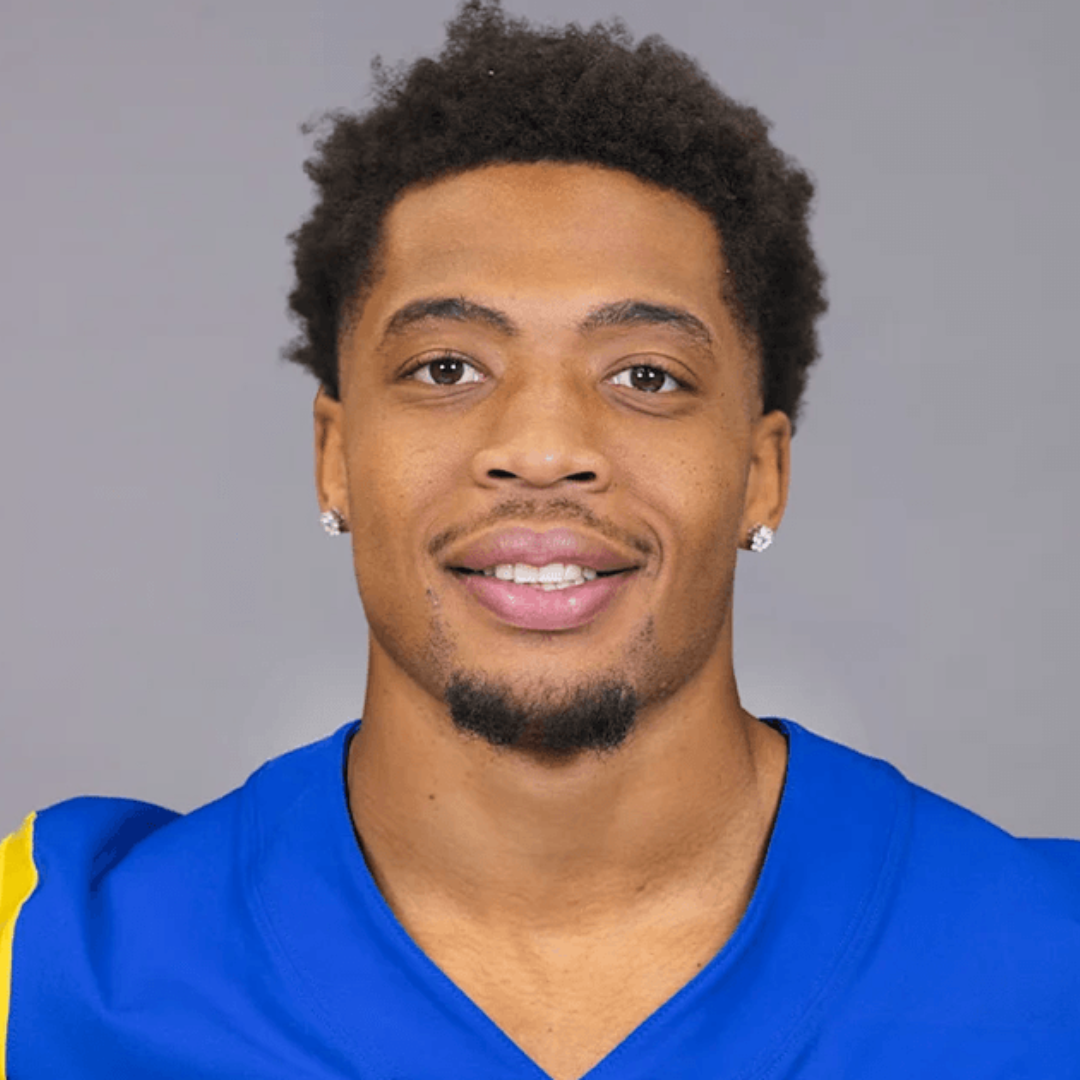
So in my conversation with NFL wide receiver, CJ Daniels, we talk about his experience with advocacy for epilepsy and how epilepsy affected his family since he was even a young child and the nonprofit that he and his mother, who is the one that lives with epilepsy, help support. To learn more about living with epilepsy, please listen through to our medical expert discussion with Dr. David Spencer, the editor of the Brain Health Book series, the Navigating Life with Epilepsy book and an epilepsy specialist from the West Coast. So I hope you enjoyed this episode.
Welcome back to the Brain and Life Podcast. It's a hot summer all over the country, and many of us are inside escaping some of that heat watching one type of football with the World Cup, but there are those who are out there training for the NFL season. And today, we're joined and excited to be here with CJ Daniels, a professional football wide receiver and epilepsy advocate. Just this last April, he was selected by the LA Rams in the NFL draft after playing at Liberty University, Louisiana State, and University of Miami.
CJ's commitment to advocacy and epilepsy is deeply personal. His mother, Natalie Beavers, has lived with epilepsy since early childhood. Growing up, he learned how to respond to her seizures, seeing the impact of epilepsy can have on other families and whole groups of people. And these experience are what he learned from the community of epilepsy in 2008 that led him to found the nonprofit Angels of Epilepsy. Through this platform, CJ has helped promote seizure education.
Challenge the stigma others experience with epilepsy and support people living with epilepsy and their loved ones. Thank you so much, CJ, for taking a break from the summer training camp with the Rams to join us and our listeners on the Brain and Life Podcast.
CJ Daniels:
Yes, sir. Thank you for having me, man.
Dr. Correa:
So CJ, help us get to know you beyond the football field, beginning maybe with your family, your upbringing, and your athletic journey.
CJ Daniels:
So growing up, I've always wanted to be in some type of sporting site, whether it was football, basketball. I just really had the athletic abilities at a young age and see others that were doing what I'm doing now and very encouraged by them and see how hard they work. I just knew I wanted to be in that spot that they were in, that I'm in now. But growing up, I had a supportive family, got three brothers, one sister.
And my parents were just very supportive of me, whatever I wanted to do. They had my back on everything. I'm just grateful to have a family that supported me all this way and did everything they could to get me in this situation. So I wouldn't be here without my parents, my family, and my support staff. So it's definitely a blessing to have the right people in my corner for sure.
Dr. Correa:
And is there something you've learned from your time training in football and this athletic journey that you take to your community and beyond the field?
CJ Daniels:
I'd probably just say the level of confidence. Being confident is not only dealing with sports. I feel like you got to be confident in everything you do. And when you have that confidence, it just breeds a different animal. It really just brings a person that is willing to never back down. My father always told me, growing up, it's really about the mindset you have. So the mind over matter, being able to conquer anything no matter the circumstance, no matter how hard it is.
So really just having that in my back pocket for sure and ultimately, having that faith in God, I'd probably say that's the main thing. You can do anything through Christ. So as long as you believe in yourself and you leave it up to Him, everything will be taken care of.
Dr. Correa:
And I've seen that some of your work advocating within the epilepsy space began long before you had a public platform in college and in other settings. What are some of your earliest memories of your mother's experience with seizures and when did you begin to understand what epilepsy meant for your entire family?
CJ Daniels:
So for me growing up, I think the first seizure that I've witnessed was probably when I was about four years old, I'd say. And I was alone at the time with my mom. And usually my older brother was always there, so he was there to really show me the ropes. But the first time I experienced it by myself was I was probably four years old and I went into the room where I just seen my mom on the floor. And for me, being a kid at that age, I was really scared. I really didn't know what to do.
I didn't have the training at that time, but it came a year or so later and I just seen my mom on the ground. So I really just sat with her. I really didn't know what was going on. I was just there just being with her, supporting her through it, getting her water, her meds, whatever she needed at that time. For me, it really clicked when ... I would be with my older brother and my mom would have a seizure and I would literally just be behind him and see what he does.
Every time she had a seizure, he was able to lay her on her side, get her her meds. From then on, it really just became second nature, I would say, whenever a seizure might've happened.
Dr. Correa:
Yeah. I mean, one thing you might not know is I also grew up in a family and my mother has epilepsy, has lived with epilepsy over the years. I remember in middle school, I think we talked about it and we knew about it. I didn't really even know necessarily what it was for her, what her experience was. But yeah, it was in middle school. It was the first time that I heard a thud upstairs and rushed up and had to go into the bathroom and help my mom who was in there.
And that I think was really my first experience in really seeing how it can impact a person and feeling it as in the family. Now, for many individuals in that situation, it really makes you grow up quickly. And you've described how this made you grow up quickly and learn how to help you, your mother and your family. How did being a young family caregiver, care supporter shape you?
CJ Daniels:
Growing up, like you said, I had to mature at a young age, I'll say. So really looking back at it, I really felt like I had the tools that was necessary in any situation. I had the tools that I was definitely prepared for that if somebody had epilepsy and I've seen a seizure, I was able to help and I was able to be a caregiver to them. So like you said, growing up at a young age, it was hard to see. It was very impactful on me and my family because it was just something that we couldn't control.
Seeing that definitely, it gave me guidance. It gave me strength through everything that I needed to go through because there was nothing harder that I would face that my mom has went through. So it definitely had me mature at a young age, for sure.
Dr. Correa:
Yeah. I mean, thinking back, what support do you wish you had been available for you and your brother as young care members in their family?
CJ Daniels:
At that time as a kid, I felt like we had a great support system. At that time, I really couldn't say what I wish we had, but we definitely had family in the surrounding areas that we could call on to ... whether my mom needed something, whether it was groceries, whatever we needed. I felt like we had a great support cast. I really wish that epilepsy awareness was advocated more. You know how we treat Breast Cancer Awareness Month? I really wish that epilepsy awareness one day could be as popular or be more put out.
So I really hope that seizure first aid is definitely something that is put out there. So I really hope for that.
Dr. Correa:
Yeah. I mean, so many people are frightened and shocked when they see a seizure.
CJ Daniels:
Yeah, for sure.
Dr. Correa:
Because they don't know what to do or they rely on myths that we've seen or heard from others or seen in movies or in television. What would you want every teammate, coach, teacher, family member, community member to understand about seizure first aid and responding with dignity?
CJ Daniels:
Yeah, definitely. I'd probably say this is something that ... like you said, I've been doing this my whole life, and one thing for me is to leave a mark everywhere I go. Literally all my schools that I've been at, middle school, high school, I've always did something to show my awareness and show that I advocate for epilepsy and the awareness of it. So really for me, just giving those around me guidance, giving them the knowledge on what you need to do when it comes to anyone having a seizure.
I really just try to leave my mark and just give first aid tips wherever I go. I've done it at every school I've been at. And for me, I would just tell them in the moment if a seizure did occur, for them to just stay calm. That's really the main thing because there's nothing you can do to get them out of that realm that they're in right now. So you really just have to wait for them to come out of it. And I think the main thing is just to be calm and use your tools and training.
Dr. Correa:
And for our listeners, we're going to provide some information and resources in the show notes for seizure first aid resources. And with our medical expert discussion following my interview with CJ, we're going to talk about some of the key points for seizure first aid and the different instances where it might be something a little bit unique, whether it's in the school or in other settings. Now, CJ, your family founded Angels of Epilepsy in 2008 and you chose to become actively involved very early on.
When did you realize you wanted to tell your family's story publicly and make advocacy part of your own life's work?
CJ Daniels:
Yeah, so I can't take all the credit. It started with my mom. She is the one who mapped out a plan and had the idea of, after her brain surgery, she just wanted to do something cool and rewarding to those who was diagnosed with the same thing she was. And I think that's really cool that she wanted to give back to people who are just like her. So I can't take all the credit for that. So it definitely started with my mom.
And growing up, she was always telling me, "I want you to be the vice president of the organization." And for me at that age, it kind of went over my head, but I felt like I was already the vice president at that moment. So growing up, I knew it was something I was always going to want to do and advocate for my mother because like I said, she's somebody that supported me when I was a child and I dreamed of doing stuff like this. She stood there by my side every which way.
So for me, giving back to her and supporting her is definitely something ... I feel like that's ingrained with me. I feel like it's something that just comes with being a family. So I'm the vice president, I'm excited to be a part of this organization with my mother and continue to grow this awareness for sure.
Dr. Correa:
Yeah. I mean, it's amazing how much some of the biggest things that we do in our lives that formed our lives start with those people who really truly loved us and had supported us.
Dr. Peters:
No doubt.
Dr. Correa:
I mean, the whole reason I'm here as a physician is my mom, and I tell even some of the students I help mentor, my first pathway program, training program to get on this way, I see it as my mom and not necessarily some sports program or anything else or even a medical or science program. It was her who found those first steps for me. And now Angels of Epilepsy goes beyond awareness to helping people with medical identification bracelets, medications, transportation, other education and short-term needs. What have you learned about the less visible burdens and challenges of living with epilepsy?
CJ Daniels:
The normal person may not see somebody with epilepsy the same. I think somebody that hasn't really been around a seizure or anything might just think of that person different thinking that they're not as good as them as the normal person. But for me, they're human too. I think that is something that as a community, as a whole, that we definitely need to get better at and not judge people just because of their diagnosis or what they have to go through. Because at the end of the day, God made us who we are and we can't change that.
So I think looking outward, the outer perspective, definitely people should never judge people based on what they're going through.
Dr. Correa:
Yeah. And I was seeing that throughout your college years and your master's program at Liberty, LSU and Miami, you brought epilepsy education to the college community and college football environments, whether it was through health summits, hospital visits and tours, or even advocacy and getting the purple ribbons on the LSU helmets. As you begin your NFL career with the Rams, how do you hope to use this larger platform and what would be meaningful for an involvement from the sports organizations like the NFL and you?
CJ Daniels:
Yeah, like what I just said earlier, I just want to ... I want to leave my mark and I want epilepsy awareness to grow based on not just me, but the whole community, man. I just want that community to rise for sure. And now being an NFL player, I'm able to use my platform even more. So for me this year, I want to definitely take it to another level. Like I said, I want to do the ribbons on the back of the helmet again, but I also want it to be a worldwide type thing.
So for all 32 teams, it's possible. So like I said, I'm definitely going to brainstorm some ideas with me and my mom and we definitely ... we want to take it to a new level for sure.
Dr. Correa:
Yeah. I mean, and it's amazing. It's clear that your mother's courage and resilience has clearly influenced you and the way you approach life moving forward. What's the most important advice you would share with someone living with epilepsy or a child, sibling or parent supporting them?
CJ Daniels:
Those living with epilepsy, you're not alone. You can't do it by yourself. And I think it's really important for you to have a great support system because you're definitely going to need them because dealing with epilepsy, you're definitely not going to have the best day each and every day. So I think it's really about being around those who love you, who care about you, and will support you for a lifetime, not just in the moment. So I'd probably say that for caregivers and those living with epilepsy.
Dr. Correa:
And a big part of our discussion here within this podcast is often the overall idea about brain health. And both as an athlete, football player and a member of the community and someone who loves someone living with epilepsy, what does brain health mean to you now and what are some of the most important things you're trying to do to take care of your own brain health?
CJ Daniels:
I'd probably say for me, I've been trying to read a lot more. I've been just trying to get out of my comfort zone, I'd probably say with doing a lot of different things that I'm not used to as far as creating new hobbies, doing puzzles, really just doing complex things to help your brain for sure. I'd probably say that's definitely a big thing that I would do.
Dr. Correa:
Well, I wish you all the luck through this beginning of the year and the season. I might be turning into a little bit of an LA Rams fan-
CJ Daniels:
Yeah, come on now.
Dr. Correa:
Just to watch and check it out.
CJ Daniels:
Come on now.
Dr. Correa:
Now, I'd love to hear, what are you most excited about in this season?
CJ Daniels:
For me, I'm blessed to be able to live my childhood dream. So it's definitely a blessing. And I think the biggest thing for me is not taking the day for granted and not letting my foot off the gas because at the end of the day I'm here, but you got to stay here. So for me, just having the right mindset each and every day, attacking the day with great maturity, attacking the day with the mindset just to get better each and every day and earn trust from the coaches, my teammates, and really be the best version of myself each and every day.
Hold myself accountable to the highest standard, hold my teammates accountable. And at the end of the day, I want to win. So I'm going to bring leadership, I'm going to bring encouragement. I'm going to do whatever I got to do for my team for sure. So it's going to be a great season.
Dr. Correa:
Well, I look forward to seeing the start of the season, seeing how things move forward. Thank you so much, CJ, for joining us on the podcast and for everything you're doing out there to advocate for the community living with different neurologic conditions. We really enjoy you joining us here.
CJ Daniels:
Thank you. I appreciate you.
Dr. Correa:
Wait, don't let this conversation stop here. Follow us at AAN Brain Health on Facebook, Instagram, and X to keep up with the latest science and brain health tips. And if you find a great story or other posts about brain health that you want to share on your social media, send it to our team at AAN Brain Health. It was so great to get a chance to talk to CJ about his and his family's experience with epilepsy and the advocacy work he's been doing. And to help us put some of CJ Daniel's family experience and advocacy work into the broader idea of what's going on in epilepsy, we're joined now by Dr. David Spencer.
Dr. Spencer is a professor of neurology at Oregon Health and Science University, where he directs the Comprehensive Epilepsy Program and the Epilepsy Fellowship. And he's also part of the team for brainhealth.com and the editor for the newly renamed Brain Health book series. He works to maintain an active epilepsy practice while he is juggling all these other things, focused on medical and surgical treatment for epilepsy and research, working in improving the care and understanding about epilepsy.
He also recently authored the most recent series of the book series, Addressing Epilepsy: Navigating Life with Epilepsy. Thank you so much, David, for joining us today.
Dr. Spencer:
Thanks, Daniel. It's great to be here with you.
Dr. Correa:
So one of the things CJ shared with us, he described growing up with a mother whose seizures continued despite multiple treatments, something I really relate to because this was an experience I had with my own mother. And for listeners, what does drug resistant or medically resistant epilepsy, these two terms, mean, and when should someone be referred to a comprehensive epilepsy center like where you work?
Dr. Spencer:
Yeah, that's a great question because it would seem obvious that drug-resistant epilepsy would just be a form of epilepsy that's not responding to our usual medications, but actually has been described or understood a little bit better in recent times in that, this definitely does not mean that you have to have a form of epilepsy that does not respond to trials of every medication we have available. What we've learned more recently is that we can define drug-resistant epilepsy at an earlier time point.
And generally, if someone has not responded well to trials of two anti-seizure medications that are appropriate for the type of seizures and we've been able to use reasonable doses of the medications, if they haven't responded after those first two, that really identifies the epilepsy as likely being drug-resistant and should really shift our way of thinking. We don't necessarily want to go on to try a third and a fifth and a 10th medication, because at some point it just become you run into futility, it's just becoming obvious that it's drug-resistant.
So we want to be able to identify this at an earlier time point so we can offer options that may work much better for that person.
Dr. Correa:
And we know now that approximately 30 to 40% might fit into that category if when we're defining it as one of those first one to two medications not adequately controlling seizures. So how do you talk with an individual and their family once they've made it to a comprehensive epilepsy center about this frustration and challenge they feel like, "Well, you're telling me it's basically futile from here." How do you help them with hope and thinking about other options?
Dr. Spencer:
Yeah, I think what I talk to them about is looking at alternative options to just trying more medications. Often practically when we see people, sometimes they've already tried their fourth or their fifth medication and they may have a sense already that this is not going where they want it to go, or they're experiencing side effects from the medications or they're just simply not working well enough. So most people are quite receptive to hearing that there are other options out there.
What I usually frame it as is an opportunity just to learn more about their seizures and their epilepsy, and by connecting with a comprehensive epilepsy center, we can do the testing that will lead to a better understanding of what alternative options there are out there for people with drug-resistant epilepsy. Traditionally, that meant epilepsy surgery, trying to identify where's the seizure focus in the brain and see if that can be removed safely with a surgery.
But now it's a much broader range of options. There are other ways to target areas other than an open surgery, for example, with a targeted laser treatment that might treat the seizure focus without having to do a big operation and the recovery is quicker, but also a range of different options such as neurostimulation or neuromodulation where rather than removing or destroying a seizure focus, we are trying to modify the electrical activity around that focus to make it just less likely the seizures will occur, maybe allow the opportunity for medications to work better at the same time.
Dr. Correa:
And I was describing my own experience, but also CJ's story reminds us that epilepsy affects an entire family, including children who may unexpectedly become caregivers. As you connect with families through your work and practice, what emotional and practical and even safety related support do comprehensive epilepsy centers and your experience talking with many of our colleagues provide to family members and individuals, not just about managing the seizure itself?
Dr. Spencer:
Yeah, I think that it's a great opportunity because the comprehensive epilepsy centers have the resources and practically often we have a little bit more time. It's our focus to try to help talk with and educate, and inform not only the patient, but also the family members. We don't do this alone though. And so, I would really want to highlight the contributions of different patient advocacy organizations. One of the biggest or most important ones is the Epilepsy Foundation.
It does wonderful work both at a local level, but also at a national level and provides a lot of resources for patients and families to offer better understanding of safety issues. And we're going to circle right back around very soon here to brainhealth.com where we also can provide a lot of that information, but also now particularly focusing also on advocacy opportunities for patients and families. So there's going to be a period of time certainly where you're focused on yourself as the patient or your family member, but opportunities for advocacy also allow you to help others, which is something that's just a great feeling for people to be able to give back.
Dr. Correa:
Yeah, and we'll make sure that in the show notes for our listeners, if you want more information about the Epilepsy Foundation or another foundation called CURE Epilepsy, we'll have information so you can go there, find out more about just a variety of epilepsies, but maybe some of those services you can connect with. At our center, we are every day so thankful that we have a social worker dedicated to the individuals who are getting care at our comprehensive support center.
And they help with some support groups and some of the local needs for that individual, but really a lot of what they do is help them navigate the different services through some of these other organizations that get to all of the other ways that an individual and their family could receive support.
Dr. Spencer:
Yeah, absolutely. I think that the availability of different resources varies a lot from center to center. So when those are available, that's fantastic. When they are less available maybe at a smaller center, then having some of these kind of centralized national resources is wonderful also.
Dr. Correa:
So along with some of the other practical challenges, our center also has a very large pediatric epilepsy and pediatric neurology group. And for children with epilepsy, there's increasing awareness of a need for seizure safe schools and school plans and seizure action plans for the individual child. More and more states are actually even requiring this and training. But for adults and others, what should every family, even places like workplaces and public spaces and sports organizations, consider in their response to a seizure first aid or a seizure action plan for individuals in their community?
Dr. Spencer:
Yeah, no, that's a great question. I think it varies a little bit by individual and based on their living setting too. So we have some of our patients live in group homes or care facilities where there may be, as you said, in other cases, a very strict requirement for having a seizure action plan or there'll actually be a written out plan if a seizure occurs, what are the steps to take, and if it does not follow its usual course, if it's a more longer, more severe seizure, what are the rescue medications that can be given or what are the emergency plans that can be called into play in those situations?
Someone who lives with friends or family, the caregivers or the care partners may be much more familiar with how to manage the seizures. Still great to have a seizure first aid discussion in the clinic. And again, of the many resources, I always direct people to the Epilepsy Foundation. They have a really nice portion of their website dedicated to seizure first aid and a very simple, basic one or two minute video showing someone, responding to someone with a convulsive or generalized tonic-clonic seizure.
And I think just seeing someone do that once and calmly go through the steps of how to take care of someone is a fantastic way to ... yeah, you can read about it. But then seeing someone do it for a lot of people, people learn in different ways, but I think that's a way I've gotten a lot of feedback that people like to see that so they know what are the steps I need to do to help this person.
Dr. Correa:
And when you are helping a person develop either for them or maybe even a child or an adult family member, a seizure action plan, maybe some notes for them to take to different ... whether it's schools or other settings, how do you help them think about this need and promoting this awareness while not increasing the stigma of their seizure or living with epilepsy for them and their family?
Dr. Spencer:
That's a tricky one. I mean, I think in the bigger picture, I think the most important thing we can do to reduce stigma is education and make people familiar. And so on a broad level, that needs to continue. This is not something that is the patient's job to do. That's our job to do. And getting out there and talking to schools, talking to first responders, just making it commonplace and understandable, that's probably the biggest thing we can do. But at the same time, it is really important to have actionable information and to know what to do.
So I think both having a discussion about the nuts and bolts of what your specific seizures are like, here's when we can recognize that an intervention is needed, taking a calm period of time and thinking through what are the steps that you need to do, so that when things are not as calm and you're a bit stressed about what to do, you've sort of rehearsed it, you know what to do, that's critical. But at the same time, you just need to think more broadly about familiarizing everyone and anyone who might come in contact with someone having a seizure.
Just so it's not as unfamiliar, not as maybe distressing or frightening to them because they don't know what to do.
Dr. Correa:
Yeah. I mean, one thing I've tried is if we're generating a letter or a seizure action plan that has some place where we can add more context or details, I often try to include either the website link or information for general very reassuring information from the Epilepsy Foundation. So if the person looking at it feels like they need more, they have a place that they're going to for reliable information, or even maybe we should start including the links to brainhealth.com information.
Dr. Spencer:
Yeah. I mean, part of the trick I think is to keep it simple because this is something you want to be able to ... you don't want to read a couple of paragraphs when someone's having a seizure. You want to have it be more in a simple flow chart, if this happens, do this kind of setting. But there can be discussions around the size of things and before and after, and filling in some of those details that can be really helpful too.
Just to have that knowledge, but also to have something that's clear that you can act on in the moment. I think both of those are important things, but they're a little bit different.
Dr. Correa:
Now, we've mentioned a few times that within the broader brain and life public education resources from the AAN, you've been the editor for the book series and now the newly named Brain Health Book series has helped guide this transition along with that. So what does this transition represent for the books and what do you hope readers will understand about the broader idea of brain health as a part of these books?
Dr. Spencer:
Yeah, I think it's a little shift in focus and tone, thinking about brain health rather than a completely disease focused approach. We are in the early stages, but hoping to have a book that will just look more generally at brain health as opposed to diagnosis specific sort of work. But outside of that, I mean I think my hope is that the books will continue to play a similar role that they have for the last 15 to 20 years, which is really filling in some of these gaps like we were talking about.
Some of the discussions we have in clinic aren't necessarily very focused and a little bit more narrow. Often people have questions about bigger picture. They want to hear about stories about how other people have managed their condition. They want to know that they're not alone in some of the difficulties or struggles or celebrations that they have when things go well. So the books are really an opportunity to, in a longer form, take a deeper dive into the condition.
So they contain a lot of in-depth information about medications, treatment options, diagnosis, what kind of testing might you go through. It's a great book for somebody with a new diagnosis of epilepsy or whatever the condition that is being addressed in the book because the book series covers 15 or 20 different topics across the whole series. But since we're talking about epilepsy, I mean it's great at that early stage.
It's also great at a later stage as we're talking about if someone has drug resistant epilepsy, what is the process of being evaluated at an epilepsy center? What is the pre-surgical evaluation process that sounds scary? What does it involve? And I think just being armed with more knowledge going into that process, you can ask better questions, you can know what to expect. It'll demystify a lot of the process and you can be a better advocate for yourself or for your family member who has epilepsy and is maybe facing some of the challenges that can come along with the condition.
Dr. Correa:
But in the process of that, as an editor for many of the other books and an author for the Navigating Life with Epilepsy book, how do you balance the scientific accuracy and clarity with the stories, the community perspective and that compassionate language?
Dr. Spencer:
That is the biggest challenge and biggest focus of the book. I think as physicians ... and these are all a variety of different voices in the authorship of the books, but always an AAN neurologist is one of the lead writers. It's very easy for us to slip into what my friend calls doctor speak or doctor talk and using jargon and thinking that we're talking to one of our colleagues, even though we really think we're not, we still do this. And we've all read books or articles where it's just very dry.
The facts are there, but there's nothing breathing life into it. There's nothing that feels like this is anything like what your experience is. So it's something that we continue to work on. It's something we talk to our authors about at the very beginning of the process. A lot of the editorial process is giving feedback saying how can we shift the tone? How can we achieve that balance of getting the reliable evidence-based information across, but not making it dry, bringing it to life with stories and things that people can relate to.
Dr. Correa:
And one of the thing, it's being that resource to compliment those discussions with the clinicians and other resources, whether they're media or these advocacy organizations, what might be an example of something that you feel like out of the Navigating Life with Epilepsy book that someone could find in the book but maybe didn't have time to ask or the comfort to ask during a clinic visit or online when they were searching for more information?
Dr. Spencer:
So online is great resource for up-to-date sort of information. It can feel when you're searching for things, I think a little bit fragmented. So one of the advantages of the books is it kind of puts things into context and gives you an organization and a structure to understand the bigger picture. So I hope that that's one of the advantages of it. It does go into other areas that maybe are less talked about if you're just looking at factual information.
In writing the epilepsy book, I remember I had a in-depth conversation about one of my patients about what is it like in the dating scene if you have epilepsy, when do you tell the person you're dating that you have epilepsy on your first date or your third date or how does this work? And it's interesting to me, I guess it had come up in clinic discussions from time to time before, but to think about that a little more depth than I thought about someone reading the book, they may or may not have brought this up to their clinician.
They may have felt like, "Well, this is not really all that medical. We only have 20 minutes in our clinic visit. Let's talk about the medications and why I'm feeling dizzy and get that adjusted." But it was a great example to me of forcing me to think about the bigger experience that people with epilepsy are going through and the kind of questions that come up that are very important to be thinking about and to navigate.
Dr. Correa:
So as we've moved to the new name and branding, but also just in general, as we're all thinking about brain health, we've been asking each of our guests and experts, what are some of the most important things that you are putting into practice for your own brain health?
Dr. Spencer:
Good question. Caught me off guard here. Some of the things I think are things that I just enjoy doing. So I'm a runner, so I love endurance exercise and getting out and it makes me feel good and I've learned over and over and over how good this is supposed to be for your brain health as well. So that is something that I ... I think it reinforces something I'm already doing. I think I'm understanding now from reading more about the benefits of being thoughtful about your diet for brain health.
So we all have our edges, areas where we can improve. That's certainly one of them. So that's something I think about. And so it's some things that are in practice that are kind of ingrained in how I do things. I've always thought that they are probably good. And I think the evidence is suggesting with exercise that it is, and we all have our leading edges where we can think about something where we could still continue to improve.
Dr. Correa:
And we were talking about before, you help with the production of the online materials, especially around epilepsy, you edit all the different books. You've written a whole book on navigating life with epilepsy. So now the challenging question, if there was one piece of advice that you could leave patients and families who are living with epilepsy and that are listening to this maybe for the first time, what would you want to tell them?
Dr. Spencer:
There's so many facts and details and things that pop to mind, but I think the most important thing to tell them is this is very common, you're not alone, and so many thousands and millions of people really have experienced some of the things that you're experiencing and gotten through it successfully. And there's just so much hope for the future as new medications and new therapies come out that this is a great time to have hope and to understand that there are so many options out there for you.
Dr. Correa:
Yeah. I mean, that was the whole question. Could you distill the whole book into one message? And I think that is clear. There is hope. We have many options. Thank you so much, David, for joining us and for everything that you're doing there in Oregon and throughout the AAN to help us increase public awareness and understanding about brain health, neurologic conditions, and especially epilepsy.
Dr. Spencer:
Thanks, Daniel. It's a pleasure talking to you.
Dr. Peters:
Thank you for joining us today on the Brain Health Podcast. Follow and subscribe so you don't miss our weekly episodes.
Dr. Correa:
Also, for each episode, you can find out how to connect with our team and our guests along with great resources in our show notes. We love it when we hear your ideas or questions, and you can send these in by email to podcast@brainhealth.com or leave us a message at 612-928-6206. I'm Dr. Daniel Correa, connecting with you from New York City, and you can find me on social media, @neurodrcorrea.
Dr. Peters:
And I am Dr. Katy Peters, joining you from Durham, North Carolina and online @katypetersmdphd.
Dr. Correa:
But most importantly, thank you and all of our community members for letting us be part of your brain health journey. You make this podcast what it is, and by listening each week, you're helping us promote brain health for all.
Dr. Peters:
Before you start the next episode, we would appreciate it if you would rate us five stars and leave a review. That helps more people find us. And don't forget our website, brainhealth.com. Subscribe to receive our newsletters and be a bigger part of our growing community. See you next week.