Like many people, I have experienced migraine attacks for much of my life. Several of my family members also experience migraines, so I never thought it was a sign of something more serious.
In August 2022, two weeks into a new job, my life completely changed. I experienced a migraine attack so severe it caused me to drop to my knees. It wasn’t like anything I had ever felt before. I knew something wasn’t right, so I made a doctor’s appointment—a decision that ultimately saved my life.
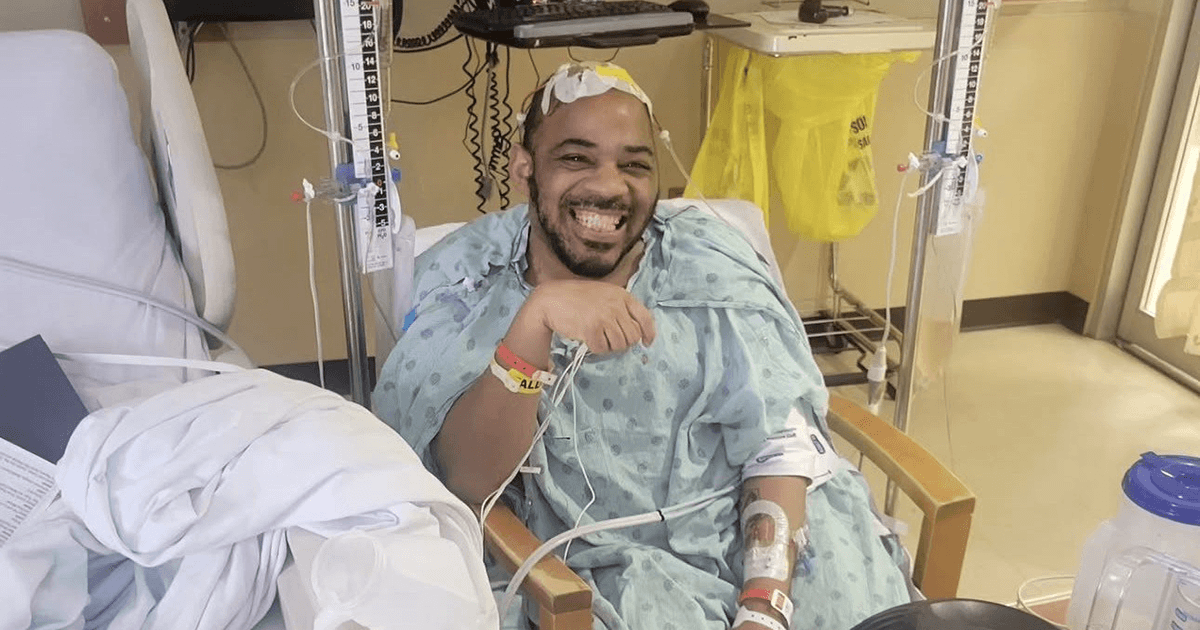
I had an MRI scan, and the results showed a craniopharyngioma, a rare brain tumor. We scheduled surgery to have it removed. Not long after the diagnosis, doctors discovered fluid building up around my brain. Suddenly surgery became urgent, and my operation was moved up an entire month.
I went into an eight-hour brain surgery not knowing what life would look like when I woke up. And when I did, it was different in every way.
During surgery, my pituitary gland was damaged, permanently changing my hormones, metabolism, and my body. Before surgery, I weighed about 160 pounds. Today, I weigh around 220 pounds. Adjusting to this new version of myself has been one of the hardest parts of my recovery.
Even after the surgery, I continued to experience fluid buildup in my brain and eventually underwent another surgery to have a ventriculoperitoneal (VP) shunt implanted. A VP shunt drains extra fluid from the brain into the abdomen, where the body absorbs it. Later, I was also diagnosed with idiopathic intracranial hypertension (IIH)—a condition where high pressure builds up inside the skull due to excess fluid.
Today, I live with chronic migraine. I often experience as many as 24 migraine attacks per month. Some days it’s manageable. Other days, I experience what I call a “category five” migraine—the kind that stops everything.
Recovery hasn’t been simply physical. It has also been emotional and mental. There were moments filled with fear, confusion, frustration, and isolation. I grieved the person I used to be while trying to accept the person I was becoming. Every day presented a new challenge, and there were times when I wondered if I would ever truly feel like myself again.
Recently, I began treatment with setmelanotide (Imcivree). This medication treats a condition called hypothalamic obesity. One role of the hypothalamus is to establish the set point for weight, kind of like a thermostat. Because my hypothalamus was affected by the surgery, I experience hypothalamic obesity.
This medication gives me hope because it manages the weight gain. But even that comes with another challenge: skin hyperpigmentation. One of the hardest parts of my recovery has been realizing that every step toward healing seems to come with another side effect. The surgery saved my life, and I will always be grateful for that, but it brought unexpected challenges.
Writing became part of my healing. What started as a way to process everything I was experiencing slowly turned into something much bigger. I began putting my thoughts, fears, and emotions on paper—raw, honest, and unfiltered. Those pages eventually became my memoir, Black Cloud.
Black Cloud isn’t just a story about surviving a brain tumor. It’s about resilience and the mental and emotional battles that often go unseen. It’s about faith and what it truly feels like when life completely changes without warning. Writing the book helped me realize that healing isn’t always about returning to the person you were. Sometimes it’s about discovering the strength to become someone new.
Sharing my story became a way to connect with others who may be facing their own neurological diagnosis, chronic illness, or life-changing event. Today, I continue writing, speaking, and working on creative projects that allow me to encourage others and remind them that hope is still possible, even when life feels uncertain.