“Talk to me, Goose.”
If you’ve seen the 1986 blockbuster film Top Gun, you know this iconic line. These are the first words spoken by the Navy fighter pilot called “Maverick” to his radar intercept officer, Goose, the man responsible for navigation and weaponry on the plane.
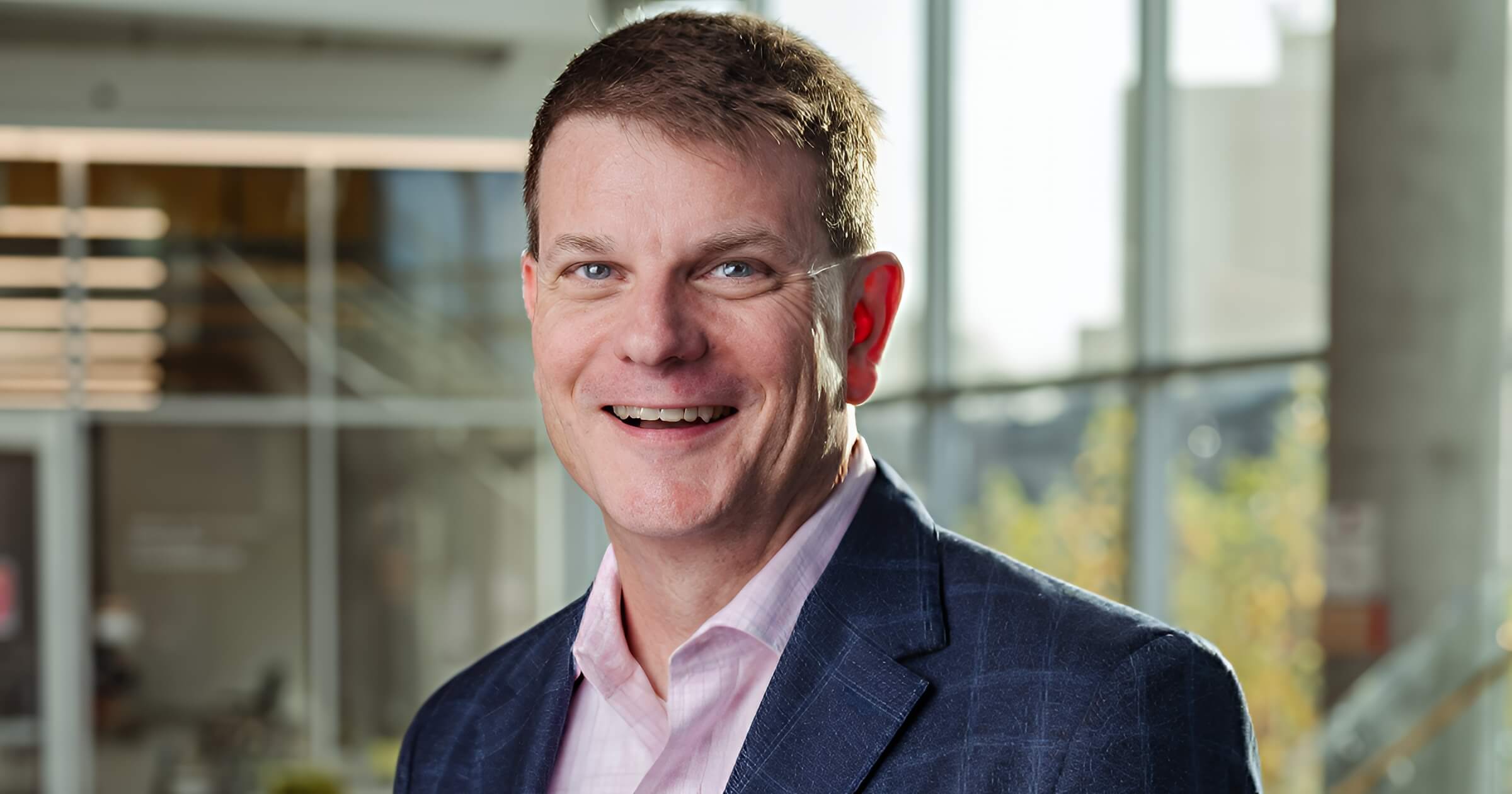
To David Betts, the line “Talk to me, Goose,” means something more. “Yes, it’s Maverick’s first line in the first film,” says David, a Pittsburgh resident who grew up in Yorba Linda, CA, and a fan of the film franchise. “But it’s also what he says later, when he’s looking for a little help…an additional dose of courage.”
This additional dose of courage is exactly what David, now 57, needed when, in April 2024, he was diagnosed with amyotrophic lateral sclerosis.
In the two years since, David has found himself reflecting on that line from Top Gun. “As I think about the journey I’m on, I’m pretty confident I’ll have moments of fear, when I’m going to need an extra dose of courage,” he says. “That line resonated with me.” Just as Maverick used the line to help calm his doubts during an important moment of aerial combat, David has used the line to inspire his own response to a life-altering diagnosis.
It took him over a year of searching for a physician who could tell him what was behind the numbness and uncontrollable twitching in his muscles he’d been experiencing for many months. He eventually found his way to the Sean M. Healey and AMG Center for ALS at Massachusetts General Hospital for an evaluation. By the time he arrived in Boston, he was already experiencing issues with his speech and weakness on one side of his body.
The tests confirmed what he had suspected. “To be honest, while I did break down in tears in the exam room, I had already concluded that it was likely ALS,” he says. “It was kind of like ‘I’m finally in the right place, I’m not crazy, what I’m experiencing is real.’”
When he returned home, he went into problem-solving mode. “I have a habit of compartmentalizing,” says David, who worked 22 years as a senior leader at Deloitte, an accounting and consulting company. “I say to myself, ‘Okay, this is the situation, what do I have control over?’”
“This is his usual coping mechanism,” says his wife, Anne Mundell. “His thinking was, ‘I obviously can’t cure myself, but can I address what will help make the road ahead a little easier?’”
From the long list of debilitating effects of ALS, it didn’t take long for David and Anne to recognize the one that was most concerning to him. “He was most afraid of losing his ability to speak,” she says, “to not have the ability to articulate [which would] become a boundary between himself and other people.”
David began to study the problem of speech for ALS patients. “When I started looking into it, I learned that we were still relying on technology that makes people sound very robotic,” he says. “I didn’t want to sound like a robot, I wanted to sound like me, and I went in search of a solution that would help me sound like me.”
David’s months of studying led him to create a smartphone app that uses AI and voice-cloning technology to help people with ALS and other speech-limiting conditions communicate in their own voice. The app’s AI assistant, Merlin, converts simple text into something that sounds most like how the person would naturally say it. For example, David could type, “I need a blanket,” into the app. Merlin will take that blunt command and translate it to, “Hey, when you have a minute, could you grab me a blanket? I’m a little cold.”
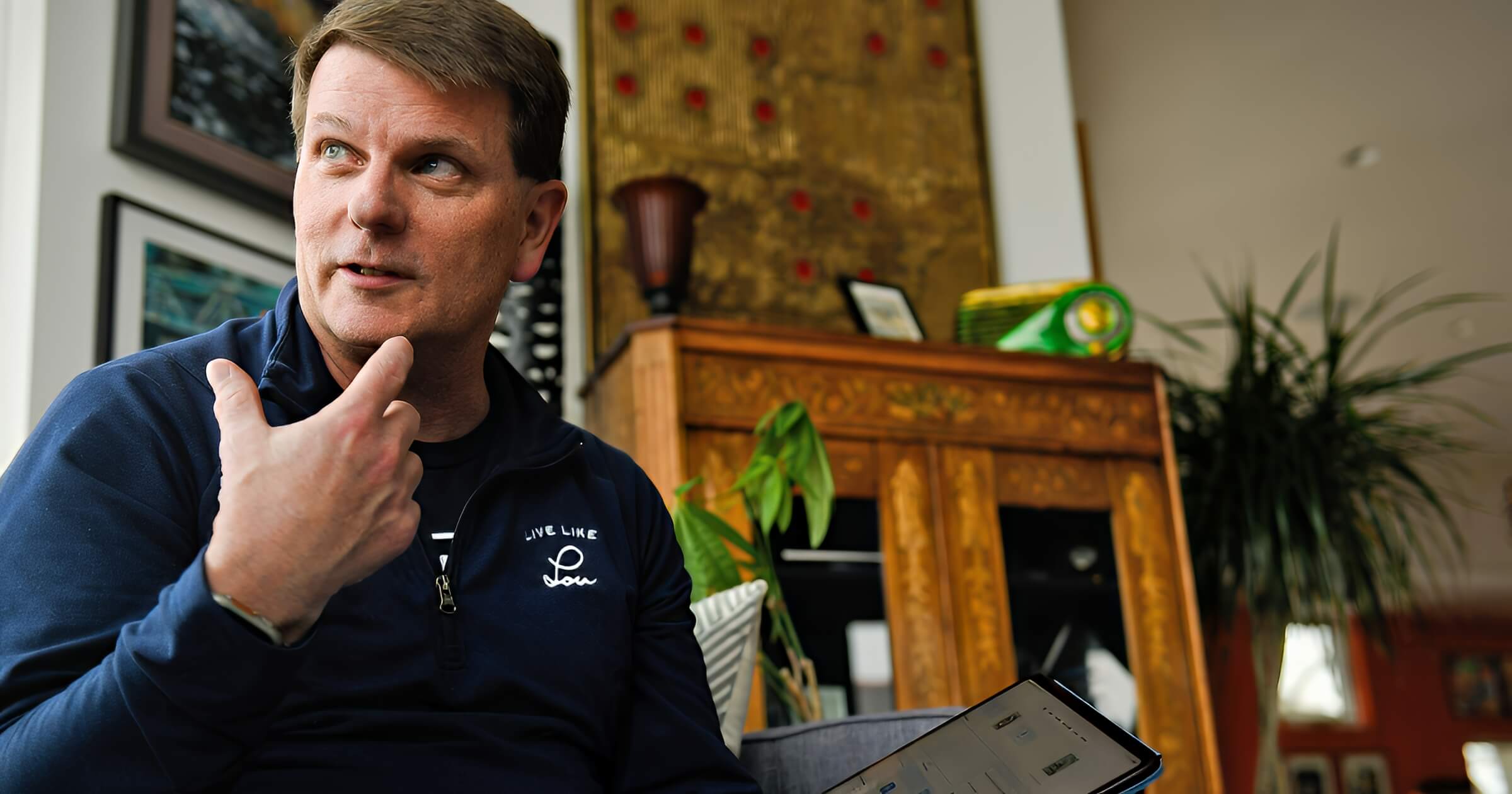
The app accepts input through a keyboard, touchscreen, voice, or assistive switches. It also works with eye-gaze devices (a technology system that lets a person control a computer, tablet, or communication aid using only their eye movements).
What’s most remarkable is that David, with no information technology (IT) background, was able to build much of the app on his own, using what he learned from online tutorials and YouTube videos. And, in the spirit of the friendship at the heart of his favorite film, David named his speech-enhancing innovation, Talk to Me, Goose!.
“For far too long we have asked people with speech-limiting conditions like ALS to settle for far less than is possible,” he says. “I didn’t know how to build an app. I just couldn’t accept what existed. So, we got to work.”
And that work—not to mention its astounding results—is an instructive lesson in how to live with the disease.
“I think what people can learn from David and his wife is that there can still be room to create, contribute, and find purpose after an ALS diagnosis,” says Jennifer Morganroth, MD, MBA, attending neurologist at Massachusetts General Hospital, specializing in ALS and neuromuscular disorders.
Dr. Morganroth, who knows David through a clinical trial he is participating in, offers this advice about living with the disease, “For patients and families, I would say there is no prescribed way to live with ALS. Keep doing the things that matter to you, whether that is traveling, participating in research, spending time with family, working, creating something, or simply living your life in the way that feels most meaningful to you.”
For David, that means spreading the word about a new technology that he feels can help so many others. To date, the Talk to Me, Goose! app has about 1,200 downloads. In partnership with the Live Like Lou Foundation, the app is free for users in the U.S. and Canada, with plans to expand access globally.
David’s work has earned global recognition, including a prestigious Zero Project award, which supports innovative solutions for people with disabilities. Talk to Me, Goose! was selected from more than 500 global nominations across 91 countries for that award. At the beginning of 2026, he was invited to present the technology to the National Council of Austria, in Vienna, the city where the Zero Project foundation is based. In February 2026, before a hushed assembly in the Austrian parliament building, David told his story and introduced Talk to Me, Goose!.
“I know, at some point, I will likely lose my ability to speak on my own,” he said, as the 183-member council listened intently. “I also know that ALS is now powerless to silence my voice.”
Watching David that day, Council Member Heike Eder said in an email, “[It] was one of those moments you simply do not forget. He stood before us, a man living with ALS, and spoke with warmth, humor, and absolute clarity. David moved an entire room in Vienna, and I hope his work moves many more. Talk to Me, Goose! is precisely the kind of innovation worth supporting.”
David will continue to fight against his affliction to help himself, and others continue to live productive and satisfying lives even as their symptoms progress. “We’re going to travel, we’re going to advocate, we’re going to continue to make Talk to Me, Goose! available to those who need it,” he says. “If you’re intentional and focused, then everything falls into place. We don’t have time to waste. None of us do.”