Six years ago, Armando De Alba Rosales, MD, MPH, PhD, found himself facing a community crisis amid a global pandemic: Despite making up less than 15% of the population in Douglas County, Nebraska, Latinos accounted for nearly half of the county’s COVID-19 cases.
These disparities were largely the product of huge structural challenges like discrimination, language barriers, health insurance coverage, and income. But Dr. De Alba believed they were also due to a lack of timely, understandable communication.
“As physicians, we’re good at conducting research and creating knowledge,” says Dr. De Alba, an associate professor of family medicine at the University of Nebraska. “But one of the greatest challenges we have is what happens after we know. We need ways to get that information to our patients and our community members—and we cannot start at the moment we’re seeing them in a clinic or a hospital.”
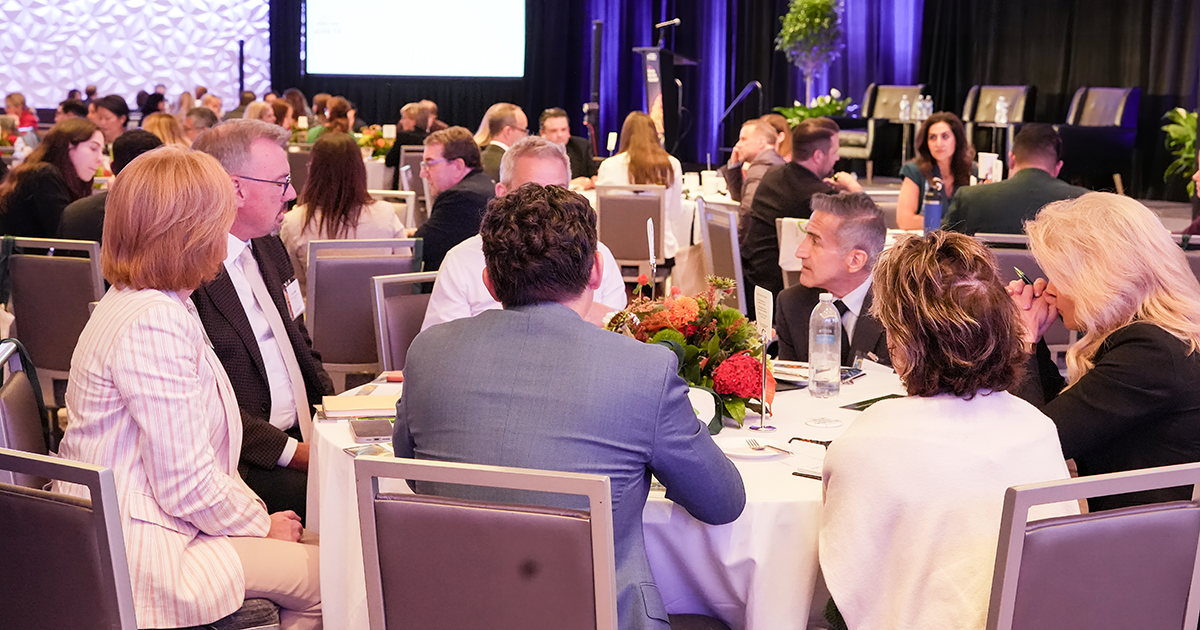
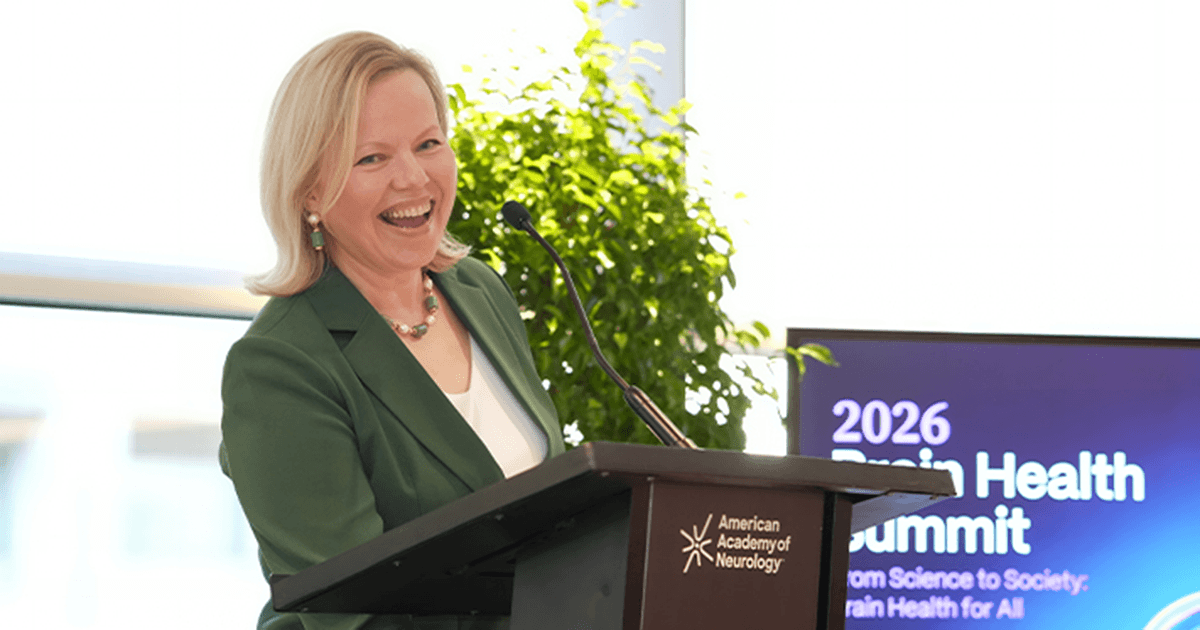
Dr. De Alba presented on his pandemic-era public health work at the 2026 Brain Health Summit, an annual conference held by the American Academy of Neurology. The summit brought more than 160 leaders together from medical societies, advocacy groups, and other organizations to discuss one of the most pressing questions in brain health: How can scientific advancements go from the clinic and into people’s lives?
After surveying Spanish speakers in the county about their sources for health information, Dr. De Alba and his colleagues worked to build trust and relationships within the community while doing public health outreach. They created a series of themed vaccination clinics in primarily Latino neighborhoods, from fútbol to mariachi to Día de los Muertos. Through games, music, and colorful decorations, they aimed to create a lighthearted setting for important conversations.
“We weren’t there to push them to do this or that,” Dr. De Alba says. “Instead, we said, ‘Here we are in case you have questions, and we can empower you to make a decision.’ We had the vaccines available and we had information for them to take back home.”
Dr. De Alba’s case study was one of seven presentations at the 2026 Brain Health Summit. Other topics included AI’s role in neurological care, proactive measures for lifelong brain health, successful advocacy efforts, and the economics of brain disease. The aim for each was to start new collaborations for better brain health. That goal requires support from physicians, neurology specialists, researchers, policymakers, public health professionals, advocates, and people everywhere.
Even within the field of medicine, specialists in different areas have limited opportunities to collaborate. One key focus of the Brain Health Summit is to bring together brain health stakeholders who might otherwise be working separately.
“Brain health, in my view, has to land in every house and every community across the world,” says Nidhi Mahendra, PhD, CCC-SLP, a speech-language pathology professor at the Duke University School of Medicine and the Vice President for Science and Research at the American Speech-Language-Hearing Association (ASHA). “You don’t want to withhold anything, good or bad. Access to health information has to be completely democratic, with equitable access to both the information and how to enact it in your daily life.”
Speech-language pathology is one of many fields outside of neurology where brain health has been an important topic. Dr. Mahendra frequently works with adults with dementia and aphasia, a language disorder most often caused by stroke. Treatment for aphasia has shifted in the past 30 years; beyond focusing on speech and language impairments alone, providers emphasize life participation, real-world interventions, and social relationships.
“You might see a neurologist every six months, but what are you doing in the meantime?” Dr. Mahendra says. “In aphasia, for example, we bring in rehabilitative arts like aphasia choirs. We design everyday activities like book clubs that are adapted for people with language difficulties. You can’t go back and reverse your diagnosis, but we want to ensure you still have the right to live a big, stimulating, fulfilling life.”
The Brain Health Summit marks an opportunity for specialists like Dr. Mahendra, family medicine physicians like Dr. De Alba, and dozens of other stakeholders to meet and collaborate on ways to bring brain health from science to action.
You can find presentation insights and other information in the 2026 Brain Health Summit Proceedings Summary.