Is flag football safer than tackle football?

Neurologists explain how flag and tackle football compare when it comes to head impacts and what safety questions parents should ask before kids play.

By Robert Firpo-Cappiello

November 5, 2026

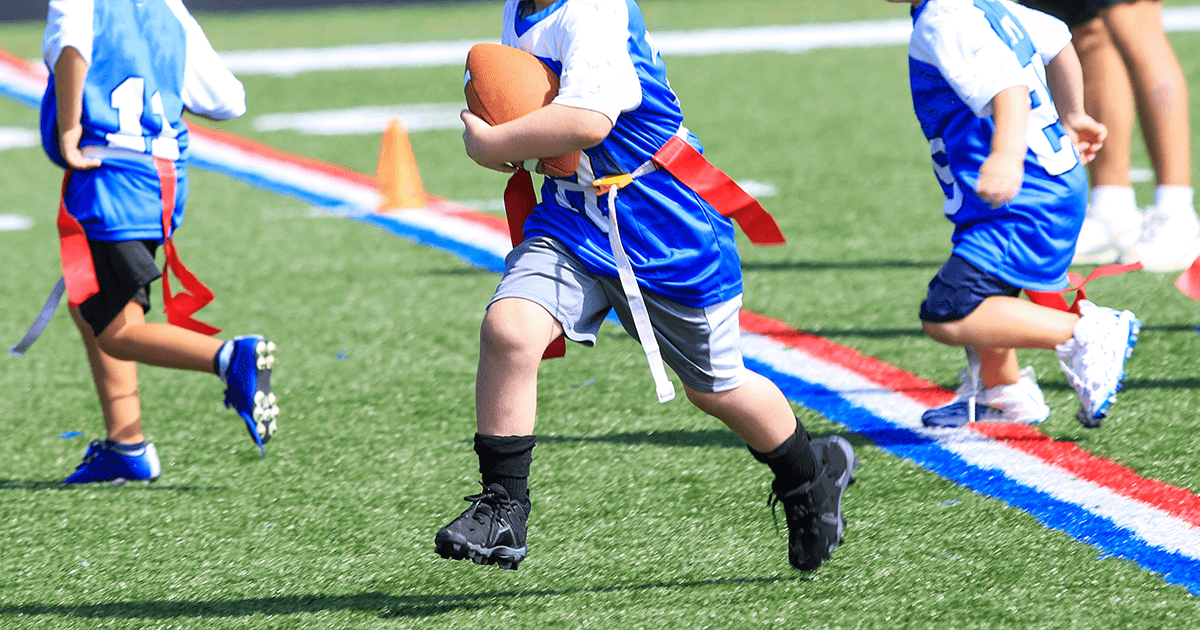
Kids are playing flag football on a green field, practicing teamwork and enjoying the day.
WoodysPhotos/Shutterstock.com

In July 2028, at a stadium in Los Angeles, five-player squads from six nations will pursue Olympic gold in a sport American soldiers invented for recreation during World War II. Flag football will debut at the LA Olympic Games with men's and women's tournaments, and NFL players are eligible to play.

Presently, youth flag football leagues are the fastest-growing form of American football. The NFL is promoting the game as a way for kids to build confidence and teamwork. In flag football, players wear flags attached to belts tied around their waist. Play stops by pulling off a flag rather than tackling another player.

Key takeaways

  • Youth flag football players experience significantly fewer head impacts than tackle football players.
  • Flag football is not risk-free. Sprains, fractures, and accidental collisions still happen, and players don’t wear helmets.
  • Parents must ensure an athletic trainer is on site and that there is an emergency action plan in place.
  • Guidelines for concussion recovery have changed. Now, it is recommended that children continue everyday activities after a short 24- to 48-hour rest period.

Protecting growing brains from harmful impacts

Neurologists explain another crucial benefit: "Physics meets biology," says José Posas, MD, FAAN, associate professor of neurology at the University of Virginia, summarizing the brain health risks posed by traditional football. A young athlete's brain is still building myelin, the insulation that helps nerve cells send signals to the rest of the body, which leaves growing brains more vulnerable to the impact of a football tackle and other common on-field contact.

The “physics” Dr. Posas mentions is what happens in a football tackle, when a player’s helmeted head stops moving but the brain inside—floating in cerebrospinal fluid and made up of tissues of different densities—keeps going. The result is a concussion. "This can be very bad as hits stack up over time, especially if a young athlete goes back on the field before being able to heal,” Dr. Posas says.

A young athlete who has had one concussion is at higher risk of sustaining another. Children with prior concussions are significantly more likely to develop persistent post-concussive symptoms—headaches, dizziness, trouble concentrating, memory lapses, irritability, and disrupted sleep that outlast the usual few weeks of recovery.

Why flag football may be safer for young athletes

Flag football takes tackling out of the game, removing most of the most dangerous impacts. A 2019 study found that flag players experienced 82% to 88% fewer impacts than tackle players. It’s important to note that the study measured impacts, not diagnosed concussions. The overall injury research is mixed. One study of Iowa youth leagues found flag players reported more injuries and more concussions than tackle players, though it relied on coaches reporting voluntarily, which is inherently less accurate than sensors.

"I would not say zero risk," Dr. Posas says. Collisions happen, flag players wear no helmets, and the sensor study found the hits they do take can carry significant force. The patients with flag football injuries who Dr. Posas sees have injuries common to any field sport: sprains, strains, bruises, ligament tears, and the occasional fracture.

Two questions every parent must ask

Javier Cardenas, MD, FAAN, a concussion and brain injury specialist at West Virginia University, says the flag-versus-tackle debate distracts parents from more urgent questions worth asking of any league:

  1. Is there an athletic trainer at practices and games? Athletic trainers are the health care members working directly with the players, Dr. Cardenas says. They are trained for the worst-case scenarios that happen on a field, like head injury, heat illness, or sudden cardiac arrest.
  2. What is the emergency action plan for flag football? For a serious injury, getting first responders to the field quickly is nonnegotiable.

Free brain health insights

Our email newsletters deliver tips, resources, and inspiration straight to your inbox.

Subscribe

New guidelines for concussion recovery

If a head injury does happen, the care guidelines have changed. A decade ago, Dr. Cardenas says, the approach changed from returning kids to play immediately, which was dangerous, to cocooning them: no exercise, no screens, no school until every symptom cleared. "This caused anxiety and depression in our young athletes," he says.

Now the guidelines recommend a short rest of 24 to 48 hours, then a gradual return to activity. While non-contact activity may temporarily increase symptoms, it does not damage the brain, and neither does looking at a screen. Only another head impact can cause additional harm.

All 50 states and the District of Columbia now require concussion education, removal from play for a suspected concussion, and medical clearance before return.

Access to flag football is growing

Girls' flag football is the single largest area of growth in youth and high school participation. But access to flag football shapes parents’ choices, Dr. Posas notes—funded tackle leagues outnumber flag leagues in many communities, so parents may have to look farther from home to find the right game for their child.

Dr. Cardenas notes that he isn't necessarily recommending football, flag, or otherwise. "The most important aspect of all sports is that kids participate in healthy physical activity," he says. "The rate of obesity in our youth far exceeds the rate of concussion in sports."

In the summer of 2028, kids will watch flag football take the field on the international stage of the Olympics. The ones who are inspired to suit up with a belt—with guidance from parents and coaches—may be doing their brains a favor.