


News & Research
MRI scan may help predict dementia progression risk in early-onset Alzheimer’s disease
Study finds brain changes on MRI could help identify who may develop dementia sooner.
*Reviewed by Sarah Song, MD, MPH, FAAN
September 1, 2026
Key takeaways
- This study showed that specific MRI findings may help predict disease progression in early-onset Alzheimer's disease.
- Participants with more shrinkage in specifically studied brain areas involving memory, attention, language, and problem-solving were more likely to develop dementia sooner.
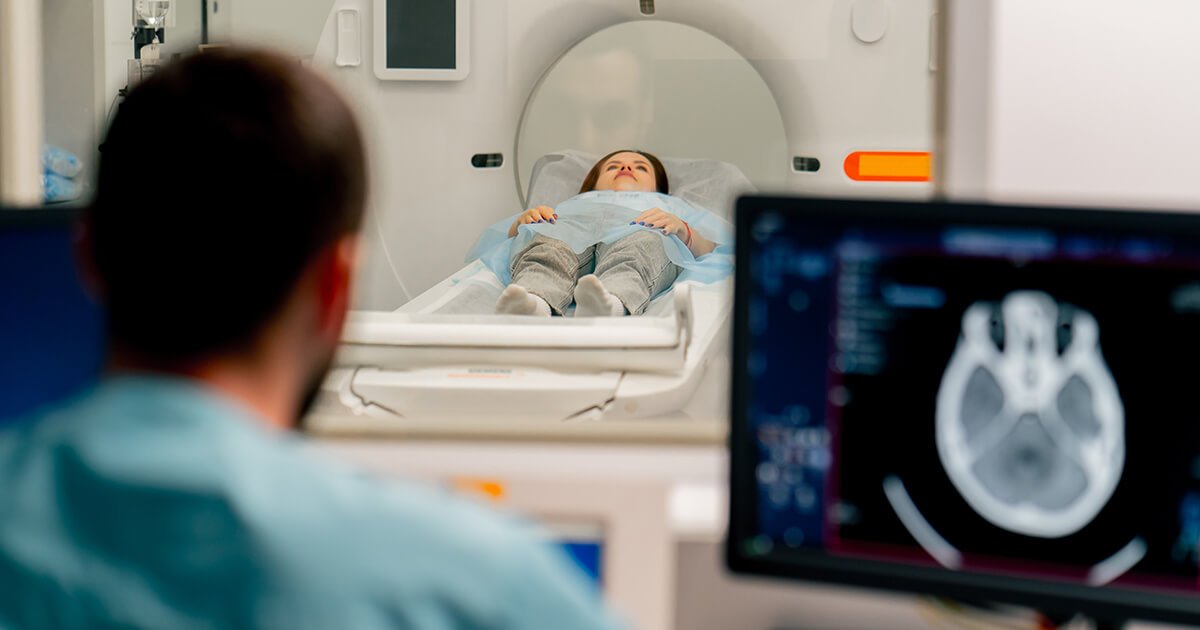
A study published August 26, 2026, in Neurology® found that specific findings on an MRI scan may help predict how quickly people with early-onset Alzheimer’s disease progress from mild cognitive impairment to dementia.
Early-onset Alzheimer’s disease develops before age 65. It starts with thinking and memory problems (mild cognitive impairment) that are more than signs of normal aging. It often progresses quickly to dementia, but the timeline varies widely from person to person.
The researchers studied 130 adults with mild cognitive impairment and 97 healthy participants between ages 40 to 64. All participants had MRI scans at the start of the study and were followed for an average of two years. During that time, about 65% of people with early-onset Alzheimer’s disease progressed from mild cognitive impairment to dementia.
The team focused on a group of brain regions they call the “EOAD-signature,” a pattern of brain shrinkage commonly seen in early-onset Alzheimer’s disease. These brain regions help support skills such as memory, attention, language, planning, and problem-solving.
This study found that shrinkage in the EOAD-signature set of regions was the strongest predictor of dementia progression, even when compared to other brain measurements commonly used in Alzheimer’s disease research.
Notably, most participants were White and carried a specific type of mild cognitive impairment where memory was the main concern, so more research is needed to know whether the findings apply broadly to other populations.
Free brain health insights
Our email newsletters deliver tips, resources, and inspiration straight to your inbox.
Read online at https://www.brainhealth.com/explore/news-research/mri-predicts-dementia-early-alzheimers/