Brain health myths are deeply embedded in our culture. They are in everyday conversation, movies and TV, and even among some medical professionals. Some myths are harmless, with no practical effect on behavior or health outcomes. However, some brain health myths can come with a cost, shaping whether or not a person calls a doctor or what “treatments” they spend their money on.
Myth 1: Memory loss is a normal part of aging
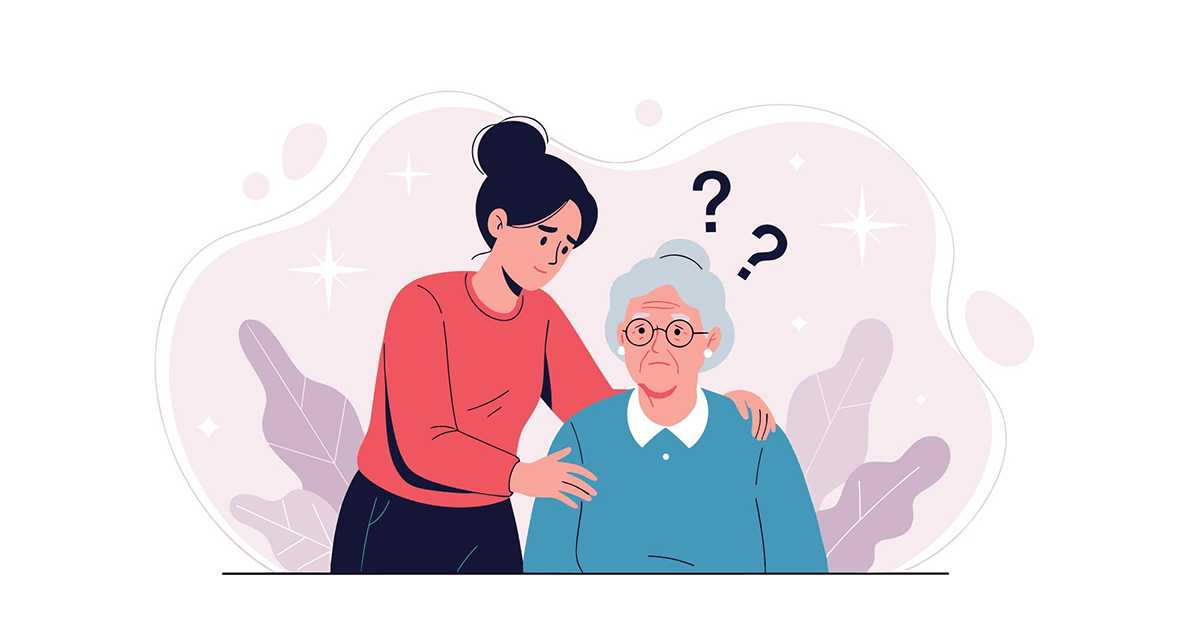
As you age, some change in memory is expected. Misplacing your keys or pausing to remember an actor's name happens to everyone, and more so as we age. But what isn't expected is losing the ability to do something you always could do.
"Real, disruptive memory loss—getting lost on familiar routes, repeating questions, fumbling with chores, struggling to manage bills or medications—is not something to write off as 'just aging,'" says Eric Dinnerstein, MD, FAAN, a behavioral neurologist at the University of Texas at Tyler.
The distinction matters because dismissing such cognitive decline as inevitable is a barrier to diagnosis and potential treatment. "Research suggests a fair percentage of dementia diagnoses actually have a treatable underlying cause, such as a vitamin deficiency, thyroid disorder, medication side effect, depression, or sleep apnea," Dr. Dinnerstein says.
Aging does not mean that all cognitive ability will decline equally: processing speed and working memory tend to slow, Dr. Dinnerstein notes, but vocabulary, knowledge, and judgment built over decades often hold steady.
The error runs both ways. "Dismissing every lapse as inevitable can delay a diagnosis that's actually fixable, while treating every small slip as a crisis can cause unnecessary anxiety," he says. "Honor aging. Question decline. Protect the years ahead."
Myth 2: Dementia is genetic destiny
Family history matters to brain health, but for most people it isn't the only factor.
"For the vast majority of people, genes are not destiny," says David L. Perez, MD, MMSc, chief of the division of behavioral neurology at Mass General Brigham and associate professor of neurology and psychiatry at Harvard Medical School. "Genetic risk is only one of a great many factors that contribute to increasing or decreasing your likelihood of developing dementia later in life." He adds that you also need to consider several biological and lifestyle factors.
In 2024, researchers estimated that roughly 45% of dementia cases worldwide might be preventable or delayed by addressing 14 modifiable risk factors. Some of the conditions to watch out for are hearing loss, vision loss, high blood pressure, high cholesterol, diabetes, depression, and social isolation. This means that a hearing aid, cataract surgery, or a blood pressure prescription go beyond routine maintenance.
Myth 3: You can buy a healthier brain
The brain health marketplace is booming, and supplements don't have to prove they work before they reach shelves. Some promise memory protection; "detoxes" claim to clear toxins from the brain; training apps advertise a higher IQ. But the scientific evidence doesn’t support many of these claims.
"Some noteworthy protective brain health benefits can be found in lifestyle modifications such as engaging in regular exercise, following a Mediterranean diet, remaining cognitively active, practicing stress reduction techniques, and limiting behaviors with negative consequences such as excess alcohol use," Dr. Perez says.
She advises, "People should do their homework before engaging in costly supplement use or 'detoxes' which may show limited—or no—evidence." And the true cost isn't just financial. It's the misbelief that a purchase has fixed the problem.
Myth 4: If you didn't lose consciousness, it wasn't a real concussion
Most concussions involve no blackout at all.
"Loss of consciousness occurs in fewer than 10% of concussions," says Johnathon Patrick Shaffer, MD, MBA, division director of neurosciences for IU Health South Region and a team physician for Indiana University football. "A person may instead have headache, dizziness, nausea, sensitivity to light or noise, confusion, balance problems, or changes in sleep or mood."
Dismissed symptoms send people back too quickly to school, work, or sports, Dr. Shaffer says, "which can prolong recovery and put one at risk for another head injury before the brain has adequately healed."
For a long time it was thought that it was best for a person to stay in a dark room until symptoms went away. However, "Current guidance favors relative rest and screen avoidance for the first 24 to 48 hours, followed by an incremental return to everyday activities under clinical supervision," Dr. Shaffer says.
Myth 5: If stroke symptoms like weakness and slurred speech subside, you are fine
This is the brain health myth that poses the greatest near-term risk, because people think that if the symptoms go away, then they are fine. But stroke symptoms that resolve on their own can be a warning sign of a stroke to come.
"If a person develops stroke-like symptoms such as sudden onset difficulty speaking or weakness on one side of the body, these symptoms could represent a transient ischemic attack," Dr. Perez says.
A transient ischemic attack is a brief blockage of blood flow to the brain—the clot clears on its own, often within minutes, and the symptoms go with it. This is known as a "warning stroke." Nearly 1 in 5 people who have one go on to have a full stroke within 90 days.
Dr. Perez notes, "Stroke-like symptoms warrant an urgent neurological evaluation." Part of what makes this myth persistent is that a stroke often does not cause pain. Without pain, people talk themselves into waiting to go to the hospital. Even if stroke symptoms appear and then fade, seek care immediately.
Myth 6: Your brain matures at age 25
There is no switch that flips on a brain’s birthday. The figure is a rough average drawn from brain-imaging studies of gradual change, and it obscures normal individual variations and how much development continues past age 25.
"We are constantly building life experiences from which our brain can draw connections," says Jessica Solomon Sanders, MD, a neurodevelopmental disabilities specialist and assistant professor at the University of Colorado Anschutz School of Medicine. She adds that growth and development of lifetime capabilities often expand well after age 25, particularly in individuals with intellectual disability.
The American Academy of Neurology promotes taking care of your brain in every stage of life. No matter your age, there is always something you can do to strengthen and protect your brain.
How to tell a brain myth from a brain fact
The next time you see a brain “fact,” ask three questions:
- Who profits from this belief?
- Do multiple high-quality studies in humans support the claim?
- Is it backed by the American Academy of Neurology, the National Institutes of Health, or other reputable science-based organizations?
Be cautious of claims that promise a cure. Most myths are misleading because they make complex neurological factors seem simpler than they are.
Talking with a health care professional can help you decide how new information applies to your own care. Dr. Perez says, "If you are reading up on information about brain health that may impact your approach to your own health care, it can be helpful to bring up what you are learning with a medical professional."